Yes—a mobile car wash can remove bug splatter at your location when the residue is still on the surface and the cleaning method suits the finish. Bug removal does not repair paint etching or clear-coat damage, so a clean panel can still show a mark. This 2026 guide explains what to request and when to stop treating a remaining spot as dirt.
- Mobile car wash service bug removal treats surface residue; it does not repair damaged clear coat.
- Crispy Clean Mobile Carwash provides on-location washing and auto detailing in Rio Rancho; confirm bug treatment before booking.
- Soften stuck residue before gentle cleaning. Hard scrubbing can scratch the finish.
- Inspect the clean, dry panel before deciding whether a remaining mark needs polishing.
Can a mobile car wash remove bug splatter from a car?
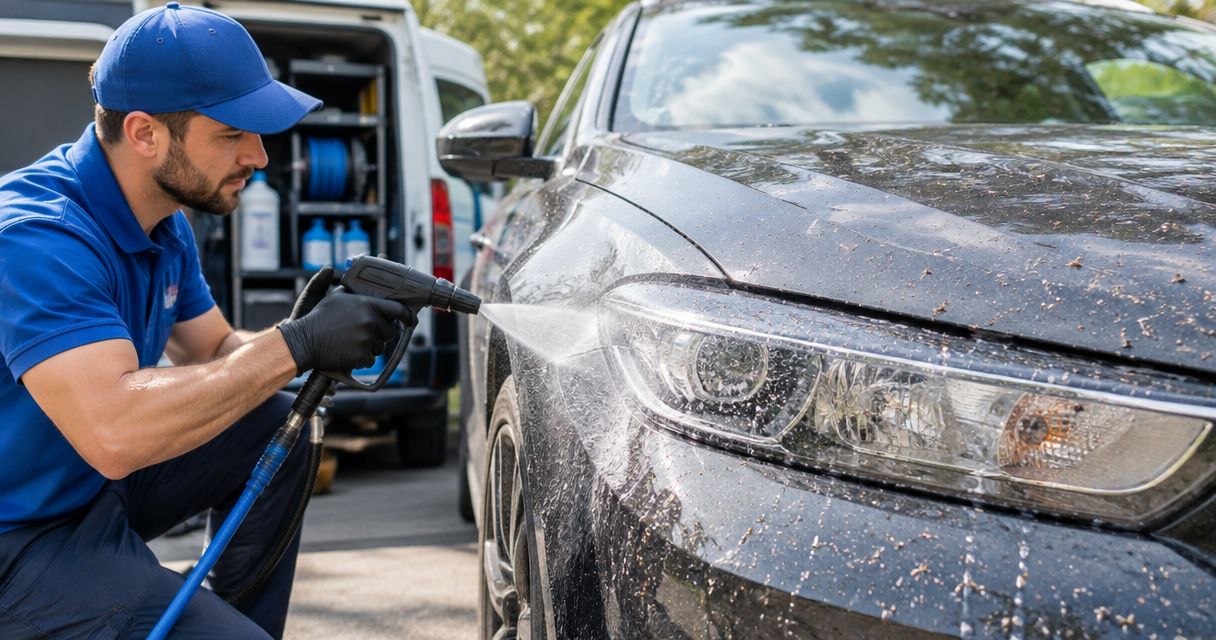
Yes, but removing the insect residue and removing the mark underneath are different jobs. A detailer should clean the contamination first, then inspect the exposed surface rather than promise that every spot will disappear.
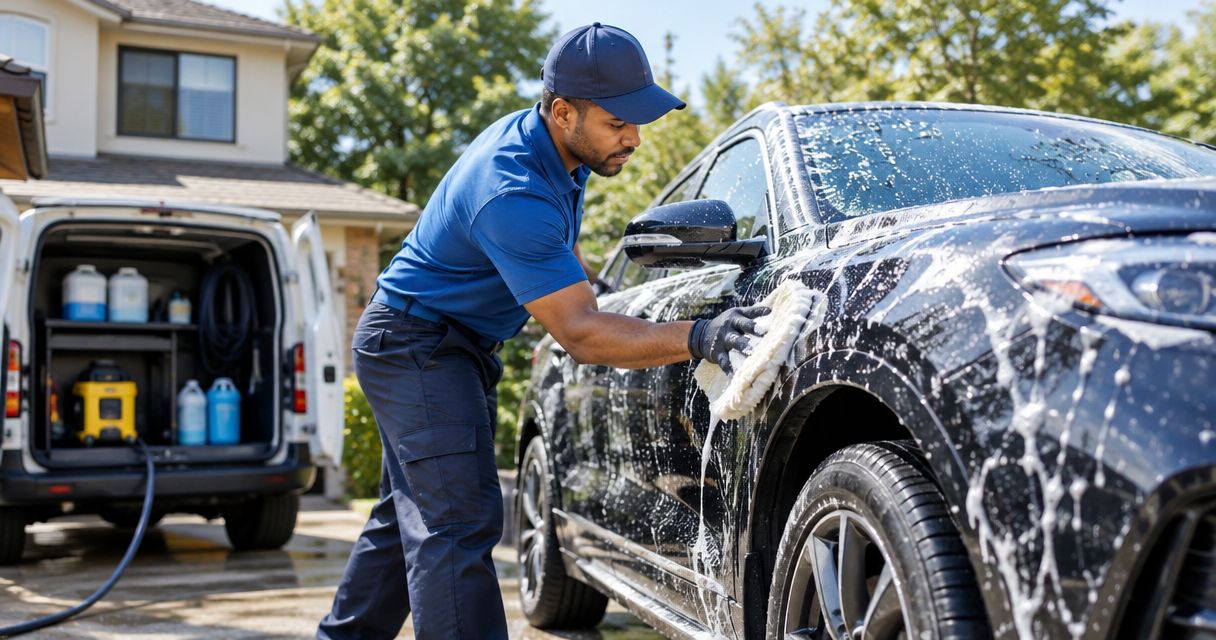
A mobile appointment brings the work to your location. It does not, by itself, tell you which cleaning steps are included. If you are comparing methods, the guide to touchless washing versus hand washing explains the broader choice.
| Condition or approach | Best for | Main benefit | Limitation |
|---|---|---|---|
| Routine exterior wash | Loose dirt and light, fresh residue | Cleans the surrounding surface | Does not establish that targeted bug treatment is included |
| Targeted bug treatment | Adhered insect residue | Gives affected areas specific attention before gentle removal | Requires products compatible with the surface |
| Paint assessment after washing | Marks that remain on clean, dry paint | Separates contamination from possible finish damage | Assessment alone does not repair the finish |
| Professional polishing assessment | Suitable glossy paint with remaining defects | Establishes whether correction is appropriate | Polishing removes some finish and cannot safely fix every defect |
Ask for an exterior wash with an assessment of the affected areas. Do not book interior shampooing or a larger package simply because bugs cover the bumper; those services address different needs.
Why this matters
The wrong response to stubborn splatter is often more pressure, more scrubbing, or a stronger household cleaner. None of those establishes what is stuck to the surface—or whether the mark is still residue at all.
For a 2026 appointment in Rio Rancho, describe the condition rather than asking only for a clean car. A close photo of the bumper and a wider photo of the hood help explain the work you want assessed. They do not replace an in-person inspection.
The goal is safe removal, not scrubbing until every visible outline disappears. If cleaning exposes an etched area, continuing the same washing step will not restore missing or damaged clear coat.
How should a mobile detailer remove bug splatter?
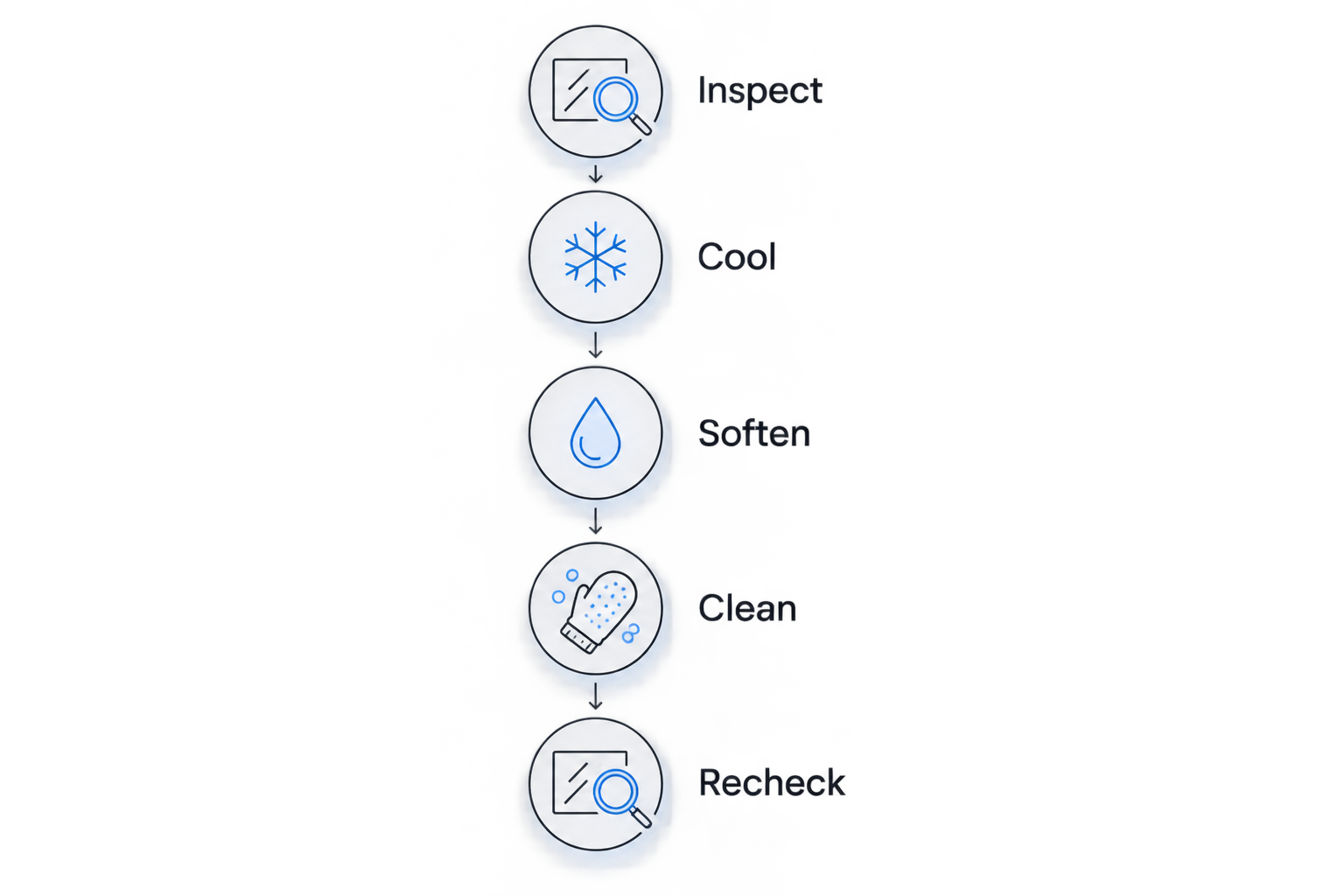
The exact process depends on the product instructions and the vehicle's finish. A sensible sequence separates preparation, removal, and inspection instead of treating the entire job as a hard scrub.
- Inspect. Identify affected panels and note matte paint, wraps, protective film, repainted areas, or damaged clear coat. Each can change which products and methods are suitable.
- Cool. Work on a cool surface and manage direct sun. Do not apply cleaner to a hot panel or let it dry against its instructions.
- Soften. Use a surface-compatible product according to its label. Let the treatment loosen residue rather than compensating with pressure.
- Clean. Remove loosened contamination with suitable clean wash media and gentle contact. Keep dirty material from being dragged across adjacent paint.
- Recheck. Rinse or remove the product as directed, dry the area safely, and inspect what remains. Repeat treatment only when appropriate; do not assume every outline needs another pass.
You do not need to choose a chemical for the detailer. You do need to disclose special finishes and previous damage. If the vehicle has a wrap or paint-protection film, share its care instructions when available.
Avoid demanding a fixed soaking time. Product directions, surface condition, and working conditions determine that step; a universal timer is not a substitute for following the label.
Fresh bug splatter: remove it before it becomes harder to clean
Fresh residue is generally easier to address before it dries firmly onto the vehicle. Arrange appropriate cleaning promptly instead of waiting for the next full interior detail.
Best for: visible residue that has not been left to harden. The advantage is dealing with the contamination early; the limitation is that appearance alone cannot confirm whether the finish underneath is unaffected.
If you clean it yourself, follow the vehicle's care guidance and use a product intended for the affected surface. Do not wipe a dusty bumper with a dry cloth. Grit trapped between the cloth and finish can cause scratches.
Dried bug splatter: soften it instead of scrubbing harder
Dried splatter needs controlled treatment, not an abrasive shortcut. Explain whether you have already tried washing it and what products you used.
Best for: targeted professional attention when ordinary washing leaves adhered residue. The benefit is a surface-specific approach; the limitation is that older contamination can conceal damage that cleaning will not reverse.
Do not pick dried insects off with a fingernail, scrape them with a household blade, or use an abrasive kitchen pad. A cleaner that works on ordinary glass is not automatically suitable for nearby paint, plastic, film, or trim.
Remaining marks: inspect before requesting polishing
A visible outline after washing does not prove that bugs remain. It can be leftover contamination, staining, or a change in the finish that requires a different assessment.
Best for: professional inspection when clean, dry paint still shows a spot. Polishing is an abrasive correction process, not a stronger wash. Whether it is appropriate depends on the finish and the defect.
Do not request polishing on matte paint as though it were ordinary glossy paint. Likewise, peeling clear coat is not a bug-removal problem. Ask the detailer to explain what remains and the limits of the proposed treatment before authorizing additional work.
Why bug-removal results vary
The vehicle's condition matters more than the word mobile. Use these factors to explain the job and compare the scope of service:
- Residue condition: Fresh splatter and firmly dried deposits need different levels of attention. Tell the provider whether a previous wash left material behind.
- Surface type: Paint, glass, textured trim, wraps, and protective film do not share every care requirement. Identify special finishes before treatment.
- Surface temperature: A hot panel changes how a cleaner behaves and can make it dry too quickly. Ask how the work area will be managed.
- Existing damage: Chips, peeling clear coat, and previous repairs affect what can safely be cleaned or corrected. Point them out before work starts.
- Included steps: A general wash description does not confirm targeted pretreatment, polishing, or protection. Get the requested work stated clearly.
There is no useful guarantee that every bug outline will disappear. A clear explanation of the remaining condition is more valuable than a promise made before inspection.
What should you request when booking in Rio Rancho?
Crispy Clean Mobile Carwash is for Rio Rancho vehicle owners seeking on-location washing and auto detailing. Its mobile service is relevant when you want the vehicle cleaned where it is parked; confirm targeted bug treatment and the suitable work location before booking.
For your 2026 request, send the vehicle type, affected areas, photos, and any known finish concerns. Ask what the exterior service includes and whether stubborn residue needs separate assessment. Do not assume polishing is part of a wash.
A useful message is:
I need an on-location exterior wash in Rio Rancho. There is bug splatter on the front bumper, hood edge, and mirrors. Please confirm whether targeted bug treatment is included and whether you need photos before quoting the work.
Add details that apply to your vehicle. Mention a matte finish, wrap, protective film, damaged paint, or any cleaner you have already used.
Use the contact method listed by Crispy Clean Mobile Carwash. For a call or text, website form, or social message, provide the same details so the request is clear. If your location is in Albuquerque, Corrales, Los Lunas, Belen, or Santa Fe, ask the provider to confirm the address rather than assuming coverage.
Do you need a full detail to remove bugs?
Bug splatter is an exterior concern; a full detail is not automatically necessary. Ask for the work that addresses the affected surfaces, then add other services only when you need them.
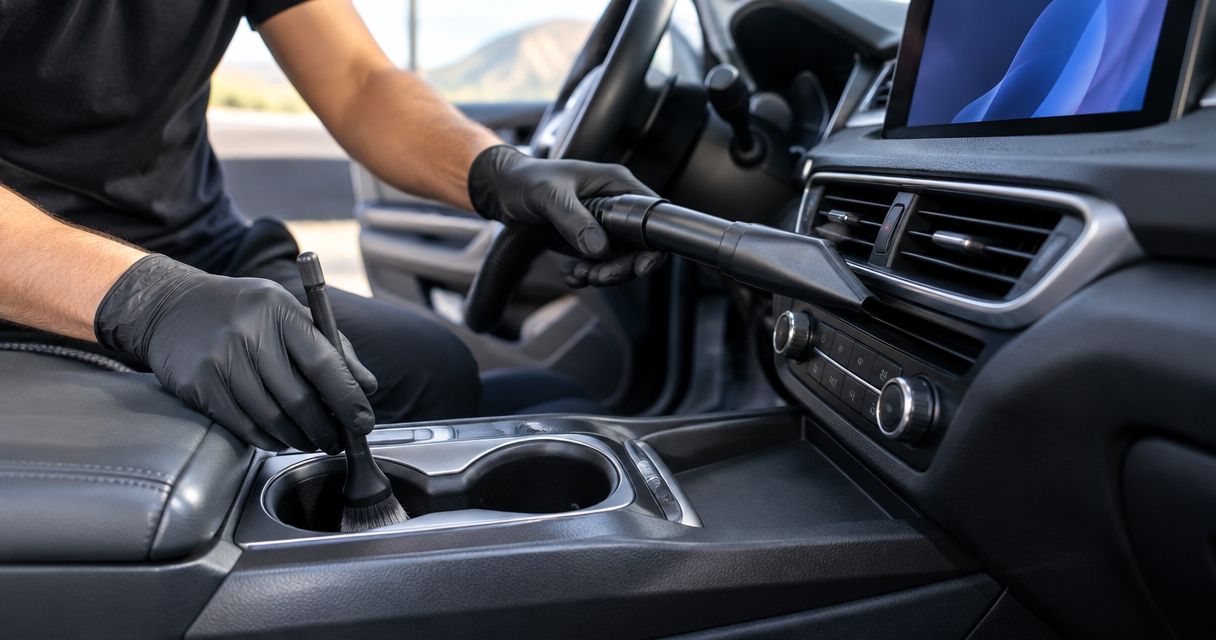
Interior detailing addresses the cabin. Shampooing and carpet shampoo address suitable interior fabrics and carpet, not splatter on a painted bumper. Waxing adds a protective layer to a properly prepared compatible finish; it is not a substitute for removing contamination.
Polishing serves another purpose: correcting suitable finish defects through abrasion. Keep those jobs separate when reviewing a service description. A longer package name does not establish that it includes the right bug-removal process.
Can bug splatter permanently damage car paint?
Yes, insect residue can leave etching or staining that survives washing. The visible result depends on the exposure and the finish, so an inspection after cleaning is necessary before discussing correction.
Treat washing as contamination removal, not paint repair. If damage remains, ask whether improvement is safe and what the limits are. Do not accept repeated aggressive cleaning as a substitute for identifying the defect.
Will wax stop bugs from sticking to the car?
No, wax does not stop bugs from hitting or sticking to a vehicle. A maintained protective layer can help with cleaning, but it does not make the finish immune to contamination or damage.
Remove residue before applying protection. Waxing over a dirty panel does not solve the underlying problem, and a protective product must suit the vehicle's finish.
FAQ
Can a mobile car wash remove dried bugs from my bumper?
A mobile car wash can remove dried bug residue using suitable pretreatment and gentle cleaning. Confirm that targeted treatment is included, and do not expect washing to repair etching underneath.
What should mobile car wash service bug removal include?
Mobile car wash service bug removal should address the affected surfaces with compatible products, controlled cleaning, and a final inspection. Ask whether this work is included in the exterior wash or needs separate approval.
Should I scrub bug splatter off with a kitchen sponge?
Do not use an abrasive kitchen sponge on automotive paint. Soften the residue with a suitable product and use clean, surface-appropriate wash media instead.
Why can I still see a bug outline after washing?
A remaining bug outline can be leftover contamination, staining, or etched finish. Inspect the clean, dry surface before choosing further cleaning or a polishing assessment.
Can I have bug splatter removed from a wrapped car?
Bug residue can be cleaned from vehicle wraps using methods compatible with the film. Share the wrap manufacturer's care instructions and do not assume a paint cleaner is suitable.
Does Crispy Clean Mobile Carwash offer on-location service in Rio Rancho?
Crispy Clean Mobile Carwash provides on-location mobile washing and auto detailing for vehicle owners in Rio Rancho, New Mexico. Confirm targeted bug treatment, the work location, and the requested service before booking.
What should I send when requesting bug removal in 2026?
Send your vehicle type, location, clear photos, and details of the affected surfaces. Include any wrap, protective film, matte finish, previous damage, or cleaning products already used.
One last thing
Look at the bumper after it is clean and dry, not only while it is wet. Water can temporarily make some surface defects less noticeable. A dry inspection helps separate a satisfactory cleaning result from a remaining finish problem.
For your next 2026 wash, make that inspection part of the conversation. Ask what came off, what remains, and whether any further work is appropriate before approving it.