Paint correction can completely remove shallow scratches when enough sound paint remains to polish the surrounding surface safely; it cannot completely remove every scratch. Deep cuts through the clear coat, missing color, and exposed primer or metal need paint repair rather than more polishing.
- Does paint correction remove scratches? Yes, for shallow defects that can be safely leveled within the clear coat.
- Deep scratches and missing paint need repair, not repeated polishing.
- Wax can conceal some marks temporarily; it does not replace missing paint.
- Crispy Clean Mobile Carwash suits Rio Rancho owners seeking on-location washing and detailing; ask about scratch assessment before booking.
Why this matters
You can book an exterior detail expecting a scratch to disappear and receive clean, shiny paint with the same groove still visible. Washing, waxing, polishing, and paint repair solve different problems. Choose the treatment by the damage, not by the package name.
For local appointment planning in 2026, Crispy Clean Mobile Carwash provides on-location mobile washing and auto detailing in Rio Rancho. On-location service removes the need to take your vehicle elsewhere for that appointment, but scratch removal still depends on the paint's condition and the agreed work.
Does paint correction remove scratches completely?
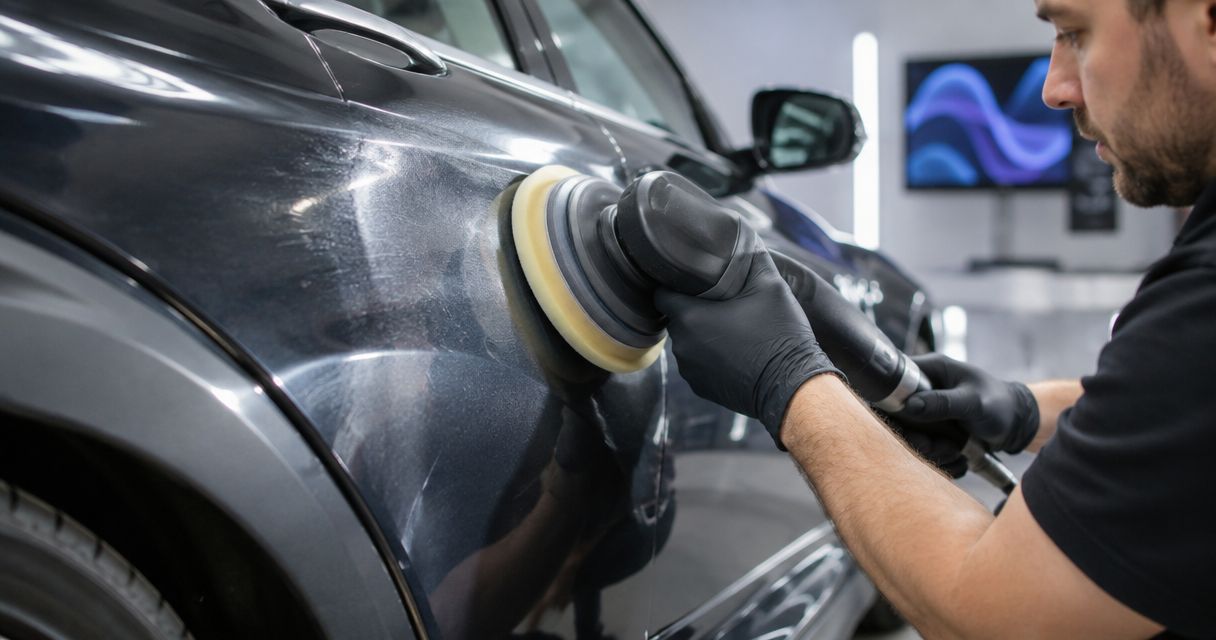
Paint correction removes a scratch completely only when the defect can be safely leveled without compromising the remaining finish. Abrasive polishing removes a small amount of surrounding paint to reduce the difference between the scratch and the surface around it. It does not fill a deep cut with new paint.
On a clear-coated vehicle, the practical question is whether the damage stays within a safely correctable part of that clear coat. A scratch that reaches the color layer or exposes the material beneath it cannot be polished back into intact paint.
| Treatment | Best for | What it does | Main limitation |
|---|---|---|---|
| Washing | Removing loose dirt before inspection | Cleans the surface so defects are easier to assess | Does not level scratches |
| Waxing | Adding protection and improving appearance | Leaves a protective layer; some formulations also conceal fine marks | Does not rebuild damaged paint |
| Paint correction | Reducing safely correctable swirls and scratches | Abrades and refines the existing finish | Removes material and cannot replace missing paint |
| Touch-up paint | Addressing localized missing color | Adds paint to a damaged area | The repair can remain visible |
| Professional refinishing | Repairing damage beyond polishing | Repairs and repaints the affected area | Requires more involved work than detailing |
A glossy finish is not proof that every scratch has been removed. Inspect the specific damage after the work, not just the overall shine.
Fine swirls and shallow scratches: correction candidates
Fine swirls often appear as curved lines around a reflected light source. They are commonly associated with surface abrasion, including improper washing or drying. When these defects remain shallow enough, polishing can remove them rather than merely conceal them.
For shallow defects, start with the least aggressive effective process. A test area helps establish whether a milder polish produces the agreed result before the same treatment is applied across the vehicle.
The advantage is genuine surface improvement without repainting. The limitation is that correction consumes some of the existing finish; repeating aggressive work simply to chase a small remaining mark is not automatically a good trade.
Ask to see the test area under lighting that reveals the defects. A wet panel or flattering reflection is not a useful substitute for a clean, dry inspection.
Deep scratches: improvement is not complete removal
A deep scratch can become less noticeable after polishing because its surrounding edges look smoother and the rest of the panel reflects light more evenly. The groove can still remain. Reduced visibility and complete removal are different outcomes.
Missing color, visible primer, exposed metal, or a break through the clear coat points toward paint repair. Continued polishing cannot restore a layer that is no longer there, and unnecessary abrasion can damage the surrounding finish.
Touch-up paint is best for localized missing paint when your priority is addressing the damaged spot rather than achieving an invisible repair. Professional refinishing is the more appropriate discussion when the finish needs rebuilding. Neither outcome should be presented as ordinary polishing.
For a daily driver, accepting a less visible scratch can be more sensible than removing additional healthy clear coat. Agree on that stopping point before work begins.
Paint transfer: inspect before calling it a scratch
A mark left by contact with another painted object can include transferred material sitting on top of your finish. Removing that material can reveal intact paint, an underlying scratch, or both. Its appearance before cleaning does not settle the diagnosis.
Have the area cleaned and assessed before choosing an abrasive treatment. Scrubbing harder with a household pad risks adding damage to a mark that first needed careful cleaning.
The benefit of a proper assessment is avoiding unnecessary correction. The limitation is that transfer removal does not guarantee the paint underneath escaped damage. Judge the exposed finish after cleaning, not the transferred color alone.
Why scratch-removal results vary
The same-looking mark can require a different approach on another panel. These factors determine whether removal is safe and whether polishing is the right treatment:
- Scratch depth: A surface defect and a cut through the clear coat need different responses.
- Remaining finish: Correction removes material, so the condition of the existing paint sets the limit.
- Repair history: Repainted areas and previous correction work affect how a technician approaches the panel.
- Paint response: Different finishes respond differently to a pad, abrasive, and polishing technique.
- Panel shape: Edges, creases, and body lines require extra care during abrasive work.
- Your goal: Making a daily driver look better is different from pursuing the disappearance of every visible defect.
A 2026 estimate should describe the expected result on your actual vehicle. A package label alone does not establish what can safely disappear.
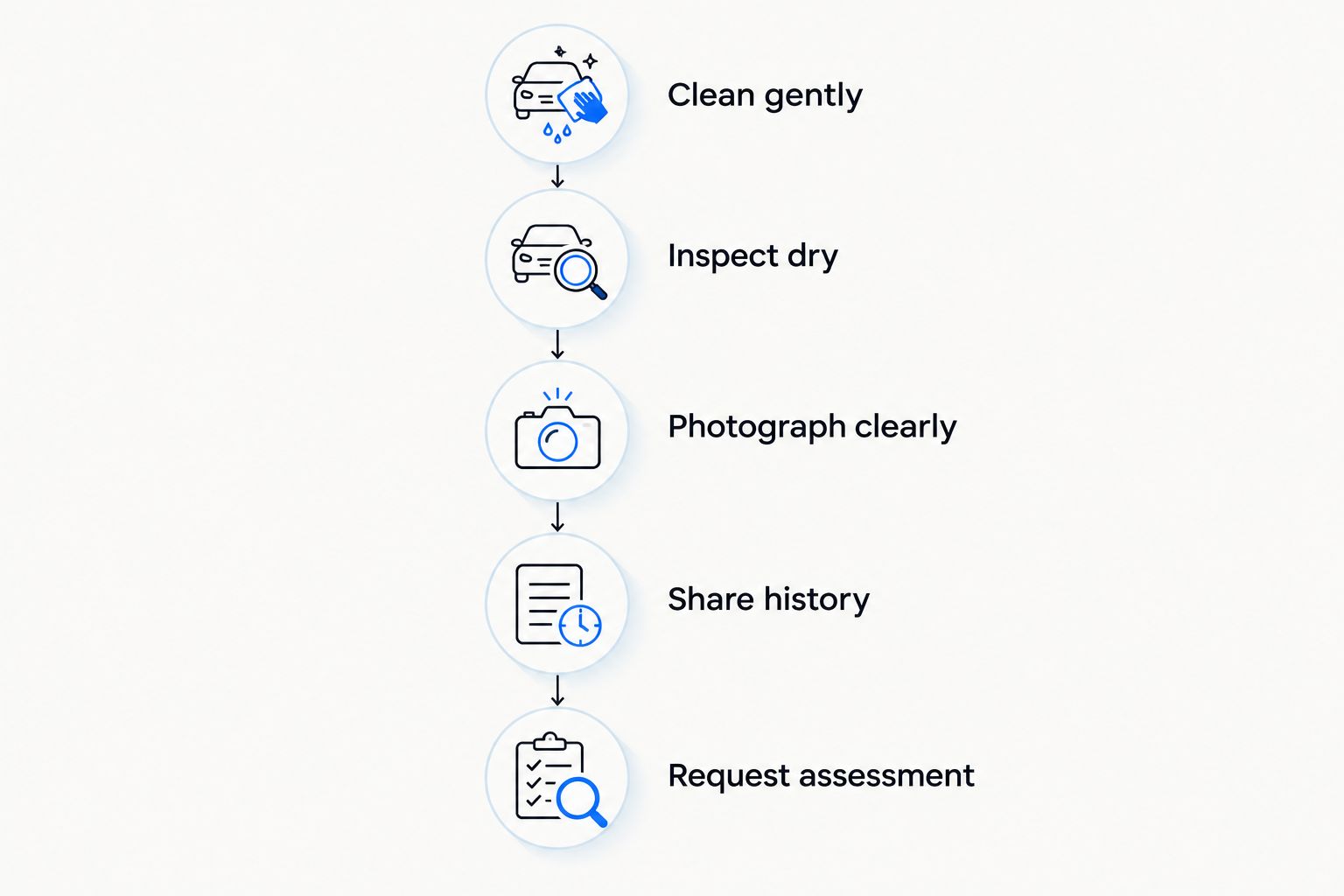
How do you check a scratch before booking?
You do not need to diagnose paint thickness at home. Your job is to provide useful information and avoid making the damage worse before an inspection.
- Clean gently. Remove loose dirt using a suitable vehicle-washing method. Do not inspect by rubbing a dusty panel with a dry cloth.
- Inspect dry. Water changes reflections and can make some defects harder to see. Look at the clean, dry area from different angles.
- Photograph clearly. Take a wider image showing the panel and a close image showing the mark. Reflected light helps reveal surface defects.
- Share history. Mention known repainting, previous polishing, and how the damage happened. Say when the history is unknown.
- Request assessment. Ask whether the goal is complete removal, reduced visibility, or referral for paint repair.
Treat the fingernail check as a warning sign, not a pass-or-fail diagnosis. A scratch that catches your nail deserves caution, but that test does not measure remaining clear coat or prove that a particular correction method is safe.
What should a scratch-correction appointment include?
Before approving work in 2026, ask for a clear description of the problem, the proposed treatment, and the expected finish. The useful promise is a defined result within safe paint limits, not the disappearance of every mark.
Ask these questions before the appointment:
- Which marks are expected to disappear, and which are expected to remain?
- Will the paint be inspected before abrasive work starts?
- Can a test area establish the likely result?
- Does the proposed work include polishing, or only washing and protection?
- How will the finished area be checked?
- What happens if inspection shows that paint repair is the better option?
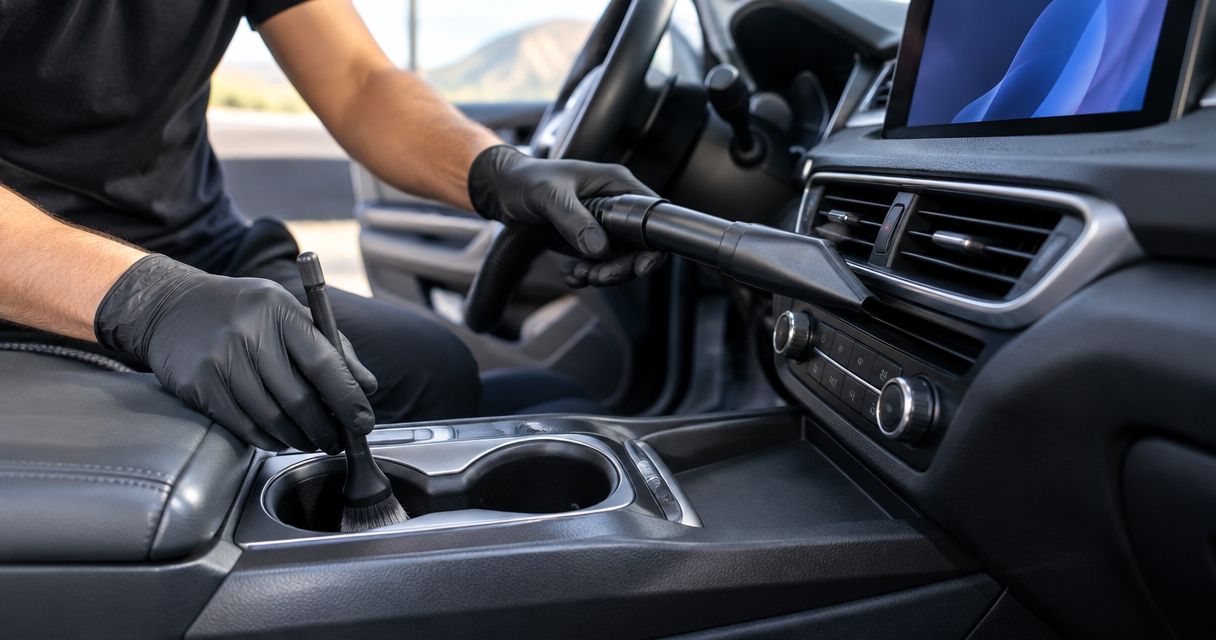
Full detailing can combine interior and exterior work, but the name alone does not promise paint correction. Interior detailing, seat shampooing, and carpet shampoo address cabin cleaning. Waxing adds surface protection; abrasive polishing changes the existing paint surface.
Use the guide to what's included in a mobile detailing package to separate cleaning tasks from the scratch treatment you actually want.
Is mobile detailing the right choice for scratch concerns?
Crispy Clean Mobile Carwash is best suited to Rio Rancho owners seeking on-location washing and detailing. The practical advantage is convenience at your location; the limitation is that a mobile detailing appointment should not be treated as a promise of body-shop repair.
If scratches are your main concern, make them the subject of the inquiry. Do not book a general clean and leave the expected paint result unstated. Ask whether an inspection and the appropriate paint treatment can be arranged before committing to that scope.
When you call, text, submit a website inquiry, or send a social message, include your vehicle, the affected panel, photos, and your location. A short description such as shallow wash marks or a gouge with missing color is more useful than asking for the car to look new.
For a 2026 appointment request in Albuquerque, Corrales, Los Lunas, Belen, or Santa Fe, confirm service to your address and the required work directly. A nearby city name does not establish coverage or suitable working conditions at your property.
Ask about your vehicle's scratches
Share the affected panel, photos, and your location before agreeing on the work.
Can scratches come back after paint correction?
A scratch that has genuinely been removed by leveling the finish does not grow back. Similar-looking marks afterward can be new damage, previously concealed defects becoming visible, or damage that was reduced rather than fully removed.
Wax and filling products can change how a defect looks without removing it. That is why a useful before-and-after comparison uses a clean, dry panel under comparable lighting, rather than one dusty image and one wet, freshly protected image.
Ask whether the improvement comes from abrasive correction, temporary concealment, or a combination. That distinction makes the result easier to evaluate and maintain.
Does ceramic coating remove scratches?
Ceramic coating is not a replacement for paint correction. It adds a protective treatment over the prepared surface; it does not rebuild missing clear coat or erase a deep groove.
If your priority is scratch appearance, settle the paint-preparation plan before discussing protection. Applying a coating over visible damage does not make that damage a completed repair. Also ask how existing protection will be handled during any abrasive work.
Is polishing safe for every painted surface?
Polishing is not appropriate for every finish. Matte and satin finishes need care that preserves their intended appearance; abrasive polishing can create an unwanted glossy patch. Conventional gloss-paint advice should not be applied to them automatically.
Previously repaired, peeling, or otherwise compromised paint also needs assessment before correction. Stop when the condition of the finish makes further abrasion the wrong treatment. A defect that remains visible is preferable to an avoidable failure of the surrounding paint.
FAQ
Does paint correction remove scratches completely?
Paint correction can completely remove shallow scratches when they can be safely leveled within the existing finish. Deep cuts and missing paint need repair rather than additional polishing.
Can you polish out a scratch that catches your fingernail?
A scratch that catches your fingernail is a warning sign, not proof that polishing is safe or unsafe. An inspection must establish the damage and the condition of the surrounding paint.
Will wax remove scratches from my car?
Wax does not remove scratches by leveling the paint. Some formulations temporarily conceal fine marks, but they do not replace missing paint.
Is paint correction included in a full detail?
A full detail does not automatically include paint correction. Ask for the exact exterior work and expected scratch result before approving the appointment.
Can a deep scratch look better without disappearing?
A deep scratch can look less noticeable after polishing while the groove remains. Agree on improvement versus complete removal before work begins.
Should I get paint correction before ceramic coating?
Address the paint's condition before applying ceramic coating if you want to improve existing scratches. Coating does not substitute for correction or paint repair.
Can I ask Crispy Clean Mobile Carwash about scratches in Rio Rancho?
You can make scratches the focus of your mobile detailing inquiry with Crispy Clean Mobile Carwash in Rio Rancho. Share photos and ask what inspection and treatment fit the damage before booking.
One last thing
For your 2026 scratch assessment, ask the technician to identify a mark that should remain untouched—not just one that should disappear. The explanation shows whether preserving the finish is part of the plan.
The best stopping point is not always a flawless panel. It is the best safe result for the paint you have.