A touchless car wash is better for avoiding wash-brush contact, but a careful hand wash is better for removing stubborn surface dirt. Touchless washing uses cleaning solution and pressurized water without scrubbing the paint; hand washing adds controlled contact to lift remaining grime. Neither method is automatically safer: cleaning products, equipment, wash technique, and drying all affect the result.
- Is touchless car wash better than hand wash? Touchless avoids scrubbing; careful hand washing handles stubborn grime better.
- Touchless washing is best for maintenance cleaning when avoiding brush or mitt contact is your priority.
- Hand washing is best for detailed cleaning, provided clean tools and careful drying are part of the process.
- Crispy Clean Mobile Carwash provides on-location car washing and auto detailing for vehicle owners in Rio Rancho.
Why this matters
Choosing a car wash in 2026 means separating convenience from cleaning quality. A wash that avoids brushes does not necessarily remove every film, and a wash advertised as hand washing does not guarantee careful handling.
For vehicle owners in Rio Rancho, Crispy Clean Mobile Carwash provides on-location mobile car washing and auto detailing. That addresses where the cleaning happens; you still need to confirm which exterior and interior tasks your appointment includes.
Choose the cleaning process that fits your car’s condition, not the most reassuring service name. A good booking conversation covers the dirt, the finish, the tools, and the expected result.
Is touchless car wash better than hand wash?
Touchless washing wins when your priority is avoiding physical scrubbing. Careful hand washing wins when your priority is removing road film and cleaning specific areas thoroughly. Both have limits, so compare the actual process before choosing.
| Wash method | Best for | Main advantage | Main limitation | What to check |
|---|---|---|---|---|
| Touchless wash | Maintenance cleaning without brush or mitt contact | Avoids scrubbing the painted surface | Can leave bonded dirt or stubborn film behind | Vehicle restrictions, wash chemistry, and drying method |
| Careful hand wash | Detailed cleaning of accessible exterior surfaces | Allows targeted attention to remaining grime | Dirty tools or poor technique can scratch paint | Pre-rinsing, clean wash media, and clean drying towels |
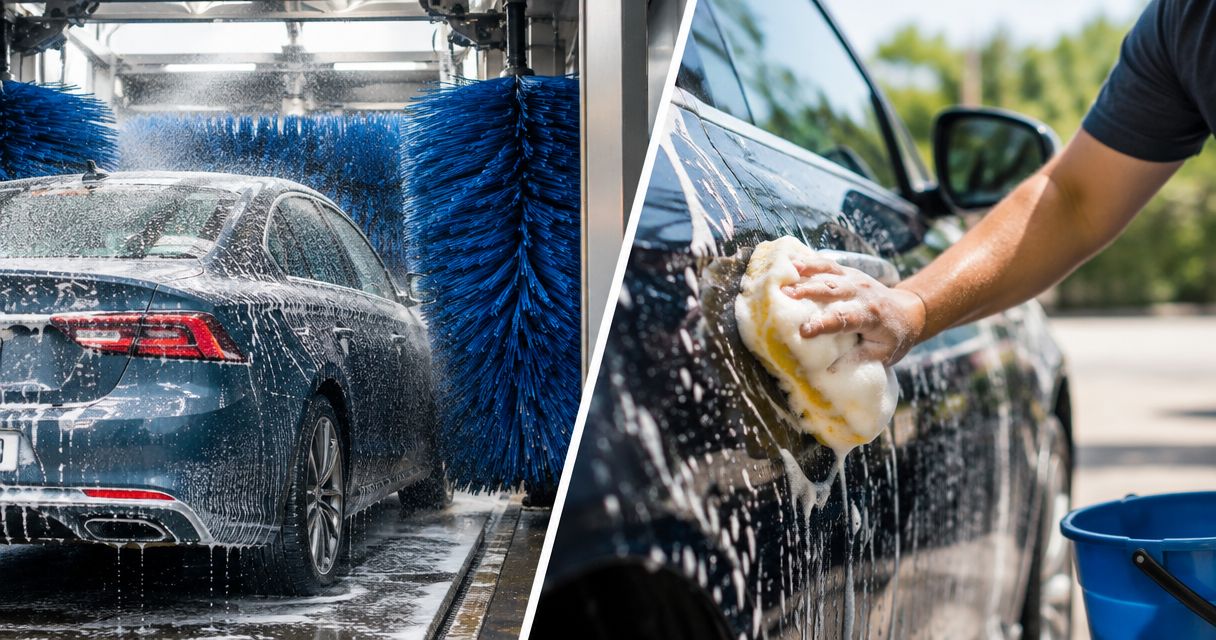
A touchless wash is not the same as an automatic wash that uses spinning brushes or cloth strips. An automatic facility can use either approach. If avoiding contact matters, ask whether anything touches the vehicle during washing or drying.
Hand washing also describes very different processes. A careful wash with clean equipment is not equivalent to wiping a dusty panel with a reused towel. The condition of the tools matters more than the word “hand.”
Touchless washing: best for avoiding scrubbing contact
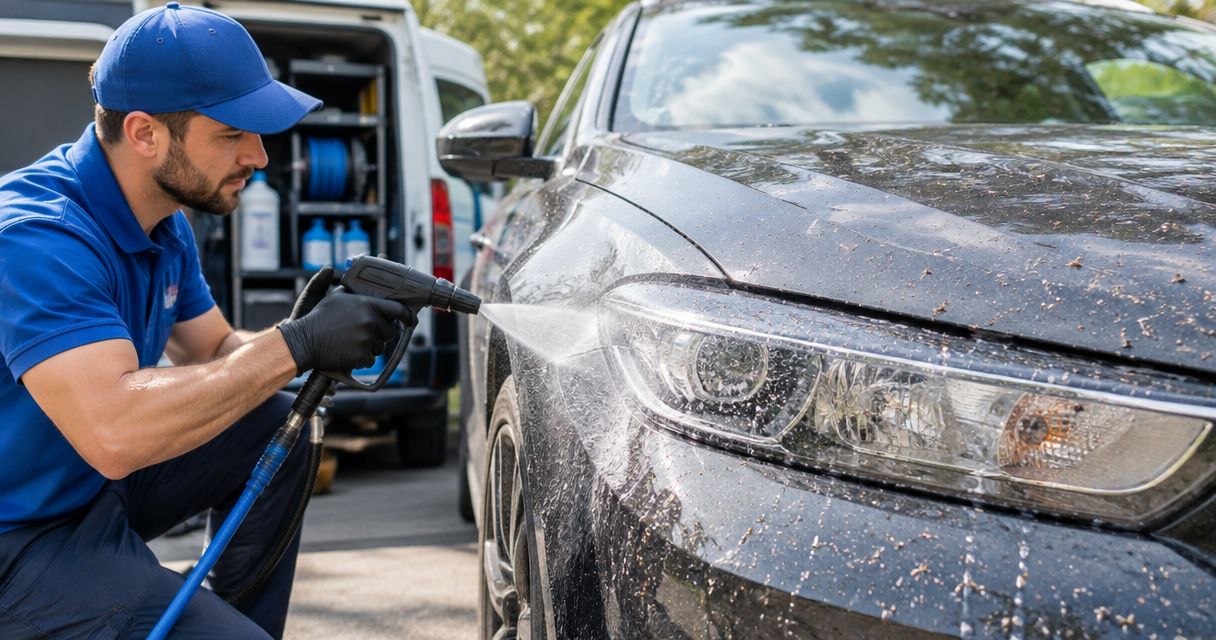
A touchless wash applies cleaning products and rinses the vehicle without brushing the paint. Its clearest advantage is straightforward: there is no wash mitt or rotating brush dragging across the surface during the wash stage.
That makes touchless washing a practical choice when the car needs routine exterior cleaning and you want to avoid scrubbing contact. It does not make the entire visit contact-free if someone towel-dries the car afterward.
The trade-off is cleaning power against contamination that does not rinse away easily. Road film, insect residue, and dirt around badges or panel edges can remain after a touchless cycle. Repeating the cycle is not a substitute for assessing what is still attached.
For your 2026 wash routine, treat touchless washing as a maintenance option rather than proof of a complete clean. Inspect the finish before deciding whether the car needs more attention.
Recommendation: choose touchless washing for maintenance cleaning when avoiding scrubbing matters most. Do not expect it to replace interior cleaning, stain treatment, or paint correction.
Hand washing: best for targeted exterior cleaning
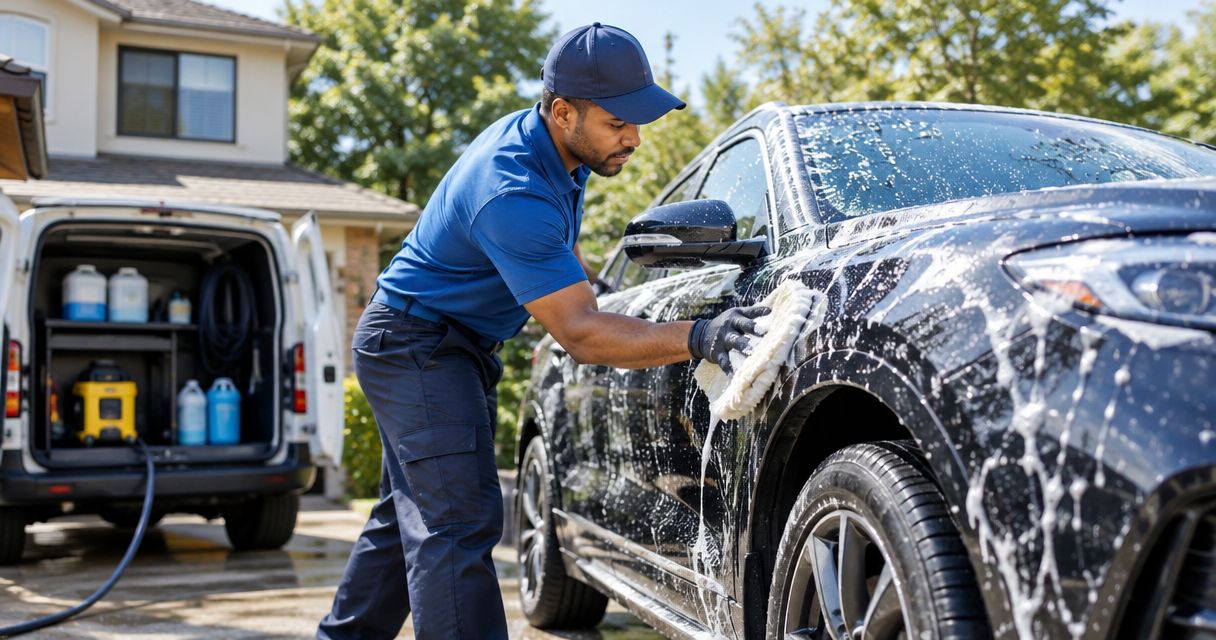
A careful hand wash lets the person cleaning your car inspect panels and work on dirt that a rinse leaves behind. It also allows attention around mirrors, trim, wheels, and other areas that need different tools or handling.
The benefit comes from controlled contact, not contact alone. A clean wash mitt, suitable car-wash product, and thorough initial rinse help reduce the chance of dragging abrasive dirt across the finish.
The main drawback is dependence on technique. Reusing a contaminated towel, using wheel-cleaning tools on paint, or pressing hard on stubborn dirt introduces avoidable risks. Hand washing is not a guarantee against swirl marks.
Drying deserves equal attention. If the wash leaves dirt behind, rubbing the surface with a drying towel can move that dirt across the paint. Ask how towels are kept clean and how remaining contamination is handled.
Recommendation: choose careful hand washing when the vehicle needs targeted cleaning, but judge the process before booking. A claim of gentle care means little without an explanation of the tools and steps.
Why the better choice varies
There is no universal winner because the cleaning task changes from vehicle to vehicle. Use these factors to decide what your car needs:
- Dirt type: Loose surface dirt and stubborn road film do not respond equally to rinsing. Inspect what remains rather than assuming the wash removed it.
- Paint condition: Existing scratches, loose paint, or damaged clear coat call for caution. Tell the provider about known damage before washing.
- Surface protection: Wax, sealant, ceramic coating, and protective film have their own care instructions. Follow the applicable product or installer guidance.
- Wash technique: Clean equipment and suitable products matter during hand washing. Touchless washing still requires appropriate equipment use and attention to vehicle restrictions.
- Drying method: Contact can happen after a touchless wash. Dirty drying towels undermine the reason you chose a no-scrub process.
- Cleaning scope: Neither an exterior touchless wash nor a basic exterior hand wash necessarily includes seats, carpets, interior glass, or cargo areas.
For a 2026 comparison, ask each provider the same questions. Otherwise, you risk comparing a basic exterior wash with a much broader detailing appointment and treating them as equivalent services.
How should you choose a wash for your car?
Start with the problem you want solved, then match the service to that problem. This approach is more useful than choosing solely by the equipment or the service label.
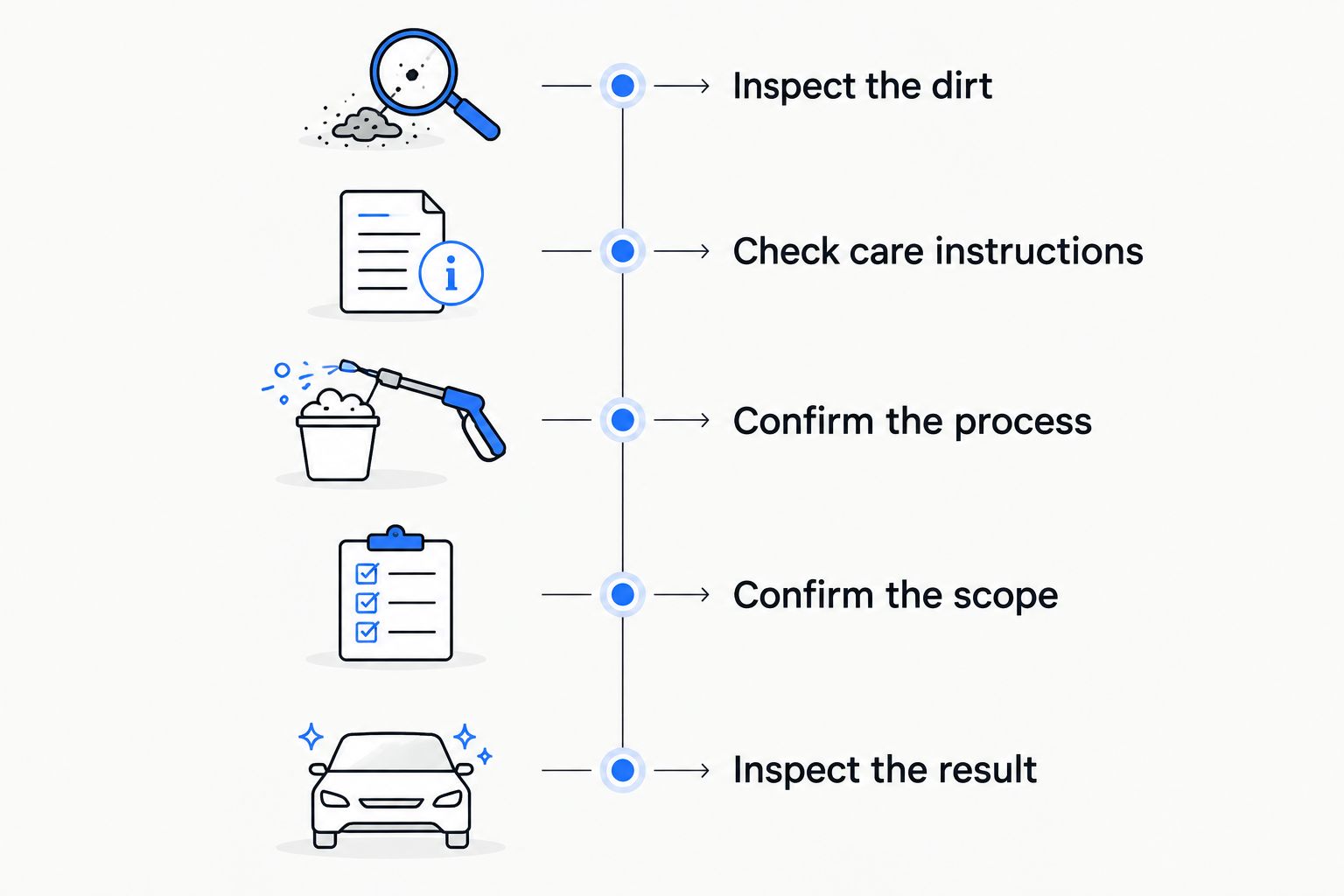
- Inspect the dirt. Look at the lower doors, rear panels, wheels, mirrors, and windshield. Identify whether you need routine washing or attention to residue that is still attached.
- Check care instructions. Review your vehicle guidance and any instructions for coatings, wraps, or protective film. Tell the provider about damaged paint or loose trim.
- Confirm the process. Ask whether brushes, mitts, or towels touch the car. For hand washing, ask how wash tools and drying towels are kept clean.
- Confirm the scope. Separate exterior cleaning from interior detailing, waxing, shampooing, and polishing. Request the tasks you actually need.
- Inspect the result. Check for remaining dirt before anyone rubs it with a towel. Point out unfinished areas and distinguish dirt from scratches or other finish damage.
You do not need to diagnose every mark yourself. Describe what you can see, share clear photos when useful, and ask the provider to distinguish removable contamination from paint damage before work begins.
Is touchless washing safer for ceramic coatings or protective film?
Touchless washing avoids scrubbing contact, but that alone does not establish compatibility with a coating or protective film. Cleaning chemistry, equipment use, film condition, and care instructions still matter.
Check the instructions for your particular protection system. If you do not know what is on the vehicle, say so instead of assuming that every wash process is suitable.
For protected vehicles in 2026, the applicable care instructions take priority over a generic “paint-safe” claim. Do not treat a wash label as approval from the coating or film manufacturer.
Will a hand wash remove scratches and swirl marks?
A hand wash removes dirt; it does not remove scratches from the clear coat. Cleaning can make existing marks easier to see because dirt is no longer hiding the finish.
Polishing is different from washing. It involves working on the finish and requires an assessment of the paint and the defect. Do not book a basic wash expecting it to deliver paint correction.
Waxing is different again: it adds a protective layer rather than replacing proper cleaning or correcting every defect. Ask what the service includes and what visible issues will remain afterward.
When does mobile detailing make more sense?
Mobile detailing makes sense when you want on-location service or need attention beyond an exterior wash. The location is the convenience; the agreed work determines the result.
Crispy Clean Mobile Carwash is best for Rio Rancho vehicle owners seeking on-location car washing and auto detailing. The practical advantage is having the service come to the vehicle; the limit is that an appointment still needs a confirmed location, scope, and suitable working arrangements.
When discussing detailing, separate these tasks:
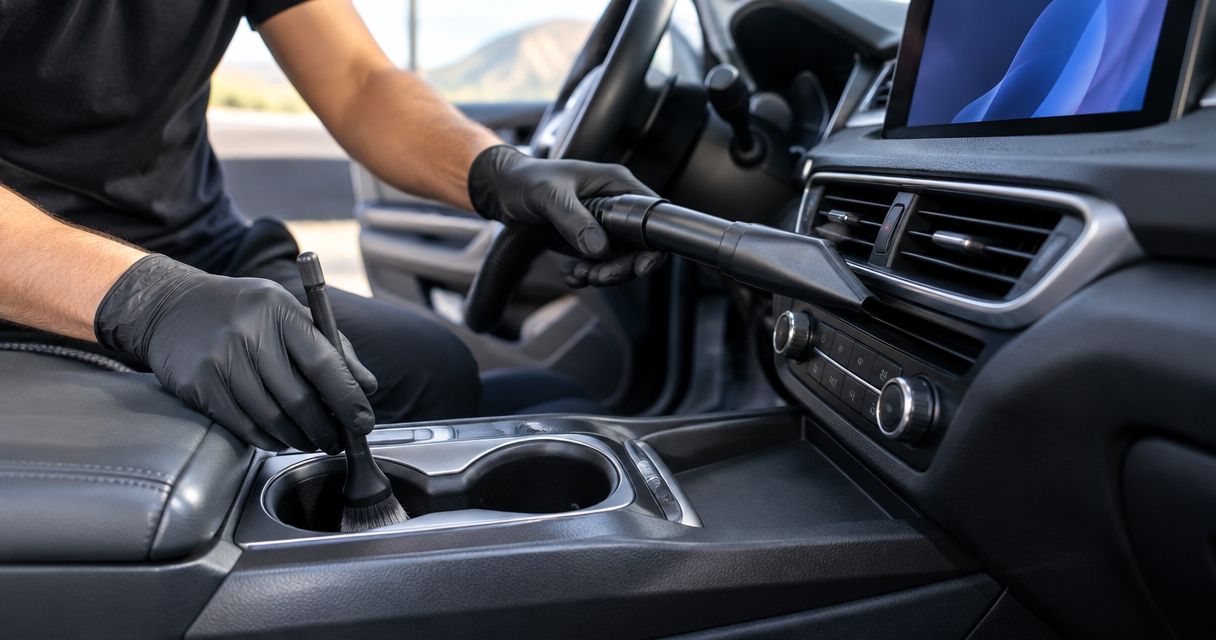
- Interior detailing: Ask which seats, surfaces, storage areas, glass, and cargo spaces are included.
- Full detailing: Confirm the exterior and interior checklist. “Full” is not a standardized promise that every possible task is included.
- Shampooing and carpet shampoo: Ask which materials need treatment and what drying instructions apply afterward.
- Waxing: Ask whether preparation and protective-product application are included.
- Polishing: Ask whether the goal is improving the finish and whether a separate paint assessment is needed.
For 2026 booking inquiries, give Crispy Clean Mobile Carwash your vehicle type, location, and main concerns. If you are in Albuquerque, Corrales, Los Lunas, Belen, or Santa Fe, confirm service at your exact location rather than assuming coverage. Use the website to check the current contact options; if using call/text, a form, or social messaging, include those same details.
Discuss your car cleaning needs
Share your vehicle, location, and cleaning concerns before choosing a wash or detailing service.
FAQ
Is a touchless car wash better than a hand wash for preventing scratches?
A touchless car wash avoids brush and mitt contact during washing, but it does not guarantee a scratch-free visit. Drying towels, existing contamination, and later handling still matter.
Does a touchless car wash get a car completely clean?
A touchless car wash can leave stubborn road film and attached residue behind. Inspect the vehicle afterward and arrange suitable targeted cleaning rather than rubbing remaining dirt with a dry towel.
Is hand washing always safe for car paint?
Hand washing is not automatically safe for paint. Dirty wash tools, excessive pressure, and contaminated drying towels can create scratches or swirl marks.
Should I use a touchless wash on a ceramic-coated car?
Use a touchless wash only when the process fits the care instructions for your ceramic coating. Avoid assuming that no brush contact means every cleaning product or equipment setting is appropriate.
Does an exterior hand wash include cleaning the seats and carpets?
An exterior hand wash does not necessarily include seats or carpets. Confirm interior detailing and shampooing separately, including the surfaces treated and any drying instructions.
Can mobile detailing remove scratches that a car wash leaves behind?
A mobile detailing appointment does not automatically include scratch removal. Washing, polishing, and paint correction are different tasks, and the provider needs to assess the finish before promising an improvement.
What should I ask before booking a mobile car wash in Rio Rancho?
Ask about the cleaning process, included tasks, location requirements, drying method, and current booking terms. Share your vehicle type, exact location, and any paint damage or interior concerns before confirming the appointment.
One last thing
The drying stage can undo the contact-avoidance benefit of a touchless wash. If the car still has a film on it, do not assume a towel is the next step. Ask for the remaining contamination to be assessed and cleaned appropriately before anyone rubs the finish.