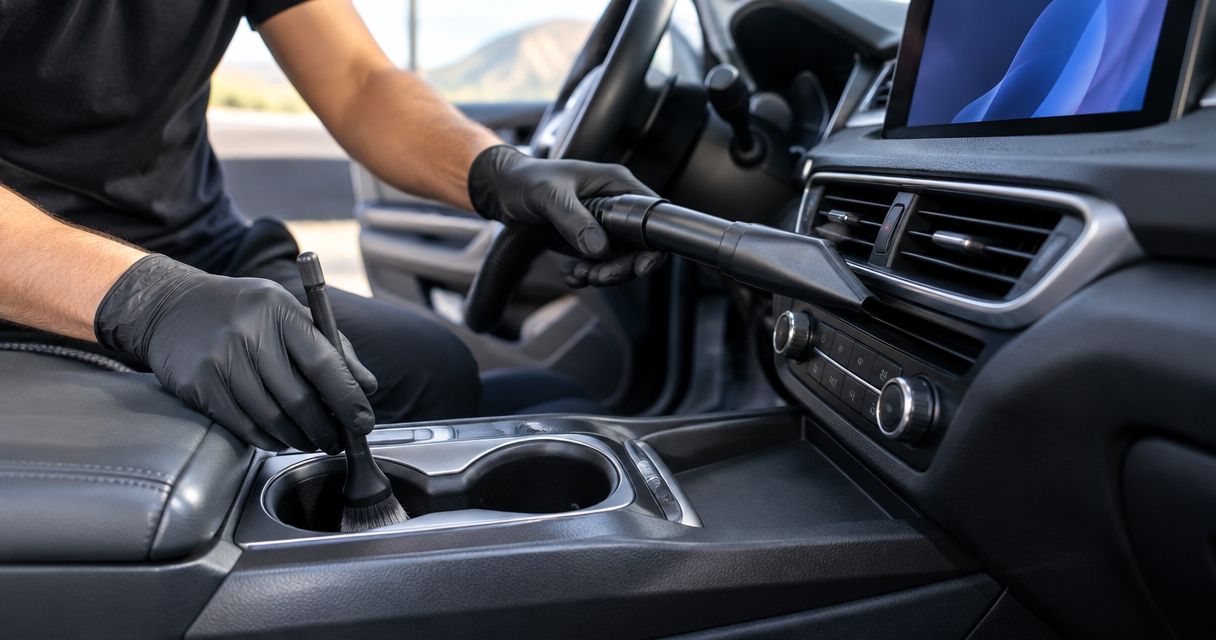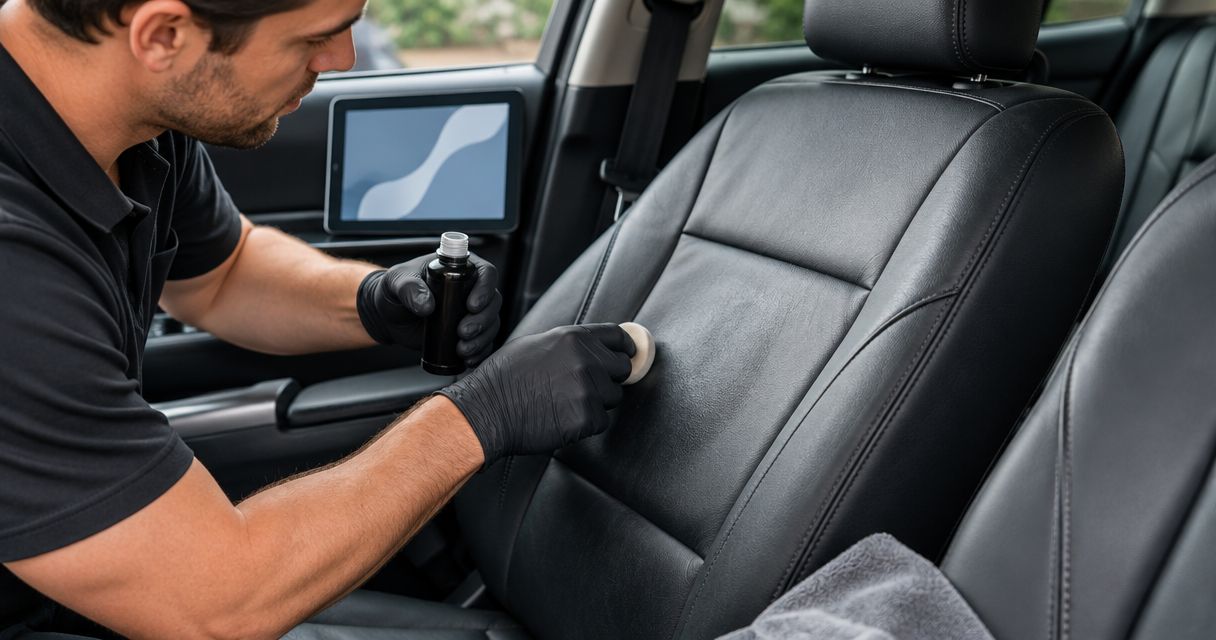
Mobile detailing brings interior cleaning to your location and can remove grime or transferred material that looks like a leather scratch, but it does not rebuild damaged leather or replace missing color. A true scratch, gouge, tear, or peeling finish needs a separate repair assessment, even when cleaning makes the surrounding seat look better.
- Car interior detailing leather scratches: cleaning removes surface contamination, not missing leather or damaged finish.
- Crispy Clean Mobile Carwash provides on-location washing and auto detailing in Rio Rancho; confirm leather-repair scope separately.
- Choose interior detailing for dirty seats; seek a leather-repair assessment for exposed material, tears, or peeling.
- Send clear seat photos before booking and ask whether the proposed work is cleaning, conditioning, or repair.
Why this matters
A cleaner scratch is not necessarily a repaired scratch. Dirt can hide damage, while marks sitting on top of a seat can resemble damage. Booking the right work starts with separating those problems.
Crispy Clean Mobile Carwash provides on-location mobile car washing and auto detailing for vehicle owners in Rio Rancho, New Mexico. For a 2026 appointment, describe the seat damage separately from the general cleaning request so the expected result is clear before work begins.
Can mobile detailing repair scratches on leather seats?
Mobile detailing alone does not repair scratches that remove the seat's finish or damage the material beneath it. A provider offering leather restoration separately can assess repair options, but the word detailing does not establish that capability.
Many automotive leather seating surfaces have a protective finish. A visible line can involve transferred material, damage to that finish, or damage deeper in the seat covering. Those conditions need different treatment.
| What you see | Appropriate starting point | Best for | Main limitation |
|---|---|---|---|
| Dirt or transferred material on an otherwise intact surface | Material-appropriate interior cleaning | Removing surface contamination | Cleaning does not replace missing color |
| A light scuff without an obvious opening | Cleaning followed by inspection | Finding out what remains after dirt is removed | The finish can still be damaged underneath |
| A pale line with visible color loss | Leather-repair assessment | Evaluating localized finish restoration | Matching color and texture requires specialist work |
| A cut, hole, or separated seam | Upholstery assessment | Evaluating structural repair or panel replacement | Ordinary detailing cannot close damaged material |
| Flaking or peeling across an area | Material identification and upholstery assessment | Establishing whether repair or replacement is appropriate | Applying conditioner does not rebuild a failing surface |
Ask the provider to identify the condition before promising an outcome. A photo helps with an initial discussion, but inspection of the actual seat is needed to distinguish surface contamination from damaged material.
Surface marks: when interior detailing is the right starting point
Interior detailing is a sensible starting point when the seat is dirty and the mark appears to sit on its surface. Cleaning removes contamination so you can see the actual condition underneath. It should use products and methods appropriate for the seating material and its manufacturer's care instructions.
Best for: dirty seats with intact surfaces and marks that have not yet been identified. The benefit is a cleaner interior and a clearer view of the problem. The limitation is straightforward: cleaning cannot restore material that has been scraped away.
Do not judge success only while the seat is wet or freshly dressed. Moisture and surface products can change how a mark catches the light. Inspect the dry seat under comparable lighting before deciding whether the mark was removed or merely became less noticeable.
For your 2026 service request, ask the detailer to explain what counts as a cleaning result and what would require a repair referral. That distinction matters more than a package name.
Finish scratches: when leather restoration needs a separate assessment
A scratch through the colored finish is different from dirt. If pigment or coating is missing, washing cannot put it back. A leather-repair specialist can assess whether localized preparation, color matching, and refinishing suit the damage and material.
Best for: localized finish damage on a seat covering suitable for restoration. Repair targets the damaged area rather than cleaning the entire interior. Its limitation is that the finished appearance depends on the existing material, damage, texture, and color match; do not assume an invisible result.
Ask whether the work treats only the visible line or also addresses any loose or failing finish around it. Request an explanation of the repair boundary and aftercare before approving the work.
Conditioning is not the same service. A compatible conditioner, where recommended by the vehicle manufacturer, is a care product—not replacement pigment, filler, or structural reinforcement.
Cuts, tears, and peeling: when upholstery work comes first
A cut through the seat covering, an open seam, or missing material needs an upholstery assessment. Detailing can clean nearby surfaces, but it cannot reconnect torn material. Damage around seat-mounted airbags also needs appropriate professional attention; do not glue or stitch that area yourself.
Best for: an upholstery specialist when the covering is split, loose, or failing. The advantage is an assessment of the actual damaged component. The limitation is that replacement or more involved repair can be necessary rather than a surface touch-up.
Peeling deserves particular caution. Leather, coated leather, vinyl, and other synthetic upholstery do not all accept the same repair methods. Identify the material before purchasing a kit or authorizing treatment.
If the surface continues to flake when handled normally, stop experimenting with cleaners. Send a photograph and describe the peeling before booking an ordinary interior detail.
Why leather-scratch results vary
The visible length of a mark does not tell you everything about the work it needs. These factors determine whether cleaning, finish restoration, or upholstery repair is the appropriate next step:
- Seat material: Genuine leather, coated leather, and synthetic upholstery need material-specific care and repair methods.
- Damage depth: Surface contamination differs from missing finish, cut fibers, or an opening through the covering.
- Existing finish condition: A localized scratch and a broader peeling surface present different repair problems.
- Damage location: Seams, perforations, frequently flexed bolsters, and airbag areas affect how a professional approaches the work.
- Previous treatments: Earlier dyes, coatings, adhesives, and household products need to be disclosed before further treatment.
- Your expected result: Removing dirt, reducing a mark's visibility, and restoring damaged upholstery are different objectives.
For a 2026 quote, ask the provider to name the objective in writing. A description such as cleaning the seat is clearer than an undefined promise to make it look new.
How should I check a leather-seat scratch before booking?
Inspect without scraping, soaking, or stretching the damaged area. Your goal is to document what you see, not to test how much abuse the surface can take.
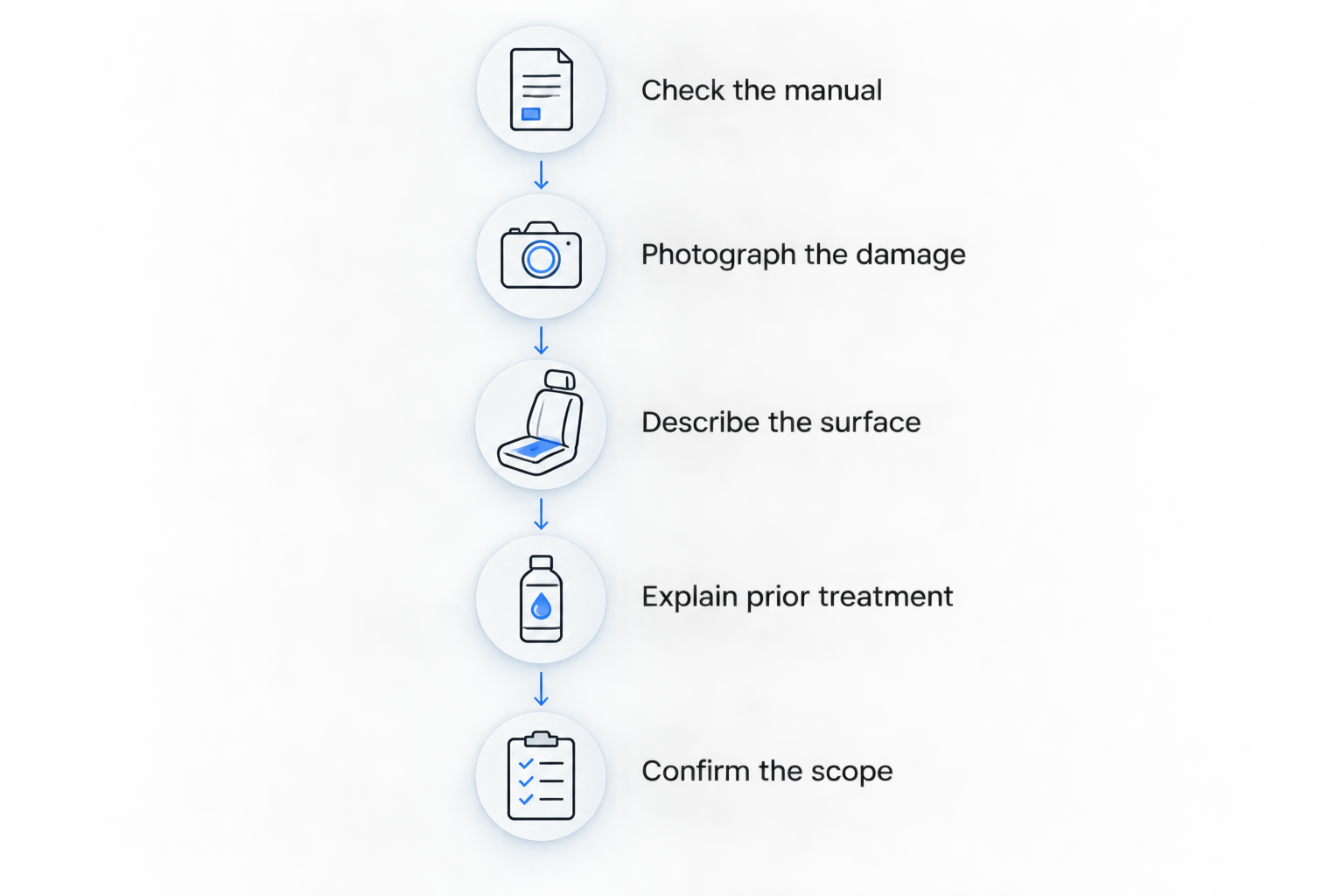
- Check the manual. Find the vehicle manufacturer's upholstery-care instructions and identify the seat material where possible.
- Photograph the damage. Take an overview of the seat and a close view of the mark in clear, indirect light.
- Describe the surface. Report visible color loss, raised edges, loose flakes, an open cut, or damaged stitching without picking at it.
- Explain prior treatment. Tell the provider about cleaners, conditioners, repair kits, dyes, or adhesives already applied.
- Confirm the scope. Ask whether the proposed service covers cleaning only or includes a separate leather-repair assessment.
Keep the photos unfiltered. Strong reflections, wet surfaces, and image filters make it harder to compare the condition before and after work.
Avoid digging a fingernail into the line to judge its depth. That is not necessary for a booking request, especially if the finish is already lifting.
Will leather conditioner remove scratches?
Leather conditioner does not replace missing finish or close a cut. Use it only when it is suitable for the seat material and consistent with the manufacturer's instructions.
A change in sheen can make a mark look different without repairing it. Ask what physical damage remains, rather than using shine or softness as proof of restoration.
Do not apply cooking oil, shoe polish, or household furniture products to disguise the mark before an assessment. These are not substitutes for vehicle-specific care instructions or a material-matched repair process.
Is a full detail better than an interior detail for scratched seats?
An interior detail is the relevant cleaning service for seat concerns; a full detail does not automatically add leather repair. A full detail generally combines interior and exterior work, but inclusions vary by provider.
Carpet shampooing treats textile flooring. Waxing and paint polishing address exterior surfaces, not leather-seat scratches. Ask what happens to the seats specifically instead of assuming that a larger package includes restoration.
Before booking, review what's included in a mobile detailing package. Compare the listed work with your actual concern: dirt removal, upholstery damage, or both.
What should I ask before a Rio Rancho appointment?
Crispy Clean Mobile Carwash is best for Rio Rancho drivers seeking on-location car washing and auto detailing. Leather-scratch repair needs separate confirmation; the stated detailing service does not establish a leather-restoration offering.
For your 2026 inquiry, send the vehicle's make, model, seat photos, and a short explanation of what happened. State whether your priority is a clean interior, assessment of the scratch, or both.
Ask these questions before authorizing work:
- Does the proposed service include cleaning the affected seat material?
- Is the mark being treated as contamination or actual damage?
- Is leather restoration offered separately, or should an upholstery specialist assess it?
- What result is included, and what damage will remain untreated?
- Are there material-specific aftercare instructions?
Use the provider's published call/text, website-form, or social-message options, and include the photos with your request. If the vehicle is in Albuquerque or Corrales rather than Rio Rancho, confirm the location before arranging the visit. The same check applies to requests in Los Lunas, Belen, or Santa Fe; do not assume a coverage boundary.
Ask About Interior Detailing
Describe the seat damage and confirm whether your request needs cleaning or a separate repair assessment.
FAQ
Can mobile detailing make leather scratches disappear?
Mobile detailing can remove dirt or transferred material that resembles a scratch, but it cannot replace missing leather or finish. True damage needs a separate repair assessment.
Can a detailer fix scratches from a dog's claws?
Claw marks need inspection because they can range from surface scuffs to cuts through the finish or covering. Cleaning addresses contamination; damaged material requires assessment for repair.
Will leather conditioner fix a scratched car seat?
Leather conditioner does not rebuild missing finish or close a cut. Follow the vehicle manufacturer's care instructions and use only products appropriate for the upholstery.
Should I book interior detailing or leather repair?
Book interior detailing for cleaning and seek a leather-repair assessment for missing color, cuts, tears, or peeling. If you cannot identify the mark, send photographs before choosing the service.
Can a mobile detailer repair peeling synthetic leather?
An ordinary interior detail does not repair peeling synthetic upholstery. Identify the material and have an upholstery specialist assess repair or replacement before applying more products.
Does Crispy Clean Mobile Carwash offer leather-scratch repair?
Crispy Clean Mobile Carwash provides on-location mobile car washing and auto detailing in Rio Rancho. Confirm leather-restoration work separately before booking; detailing alone does not establish that service.
What should I send with a leather-seat detailing request?
Send clear overview and close-up photos, the vehicle details, and a description of the damage. Include any products or repair treatments already used and your appointment location.
One last thing
Check the seat before applying anything to hide the scratch. A shiny surface can look improved while the underlying finish remains damaged. For a 2026 appointment, photograph the untreated area first and ask to inspect the dry seat afterward under similar lighting.
Agree on the task before the visit: clean the surface, assess the damage, or perform an explicitly approved repair. Those are separate outcomes, and the booking should say which one you expect.