Wax or seal your car’s paint according to the protection product’s maintenance instructions, then adjust for outdoor parking, washing, and paint condition. There is no single interval that fits every wax and sealant in 2026. Cleaning and preparation still matter: applying protection over dirt or bonded contamination does not fix the underlying problem.
- How often should you wax your car? Follow the product’s instructions, not a universal calendar rule.
- For Rio Rancho drivers, outdoor parking and washing habits belong in the paint-protection maintenance plan.
- Car wax and paint sealant protect finishes; neither replaces cleaning or repairs damaged clear coat.
- Check water behavior after washing, but do not treat water beading as proof of remaining protection.
Why this matters
On-location detailing saves you a trip, but the appointment needs to match what your paint actually needs. A wash removes dirt; a protection service adds wax or sealant after suitable preparation. Those are different jobs.
Crispy Clean Mobile Carwash is a fit for Rio Rancho vehicle owners seeking on-location car washing and auto detailing. Start with Crispy Clean Mobile Carwash and ask which paint-protection work fits your vehicle rather than assuming an exterior wash includes it.
For your 2026 maintenance plan, record the protection product and application date. That information is more useful than guessing from how shiny the car looks.
How often should you wax or seal your car’s paint?
Use the actual wax or sealant’s instructions as your starting schedule, then inspect clean paint between applications. A product’s stated durability is not a guarantee that every vehicle will perform the same way. Storage, preparation, washing, and exposure all affect the maintenance decision.
Use this sequence to decide what comes next:
- Identify the protection. Find the product name from your receipt, application record, or detailer. Establish whether the paint has wax, sealant, or an existing coating with its own care requirements.
- Read the maintenance instructions. Look for application conditions, reapplication guidance, compatible cleaners, and any curing requirements. Do not substitute advice for another product.
- Wash before evaluating. Dirt and residue can change water behavior and hide the finish. Inspect after a suitable wash and rinse, not while the car is dusty.
- Check for a cleaning problem. Roughness, stubborn deposits, or persistent spots call for assessment before another layer of protection.
- Reapply when the instructions and condition support it. If the protection history is unknown, ask for an assessment rather than adding an unidentified product over the existing finish.
A calendar reminder helps you remember the inspection. It does not prove that another application is needed that day.
Car wax: best for a wax-based maintenance routine
Car wax is a paint-protection option, not a substitute for washing or repairing the finish. Choose it when you want to maintain the vehicle with a specific wax product and can follow that product’s preparation and reapplication instructions.
The practical advantage is a defined maintenance routine: clean the paint, apply as directed, and reassess before the next application. The limitation is that the word wax alone tells you little about durability. Formulations differ, and some products combine wax with synthetic ingredients.
Best for: owners who know which wax is on the paint and want to continue a compatible routine. Do not buy or book by the word wax alone; ask what product will be used and how it should be maintained.
Paint sealant: best for a documented synthetic-protection routine
Paint sealant generally refers to synthetic paint protection, but the label does not establish a universal service life. Follow the chosen product’s instructions rather than treating every sealant as interchangeable.
A sealant gives you another protection option with its own application and maintenance requirements. The limitation is preparation: applying sealant to contaminated paint does not remove those contaminants. Compatibility also matters when another protection product is already present.
Best for: owners who want a sealant-based routine and clear aftercare instructions. Ask for the product name, surface-preparation steps, and reapplication guidance before choosing the service.
| Option | Best for | Practical benefit | Limitation | What to confirm |
|---|---|---|---|---|
| Car wax | Maintaining a known wax routine | Adds protection when applied to properly prepared paint | Durability varies by formulation and use | Product identity and maintenance instructions |
| Paint sealant | Maintaining a documented synthetic-protection routine | Provides a separate paint-protection option | Requires suitable preparation and compatibility | Preparation, curing, and aftercare requirements |
Neither option makes your vehicle maintenance-free. Choose the product and care routine together, not just the name on the service menu.
Why waxing and sealing intervals vary
Your 2026 paint-care schedule should account for how the vehicle lives between appointments. A garage-kept vehicle and a vehicle parked outside do not have identical exposure histories, even when both receive the same product.
- Product formulation: A spray wax, paste wax, and synthetic sealant do not share one universal maintenance instruction. Use guidance for the actual product.
- Outdoor exposure: Sunlight, weather, and airborne contamination belong in the assessment. Tell the detailer whether your vehicle stays outside at home or work.
- Washing method: Cleaning chemicals and physical contact affect the finish and its protection. Follow the protection manufacturer’s washing guidance.
- Surface preparation: Residue or bonded contamination can interfere with application. Adding more product is not a replacement for cleaning the surface correctly.
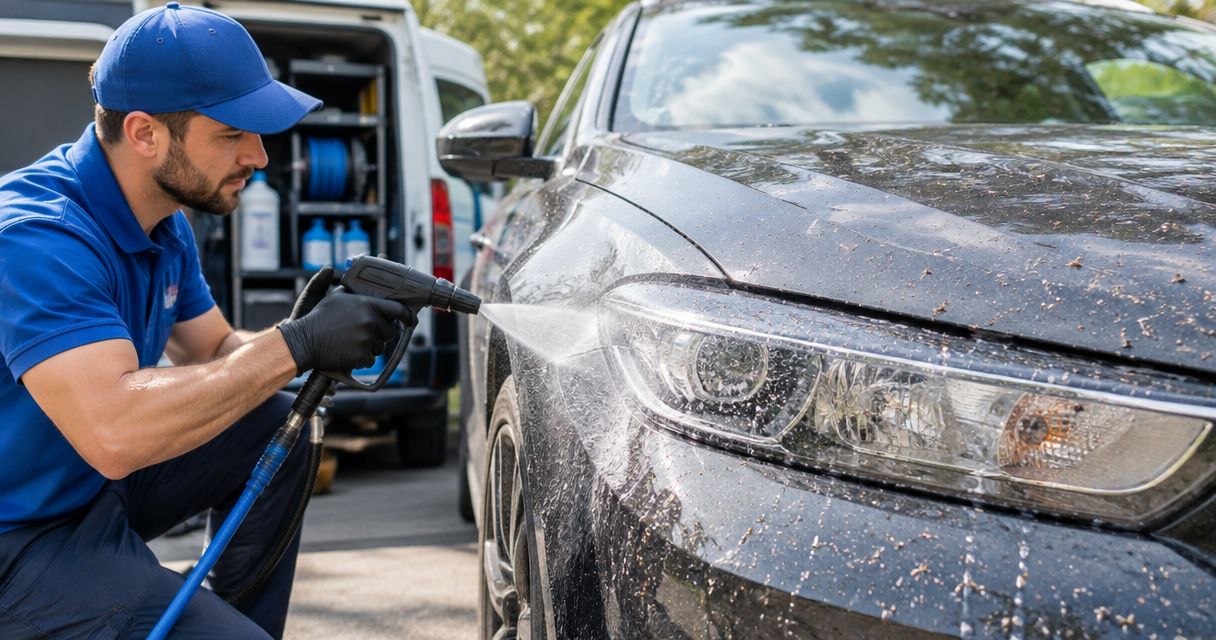
- Vehicle use: Road grime, insects, bird droppings, and tree deposits create cleaning needs between planned protection appointments. Remove contamination promptly using a paint-safe method.
- Existing protection: Wax, sealant, and coatings have different compatibility requirements. Identify what is already present before applying something else.
For a Rio Rancho commuter who parks outside in Albuquerque, parking conditions are useful information to share. A city name alone does not determine the right interval.
How do I know whether my car needs more wax?
Inspect freshly washed paint, compare it with the product’s instructions, and look for changes rather than relying on shine alone. Gloss can remain when the protection needs attention, and visible dirt can make a protected surface look neglected.
Water behavior
Beading and sheeting describe how water behaves on the surface. They are observations, not a measurement of how much protection remains. Product chemistry, contamination, and washing residue can all affect what you see.
If water behavior changes, wash and rinse appropriately before deciding the product has failed. Do not keep adding wax just to chase tighter beads.
Surface contamination
If clean paint still feels rough, ask whether bonded contamination needs removal. Avoid aggressive rubbing or improvised household cleaners. The next step is to identify the deposit and select a suitable method.
Wax does not make grit disappear. Covering contamination also makes it harder to tell whether preparation was adequate.
Visible paint damage
Scratches, oxidation, and peeling clear coat are not the same problem as worn protection. Wax or sealant does not repair failing clear coat. Paint damage needs its own assessment before you choose an appearance or protection service.
Treat a change in the finish as a reason to inspect, not an automatic instruction to add another coat.
What should I do before waxing or sealing?
Follow the product’s directions and work on a suitable surface in suitable conditions. Do not apply protection to dusty paint or use a hot panel simply because the appointment is convenient.
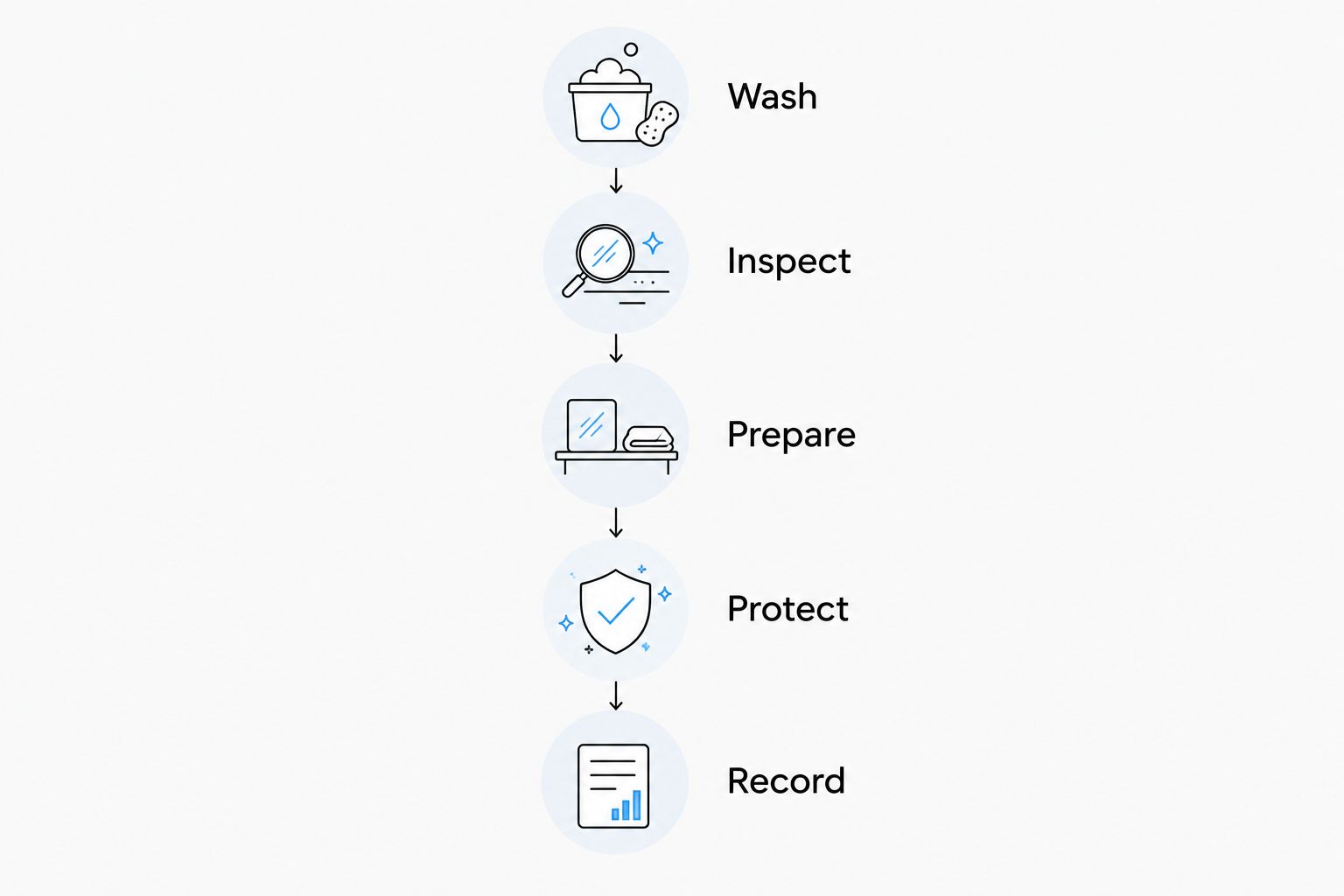
A useful preparation sequence is:
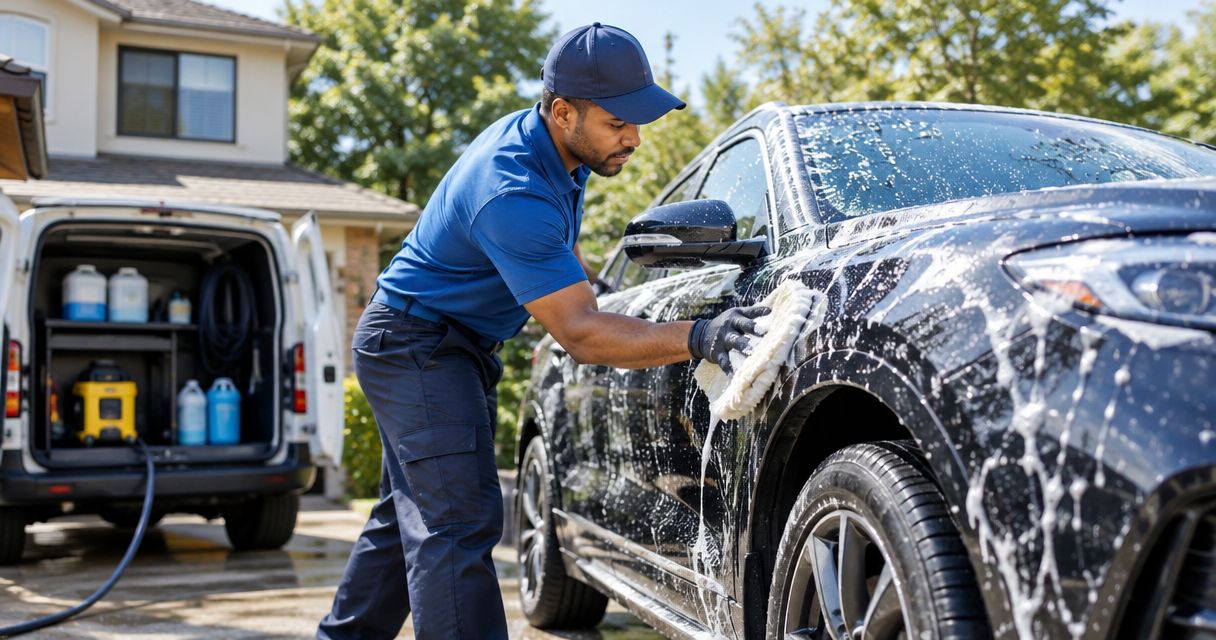
- Wash: Remove loose dirt with products and methods suitable for the finish.
- Inspect: Look for remaining deposits, roughness, and visible damage after rinsing and drying as directed.
- Prepare: Address contamination or residue using an appropriate method. Mechanical decontamination and polishing are separate decisions, not automatic additions.
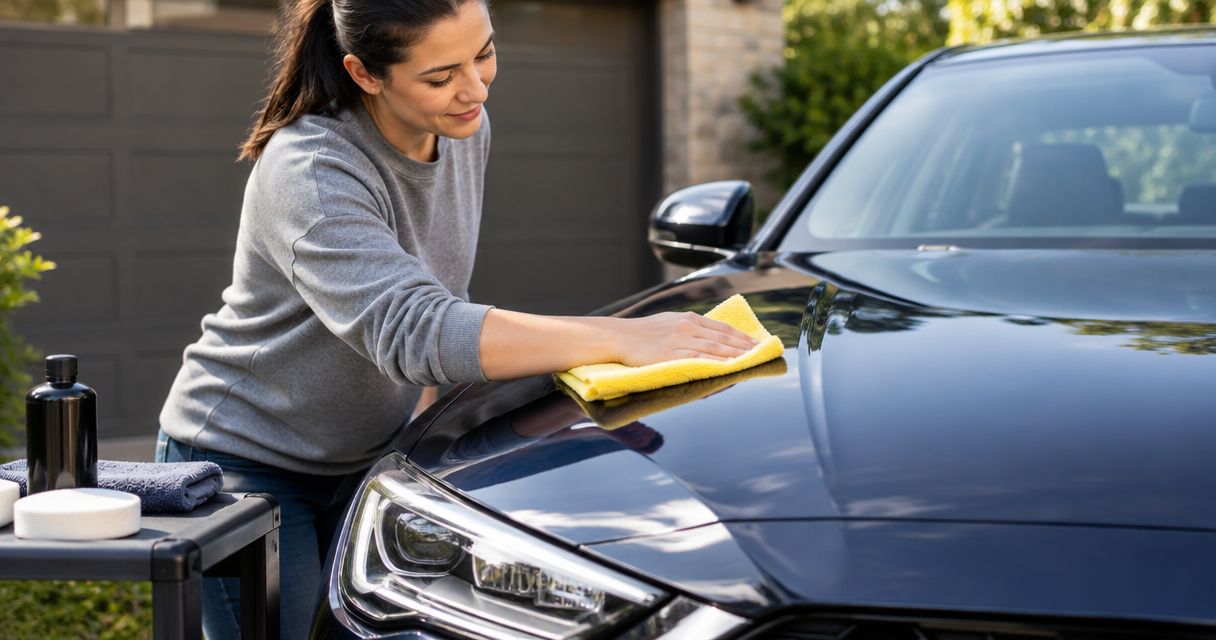
- Protect: Apply the selected product according to its directions, including any removal or curing steps.
- Record: Save the product name, date, and aftercare instructions for your next maintenance decision.
For a mobile appointment, discuss the parking location and working conditions beforehand. Shade, panel temperature, access, and the product’s requirements affect whether the location suits the planned work. Do not assume every parking space works for every treatment.
Does a full detail include waxing or sealing?
A full detail does not establish what paint protection is included; the agreed service scope does. Ask for the exterior work to be described separately from the interior work.
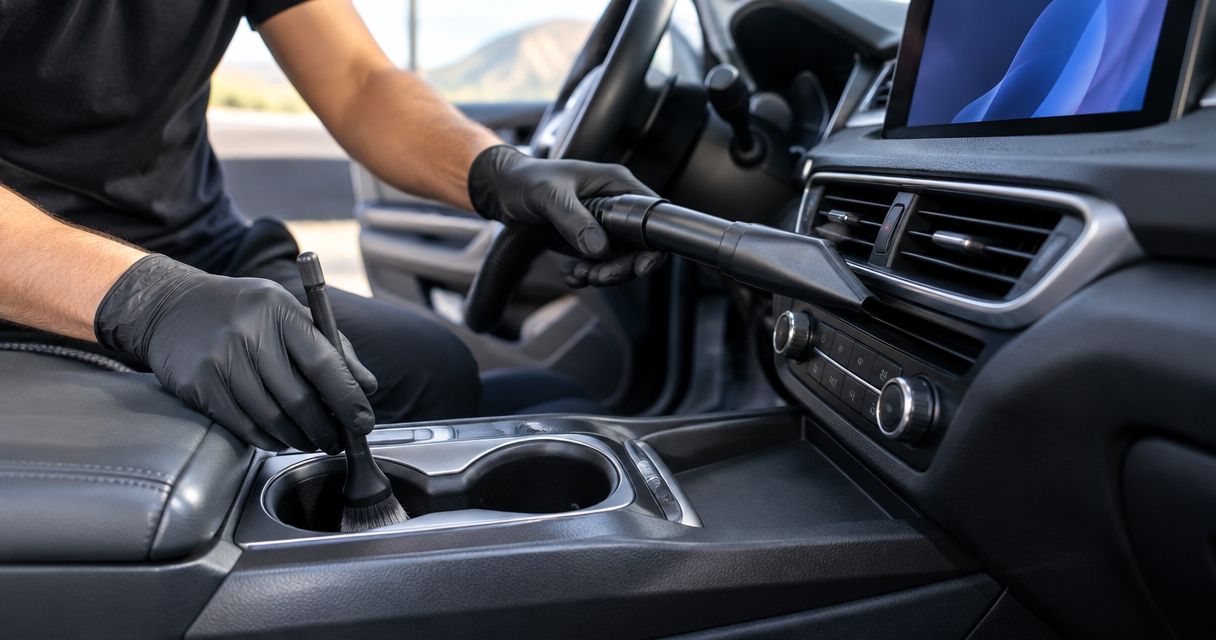
Interior detailing, upholstery shampooing, and carpet shampoo address the cabin. They do not protect exterior paint. Polishing addresses the finish through a different process from adding wax or sealant, and it should not be treated as another name for protection.
Before your 2026 appointment, confirm:
- Whether the service includes a wash only or paint protection afterward.
- Whether preparation beyond washing is needed.
- Which wax or sealant will be applied.
- Whether polishing is proposed, and what issue it addresses.
- What you should do after the application.
The guide to what’s included in a mobile detailing package helps separate the service name from the work you need to confirm.
What should I ask before booking mobile paint care?
Tell the detailer where the vehicle will be parked, what protection is already on it, and what you want addressed. Photos of visible concerns help start that conversation, but they do not replace an inspection.
For Crispy Clean Mobile Carwash auto detailing, ask whether the requested paint-care work is offered and what preparation it requires. If your location is Corrales, Los Lunas, Belen, or Santa Fe, confirm service to your address before planning around a mobile visit.
Use the call/text details, website inquiry option, or social messaging channel listed by the business. Include your vehicle, location, parking setup, and whether you want exterior protection, interior cleaning, or both; do not assume those are one service.
Ask about your vehicle’s paint care
Share your vehicle, location, and current paint protection before choosing the work.
FAQ
How often should you wax your car in 2026?
Follow the specific wax product’s maintenance instructions and inspect clean paint between applications. Parking, washing, contamination, and preparation affect when another application is appropriate.
Should I wax my car after every wash?
Do not assume every wash requires another wax application. Follow the product’s instructions and confirm whether a maintenance spray is compatible with the protection already present.
Is paint sealant better than wax for my daily driver?
Paint sealant is not automatically better than wax for every daily driver. Compare the actual products, preparation requirements, and maintenance instructions rather than choosing by category name alone.
Does water beading mean my wax is still working?
Water beading alone does not prove how much protection remains. Check clean paint and the product’s maintenance guidance because contamination and residue can change water behavior.
Can I put wax over paint sealant?
Apply wax over sealant only when the products’ instructions allow that combination. Adding another layer without checking compatibility does not establish better protection.
Do I need to polish before every wax application?
You do not need to polish automatically before every wax application. Polishing addresses finish defects; decide whether it is needed after inspecting the paint.
Can mobile detailing help me plan paint protection in Rio Rancho?
Mobile detailing provides an on-location way to discuss paint condition and maintenance. Crispy Clean Mobile Carwash provides mobile car washing and auto detailing in Rio Rancho; confirm the requested protection work before booking.
One last thing
The most useful item to keep after a protection appointment is the product name. Without it, you cannot reliably match the next wash, maintenance product, or reapplication decision to the instructions.
For the rest of 2026, keep a simple note with the application date, product, and aftercare guidance. At the next appointment, bring that record instead of asking someone to identify an invisible layer by appearance alone.