Yes, mobile detailing can remove hard water stains that sit on top of your paint, and polishing can improve some marks etched into the clear coat. The limit is paint condition: deep etching is not always safe to remove completely. An on-location inspection and a small test area should determine the treatment before you approve work across the vehicle.
- Can mobile detailing fix hard water stains? Yes for removable deposits; etched paint needs assessment before polishing.
- A regular wash, mineral treatment, and paint correction address different problems. Ask which treatment your appointment includes.
- Crispy Clean Mobile Carwash provides on-location mobile detailing for Rio Rancho vehicle owners.
- Choose paint preservation over a promise to erase every mark.
Why this matters
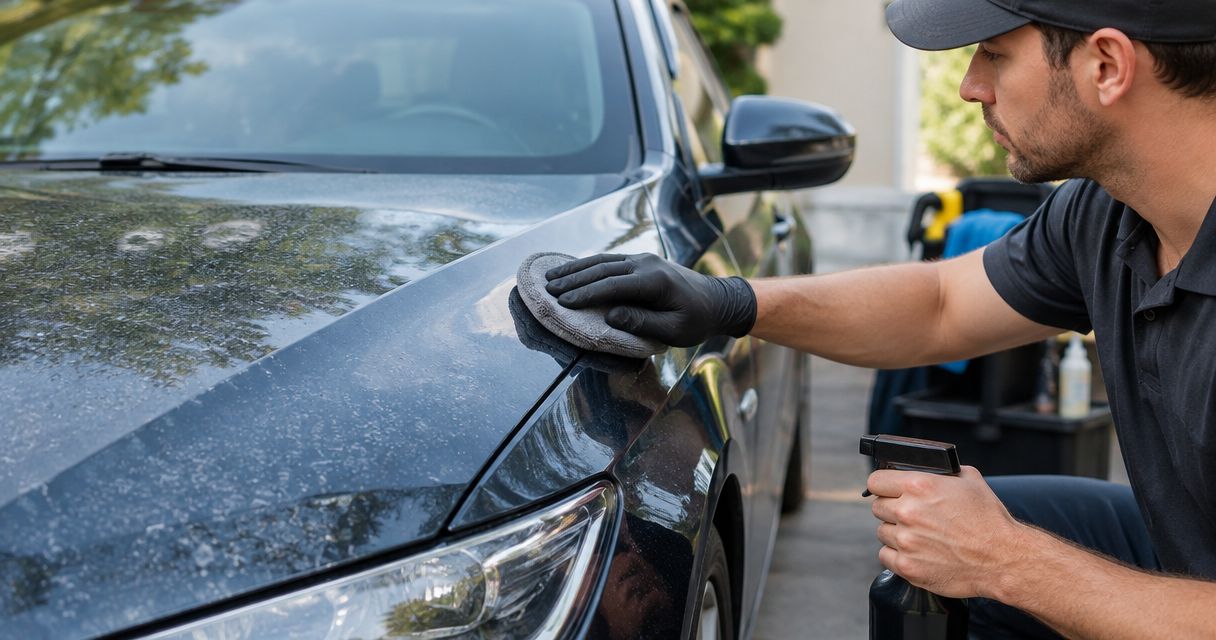
A white ring on your hood does not tell you whether minerals are sitting on the surface or the finish underneath has changed. Those problems need different treatment. Repeating a wash will not repair etched clear coat, while jumping straight to aggressive polishing can remove finish unnecessarily.
For a 2026 appointment, describe the marks rather than requesting a generic full detail. Crispy Clean Mobile Carwash provides on-location auto detailing in Rio Rancho; ask specifically whether your water-spot concern needs a separate inspection or treatment.
Book for the problem, not just the package name. Interior shampooing and carpet cleaning address cabin materials, not mineral rings on exterior paint.
Can mobile detailing fix hard water stains on paint?
Mobile detailing can fix surface mineral deposits when the treatment suits the finish. Where water spotting has etched the clear coat, improvement depends on the depth of the damage and the condition of the remaining finish. The fact that the service happens at your location does not determine the result; diagnosis and treatment do.
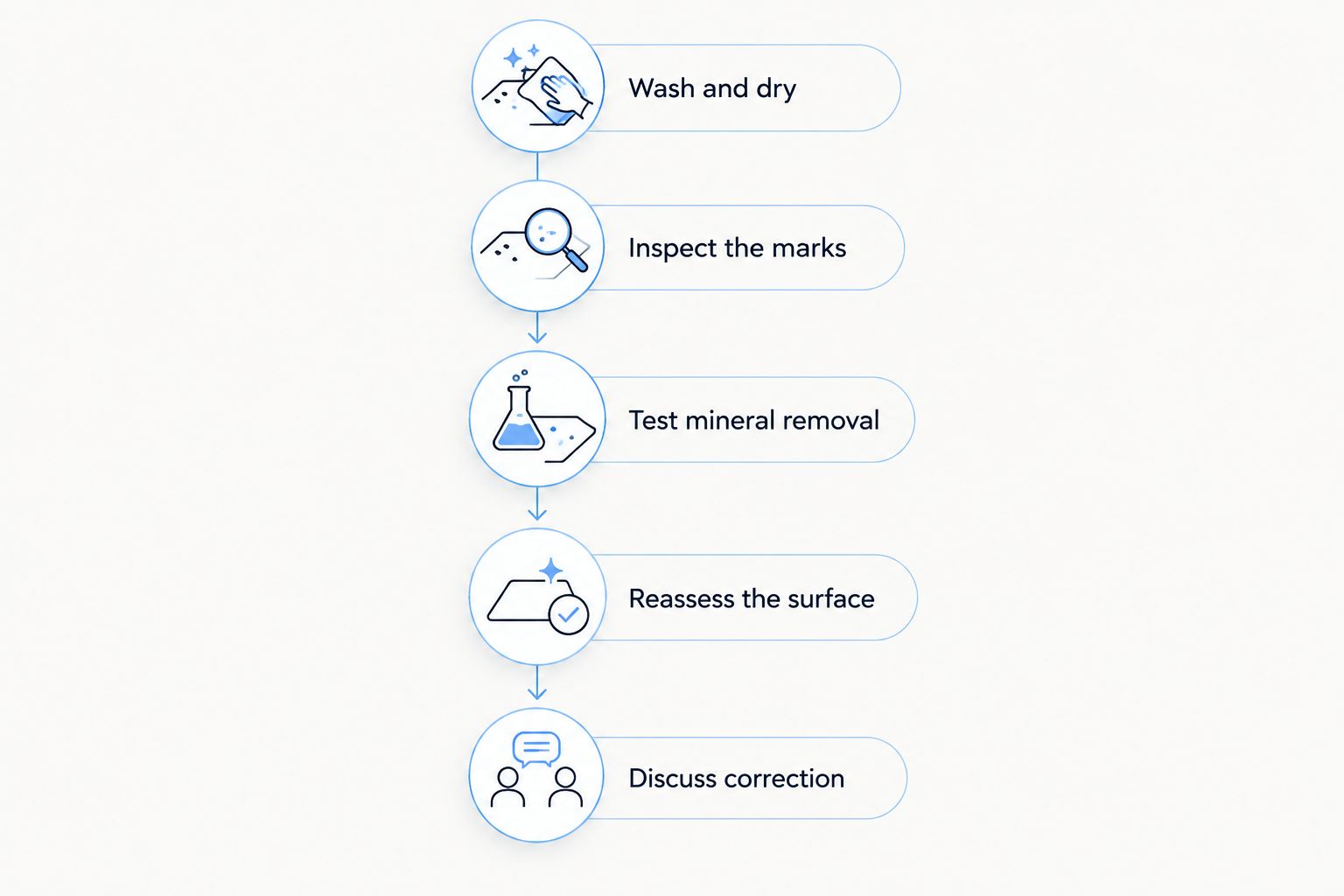
A sensible process starts with cleaning and moves toward correction only when necessary:
- Wash and dry. Remove loose dirt so the detailer can inspect the paint without confusing dust or road film with water spotting.
- Inspect the marks. Examine clean, dry paint under useful lighting. Ask about previous polishing, repainting, coatings, or protective film.
- Test mineral removal. Use a treatment labeled for the affected finish on a small area, following its directions.
- Reassess the surface. Check whether the ring disappeared or whether a visible outline remains after the deposits are gone.
- Discuss correction. If etching remains, assess whether polishing is appropriate and agree on the stopping point before proceeding.
A test spot provides a practical basis for that decision. It is not permission to keep increasing the strength of a chemical or abrasive until every mark disappears.
Surface deposits: start with paint-safe mineral removal
Best for: mineral residue sitting above otherwise sound paint. Water can leave dissolved minerals behind as it evaporates. A treatment formulated for automotive water spots addresses those deposits more directly than repeated washing alone.
The advantage is that chemical deposit removal does not rely on abrasive polishing. The limitation is equally important: dissolving residue cannot rebuild a surface that has already been etched.
Ask the detailer to inspect the panel after treatment, rinsing, and drying. Wet paint can disguise defects, so a panel that looks clear while wet is not enough evidence that the work is complete.
Avoid asking for the strongest available product. The right choice depends on the surface and the product instructions, including whether the finish has a coating or protective film.
Light etching: assess before polishing
Best for: remaining marks in sound clear coat after deposits are removed. Polishing abrades the surface to reduce defects. That can improve shallow etching, but it also removes some finish rather than adding material back.
This trade-off makes inspection essential. A mark on a previously corrected panel deserves different consideration from a similar-looking mark on paint with a known history and no previous correction.
Ask to see the test area dry and under lighting that reveals the original defect. Approve the level of improvement you can actually see, not a promise based on a photograph.
For the distinction between improvement and complete removal, read Does paint correction remove scratches completely?. Scratches and water etching are different defects, but both raise the same question about safe correction limits.
Deep etching: preserve the finish before chasing perfection
Best for: a specialist assessment when aggressive correction would risk the finish. Deep marks, damaged clear coat, or an uncertain repair history can limit what detailing should attempt. More polishing is not automatically the right response.
The benefit of stopping is preserving the remaining finish. The drawback is that some visible damage stays. A paint-repair assessment can establish whether refinishing, rather than further detailing, is the appropriate next step.
A responsible result can be improvement without complete removal. Reject a blanket guarantee that every spot will disappear before anyone has inspected the vehicle.
Which treatment matches the problem?
Use this comparison when discussing your 2026 detailing appointment. These are treatment categories, not confirmed package inclusions; ask the provider what the proposed service actually covers.
| Treatment | Best for | Main benefit | Main limitation |
|---|---|---|---|
| Regular wash | Loose dirt and routine surface cleaning | Creates a clean surface for inspection | Does not repair etched clear coat |
| Mineral treatment | Deposits above the finish | Targets mineral residue without abrasive correction | Cannot reverse etching underneath |
| Paint polishing | Suitable shallow defects in sound paint | Can reduce visible etching | Removes some finish and has a safe limit |
| Paint-repair assessment | Damage beyond sensible correction | Establishes repair options | Falls outside routine washing and detailing |
Waxing belongs in a different part of the conversation. Wax adds a protective layer; it is not a substitute for removing mineral deposits or evaluating etching. Ask whether the proposed work treats the defect or simply finishes the surface afterward.
Why hard water stain removal varies
The appearance of a spot is only part of the diagnosis. These factors affect the treatment choice and the result:
- Deposit or etching: Residue above the surface needs a different approach from damage within the clear coat.
- Paint condition: Peeling, cracking, previous repairs, and earlier correction affect what the finish can tolerate.
- Affected material: Painted panels, glass, trim, protective film, and coatings require surface-specific treatment.
- Extent of spotting: An isolated patch and widespread marks require different inspection and treatment plans.
- Working conditions: Panel temperature, shade, and product directions affect whether treatment is appropriate at the appointment location.
- Existing protection: A known wax, coating, or film changes which products and follow-up care are suitable.
Do not use the vehicle's age alone to judge the answer. A newer car can have paint damage, while an older finish can have removable deposits. Inspect the actual surface.
What should you send before booking mobile detailing?
Send photographs of the affected panels, including a close view and a wider view showing where the marks sit. Photograph clean, dry paint when practical. Include whether the marks followed sprinkler exposure, washing, or another known event without guessing when you are unsure.
For your 2026 booking request, include this information:
- Vehicle and location: Identify the vehicle and where you want the work performed.
- Affected surfaces: Say whether the spotting is on paint, windows, trim, or several materials.
- Previous attempts: Name any cleaner, household treatment, clay, or polish already used.
- Paint history: Mention known repainting, previous correction, ceramic coating, or protective film.
- Your priority: Explain whether you want deposit removal, visible improvement, or an assessment of persistent damage.
Crispy Clean Mobile Carwash is best for Rio Rancho owners seeking on-location auto detailing. For hard water spots, confirm the treatment scope before booking rather than assuming the service name includes correction.
If your vehicle is in Albuquerque, Corrales, Los Lunas, Belen, or Santa Fe, give the exact appointment location and ask whether service is offered there. A nearby city name is not confirmation of coverage at your address.
When contacting Crispy Clean Mobile Carwash, ask about exterior water-spot assessment specifically. Use the contact method currently listed on the website; if calling, texting, using a form, or sending a social message, include the same vehicle details and photographs where the channel permits.
Ask about your water spots
Describe the affected panels and ask whether inspection or separate treatment is needed.
Can a regular wash remove hard water spots?
A regular wash can remove loose contamination, but it does not repair water-spot etching. If rings remain after proper washing and drying, ask for an assessment rather than repeatedly scrubbing the same area.
Stronger friction is not a diagnosis. Keep dirt removal separate from mineral treatment and paint correction so you know what each step is meant to accomplish.
Will polishing completely remove etched water spots?
Polishing can improve suitable shallow etching, but complete removal depends on the damage and the finish's safe correction limit. Ask what remains after the test area and why.
A useful explanation identifies the remaining defect and the reason for stopping. It should not treat every visible mark as permission for more abrasion.
Can I use vinegar or household cleaner on car paint?
Do not substitute a household recipe for a product labeled for the automotive surface you are treating. A cleaner's ability to dissolve mineral deposits does not establish that it is suitable for paint, trim, coatings, or protective film.
Follow the product and finish manufacturer's directions. Avoid scraping mineral rings or using abrasive household pads on painted panels.
How do you reduce repeat water spotting?
For your 2026 wash routine, focus on what happens before water dries. Move the vehicle away from sprinkler spray where practical, wash under suitable conditions, and dry the paint rather than leaving droplets to evaporate.
Protection helps with maintenance, but wax, sealant, or a coating does not make a vehicle immune to mineral deposits. Treat new spotting promptly with a surface-appropriate approach instead of waiting for repeated exposure.
After treatment, ask which protection remains and what maintenance it needs. Mineral-removal products and polishing can affect existing protection, so the final step should match the work performed and the products involved.
FAQ
Can mobile detailing fix hard water stains without polishing?
Yes, mobile detailing can remove surface mineral deposits without polishing when a suitable mineral treatment resolves the spotting. Etching that remains afterward needs a separate paint assessment.
How can I tell whether water spots have etched my paint?
Appearance alone does not reliably distinguish deposits from etching. Have the surface cleaned, treated appropriately, and inspected dry before deciding whether correction is needed.
Does a full detail automatically include water-spot removal?
No, the phrase full detail does not establish that mineral removal or paint correction is included. Ask for the exterior treatment scope before booking.
Will waxing my car get rid of hard water stains?
Wax alone is not a treatment for mineral deposits or etched clear coat. Assess and address the spotting before choosing a protective finishing step.
Can a mobile detailer work on water spots in direct sun?
Treatment must follow the product's directions for panel temperature and working conditions. Tell the provider about available shade and let the provider confirm whether the location is suitable.
Should I ask for every water spot to be polished out?
No, complete removal should not take priority over preserving the finish. Ask for a test area and a clear explanation of the safe stopping point.
Can the same water-spot remover be used on paint and windows?
Only use a product on surfaces its label specifically permits. Approval for painted panels does not establish compatibility with glass, trim, coatings, or protective film.
One last thing
Inspect the result dry before accepting that the spots are gone. Water can temporarily hide surface defects, which makes a wet panel a poor basis for judging correction.
For a 2026 appointment, agree in advance to review a dry test area before expanding treatment. That small decision keeps the conversation focused on visible improvement, paint preservation, and the work you actually want.