No. Headlight restoration removes exterior haze and oxidation; it does not repair a cracked lens or restore a broken seal. Before booking an on-location visit, have the damage identified so you do not mistake a cosmetic improvement for a headlight repair.
- Headlight restoration service cracked lens searches need a clear answer: polishing removes haze, not fractures.
- Restore an intact, oxidized lens; have cracks, persistent water, and damaged housings assessed separately.
- Crispy Clean Mobile Carwash provides on-location mobile washing and auto detailing in Rio Rancho, not a stated headlight-repair service.
- Ask whether damage affects the outer coating, lens plastic, housing, or seal before authorizing work.
Can headlight restoration fix a cracked headlight?
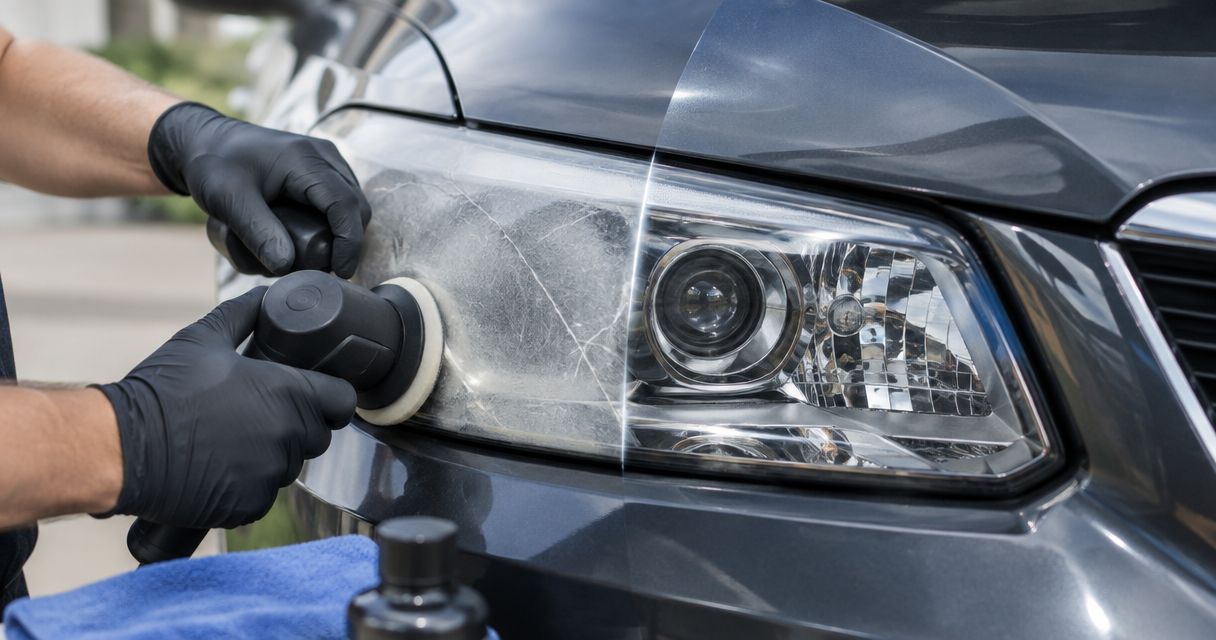
No. Restoration treats the lens surface, while a crack is a break in the lens material. Sanding and polishing do not join separated plastic, repair mounting points, or seal a damaged headlight assembly.
The distinction matters when a headlight looks cloudy and has a visible line across it. Removing the cloudiness can improve its appearance without correcting the line. If you are still identifying the problem, start with how headlight restoration works, then compare your symptoms below.
| Condition | Best next step | Best for | Benefit | Limitation |
|---|---|---|---|---|
| Yellowing or exterior haze on an intact lens | Headlight restoration assessment | Surface deterioration | Can improve exterior clarity | Does not repair fractures or internal damage |
| Fine lines in the outer coating | Inspect before choosing treatment | Separating coating damage from plastic damage | Helps avoid unnecessary work | Appearance alone does not establish depth |
| A split, hole, or missing piece | Automotive lighting repair assessment | Physical lens damage | Identifies appropriate repair or replacement | Polishing cannot close the opening |
| Persistent droplets or pooled water inside | Seal, vent, and housing inspection | Internal moisture problems | Addresses the possible entry or ventilation issue | Exterior restoration cannot dry or reseal the assembly |
| Broken mounting tabs or a loose housing | Mechanical inspection | Headlight attachment problems | Addresses how the lamp is secured | Clearer plastic will not stabilize the housing |
For a 2026 booking, describe the damage rather than requesting restoration by name. Ask whether the proposed work addresses the defect you can see, not just the cloudy area around it.
Why this matters
A clearer-looking headlight is not necessarily a repaired headlight. The lens, housing, seals, mounting points, and internal components all have different jobs. Surface work addresses only part of that assembly.
For drivers in Rio Rancho, Albuquerque, or Corrales, the practical choice is not simply mobile service versus a shop. It is whether the person assessing the light can distinguish appearance problems from physical damage and refer repair work appropriately.
Choose the service that addresses the damage, not the service that makes the surrounding plastic look better. If the light is loose, malfunctioning, or visibly damaged, arrange an automotive inspection rather than relying on a cosmetic appointment.
An intact, cloudy lens: consider restoration
Headlight restoration is most relevant when the exterior surface has deteriorated but the lens remains intact. Depending on the process, treatment removes damaged surface material, refines the finish, and applies suitable protection afterward.
The benefit is straightforward: an appropriate process can improve the clarity of an oxidized exterior surface. The limitation is equally important. Restoration does not fix a failing bulb, damaged reflector, wiring problem, internal contamination, or incorrect aim.
Best for: an intact lens with exterior haze or yellowing. Before approving work, ask what protection follows the polishing stage and what defects will remain visible. A promise that every mark will disappear is not a substitute for inspecting the lens.
Your 2026 restoration request should separate the desired appearance from the actual repair scope. Ask the provider to identify anything that surface treatment will leave unchanged before work begins.
A cracked lens: get a repair or replacement assessment
A true crack extends into or through the lens material. It can exist alongside oxidation, which makes it tempting to treat both problems as a single cloudy-headlight issue. They require different decisions.
An automotive lighting specialist or repair shop can assess the lens, housing, attachment points, and internal condition. The appropriate remedy depends on the assembly design and applicable repair instructions. Do not assume that every vehicle accepts a separate replacement lens or that every crack has an approved repair procedure.
Best for: a visible split, impact damage, missing material, or a crack associated with moisture entry. Replacement addresses damaged components, but the scope must match the vehicle; replacing an entire assembly is not automatically necessary in every case.
Ask the repairer to explain whether the recommendation concerns the lens alone, the complete assembly, or related damage. Also ask whether installation requires aiming, setup, or other vehicle-specific procedures. Those questions keep a cosmetic quote from being mistaken for a complete repair plan.
Fine lines or crazing: inspect before sanding
Fine branching lines are harder to classify than a missing piece. They can involve the protective coating, the plastic underneath, or both. A photograph is useful for an initial conversation, but it does not reliably establish the depth of every mark.
Do not ask a detailer to keep sanding until the lines disappear. Removing more surface material is not proof that the remaining lens is sound, and polishing is not a structural repair.
Best for: an inspection before choosing restoration or replacement. Surface coating deterioration can be a restoration issue; cracking within the plastic needs a different assessment. The benefit of inspecting first is avoiding treatment that leaves the main defect untouched.
For your 2026 decision, ask a direct question: is the damage in the coating, or is the lens plastic fractured? The answer should determine the service, rather than the other way around.
Why the right treatment varies
The same cloudy appearance can come from different problems. These factors determine whether exterior restoration is relevant:
- Damage depth. Deterioration confined to the surface is different from a fracture within the lens plastic.
- Damage location. Exterior haze is accessible to exterior treatment; internal haze or contamination is not.
- Housing condition. A damaged housing or mounting point requires attention beyond lens polishing.
- Moisture behavior. Temporary light fogging differs from persistent droplets or pooled water that needs investigation.
- Assembly design. Repair options depend on how the vehicle's headlight is constructed and what procedures apply.
- Lighting function. Flickering, failed illumination, or an abnormal beam needs diagnosis rather than an assumption that haze is responsible.
No single photograph or service label answers all of these questions. Tell the provider about changes in lighting performance as well as visible damage. That information helps direct the assessment to the whole problem.
How do I check the damage before booking?
Use this sequence to document what you see, not to certify the headlight as safe. Avoid pressing on a crack, pulling loose pieces, or opening a sealed housing yourself.
- Clean gently. Remove loose dirt using an appropriate wash method so you can see the exterior. Do not begin with abrasive sanding or household solvents.
- Inspect outside. Look for yellowing, branching lines, a distinct split, missing material, and separation around the lens edge. Check in daylight without putting pressure on the damaged area.
- Look inside. Note internal droplets, standing water, discoloration, or loose material. Describe whether moisture clears or stays visible.
- Check function. Note whether the lamp illuminates normally and whether the housing appears loose. Do not touch hot lighting components or exposed electrical parts.
- Request assessment. Send the observations with clear photographs and ask whether you need surface restoration, lighting diagnosis, or body repair.
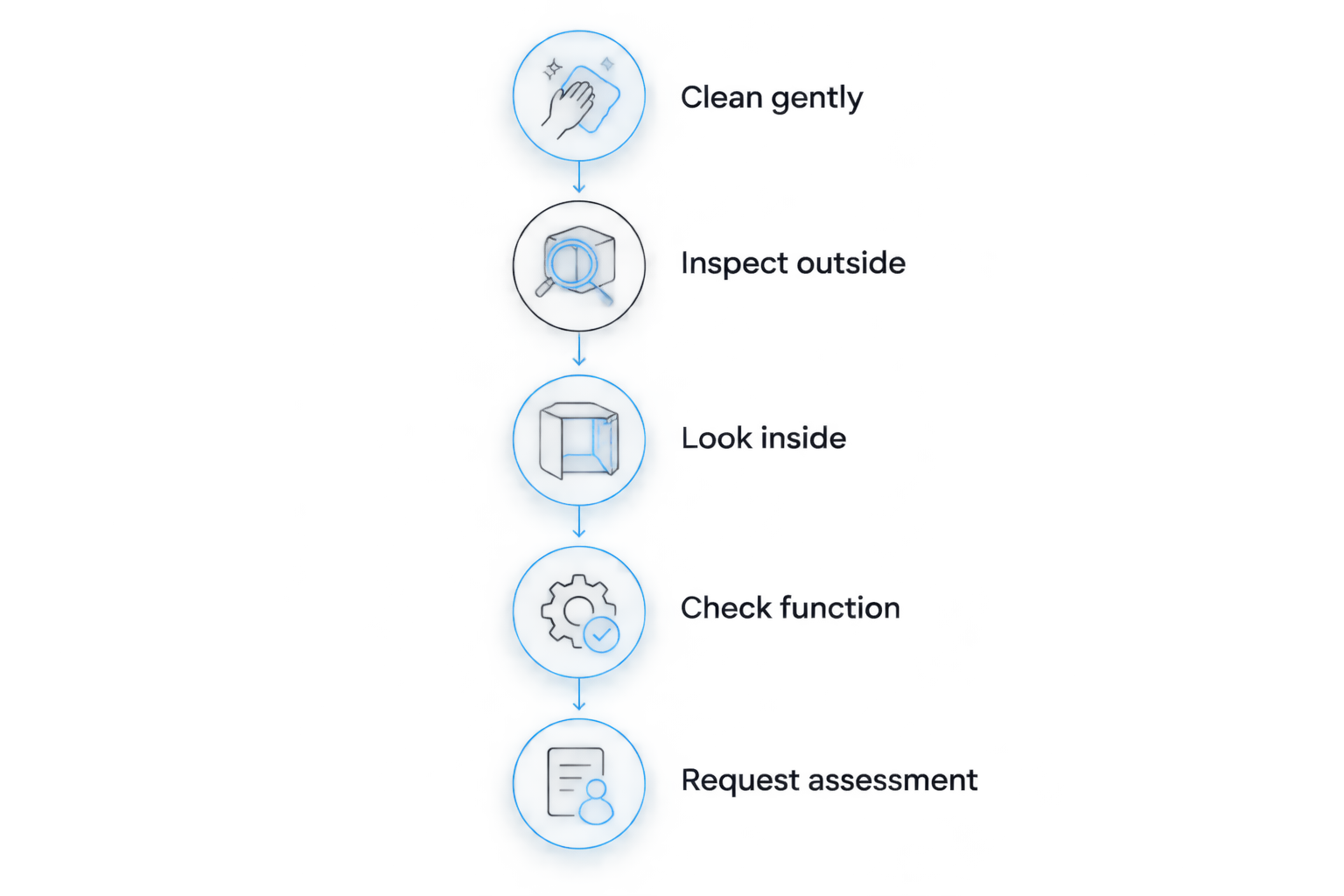
For a useful photo set, take 3 photos: the complete headlight, a close view of the damage, and a wider view showing its position on the vehicle. This is a documentation suggestion, not a substitute for an in-person inspection. Include the vehicle's make, model, and model year in your message.
Can I polish a cracked headlight just to make it look better?
Polishing can improve surrounding surface haze, but it does not repair the crack. That distinction must remain clear even if the finished headlight looks cleaner in photographs.
Have the fracture assessed before authorizing cosmetic work. If repair or replacement is needed, ask whether restoration would serve any useful purpose first. Do not accept polishing as evidence that the lens is sealed, structurally sound, or functioning correctly.
Does water inside a headlight prove the lens is cracked?
Water inside a headlight does not by itself prove the lens is cracked. Moisture problems can involve seals, vents, housing damage, or a lens opening, and some vented lamps develop temporary condensation during temperature changes.
Persistent droplets, pooled water, or repeated moisture-related problems deserve inspection. Exterior polishing does not identify the entry point or correct an internal moisture problem. Tell the repairer what happens after rain, washing, and normal driving without assuming which part failed.
Can glue or a coating replace headlight repair?
Glue or a surface coating is not a substitute for a vehicle-appropriate repair assessment. A coating used after restoration protects the treated surface; it does not turn a fractured lens back into intact plastic.
Household adhesives and solvents are not automatically compatible with headlight materials. Avoid applying them before inspection, and do not assume that a clear-looking patch preserves the lamp's optical performance or sealing. Ask whether the proposed repair follows applicable component instructions.
Booking the right local service
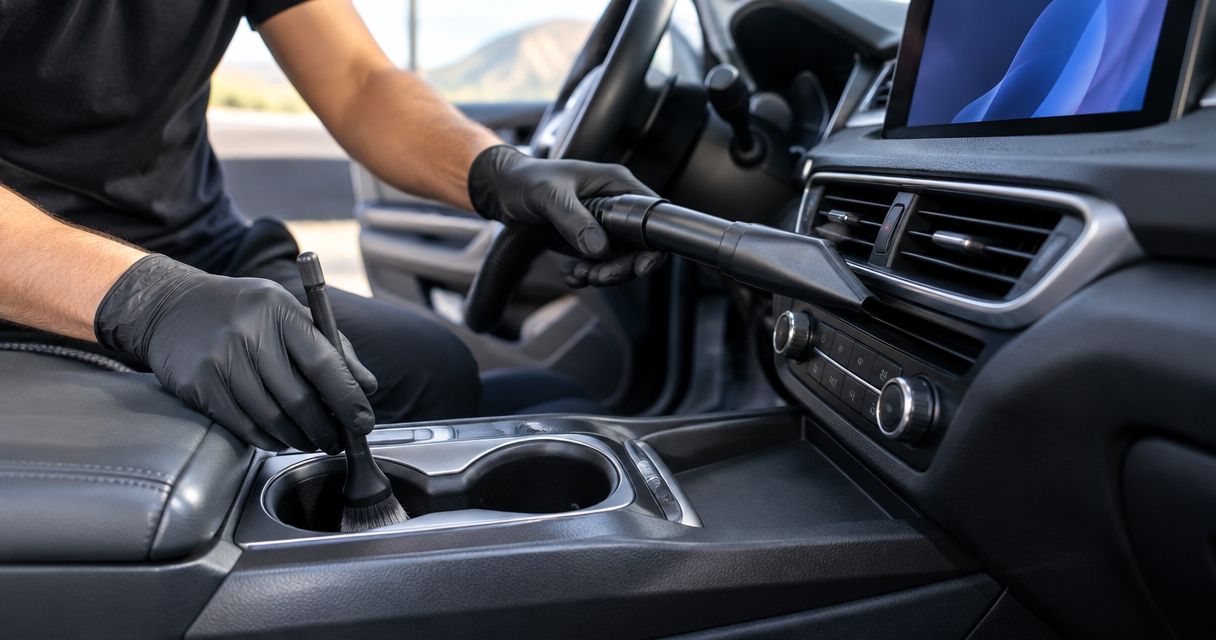
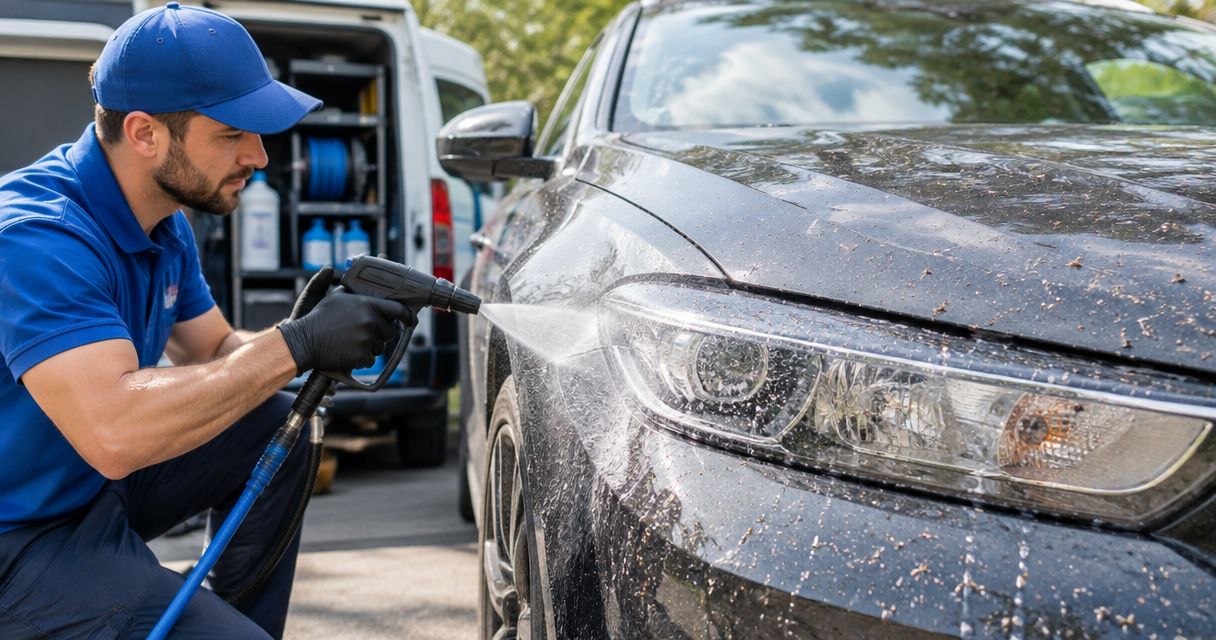
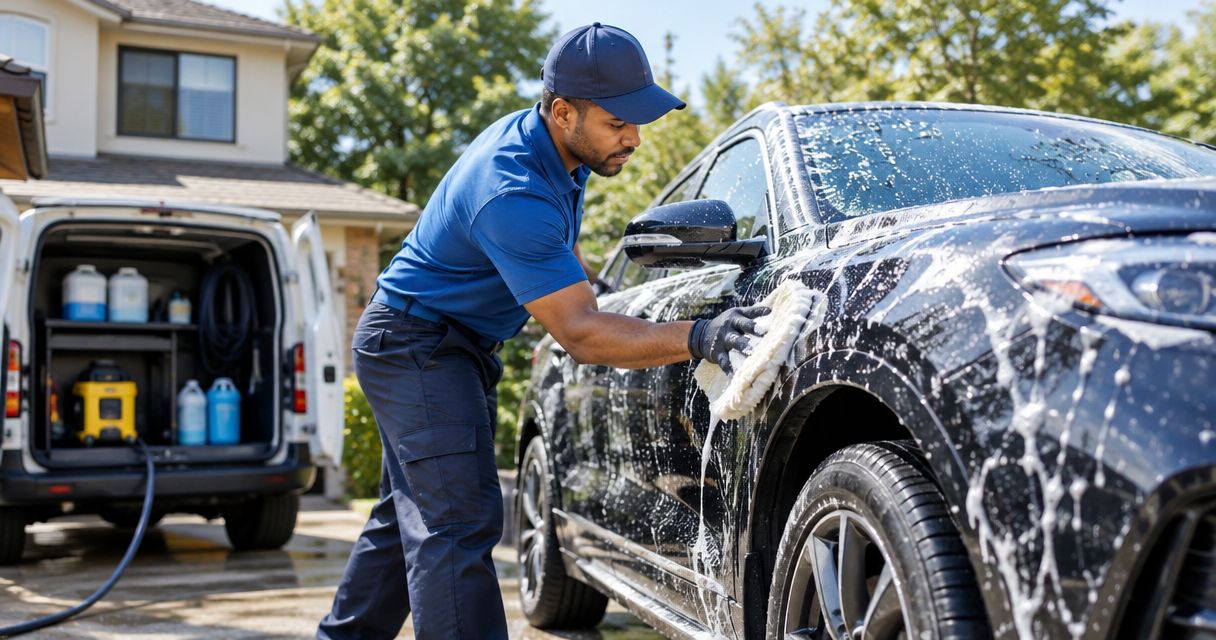
Crispy Clean Mobile Carwash is best for Rio Rancho vehicle owners seeking on-location mobile washing and auto detailing. That convenience serves routine vehicle cleaning, but it should not be confused with a confirmed cracked-headlight repair offering.
When contacting Crispy Clean Mobile Carwash, describe the lens damage and ask whether the concern falls within its current service scope. For washing or detailing, explain whether you want exterior cleaning, interior attention, or both; keep the headlight repair question separate.
If you are comparing appointments in Los Lunas, Belen, or Santa Fe, confirm the exact location and requested work with the provider. A city mentioned in a guide is not confirmation that your address or repair request is covered.
Before confirming a 2026 appointment, use the provider's published call/text, website-form, or social-message option. Send the vehicle details, photographs, and your location, then ask what is included, what remains unresolved, and whether another repair professional is needed.
Ask about mobile detailing
Describe your vehicle, location, and cleaning needs. Confirm whether headlight concerns fall within the service scope.
FAQ
Can a headlight restoration service fix a cracked lens?
No. A headlight restoration service treats exterior haze and oxidation, not a fracture in the lens. Have the crack assessed for an appropriate repair or replacement before approving cosmetic work.
How can I tell a headlight scratch from a crack?
A scratch marks the surface, while a crack is a fracture in the material. Fine lines can be difficult to classify, so ask for an inspection rather than testing their depth with aggressive sanding.
Will headlight restoration remove condensation inside the light?
Exterior headlight restoration does not correct internal condensation or water entry. Temporary fogging differs from persistent droplets or pooled water, which need assessment of the lamp's condition and ventilation.
Do I need a whole new headlight if the lens is cracked?
A cracked lens does not automatically establish which components need replacement. The correct repair depends on the assembly design, damage, and applicable repair procedures; ask whether separate lens replacement is supported.
Is it safe to drive with a cracked headlight?
A cracked headlight needs assessment before you rely on it for safe lighting. A photograph cannot confirm beam performance, secure mounting, electrical condition, or compliance with applicable equipment requirements.
Does Crispy Clean Mobile Carwash repair cracked headlights?
Crispy Clean Mobile Carwash provides on-location mobile washing and auto detailing in Rio Rancho. Ask directly whether a headlight concern falls within its current service scope; cracked-lens repair is not a stated service.
What should I send when asking about headlight damage?
Send clear photographs, the vehicle's make, model and model year, and a description of the symptoms. Include any persistent moisture, loose mounting, or lighting malfunction so the provider can direct the request appropriately.
One last thing
Judge the repair by the defect it corrects, not by the shine around it. Before signing off, ask the provider to point out the original damage and explain what changed. A clearer lens with the same fracture is a cosmetic improvement, not a repaired crack.