Headlight restoration has no single guaranteed lifespan: lasting clarity depends on the condition of the lens, how the damaged surface is treated, and what protection is applied afterward. A clear-looking lens immediately after polishing does not establish how long the result will last. For your 2026 appointment, ask about the protective finish and aftercare—not just the before-and-after photo.
- How long does headlight restoration last? Judge the protective finish and lens condition, not the initial shine.
- Exterior oxidation and moisture inside a headlight require different repairs.
- Ask what protection follows polishing and what maintenance that protection requires.
- Crispy Clean Mobile Carwash provides on-location mobile washing and auto detailing for Rio Rancho vehicle owners.
Why this matters
You want clear headlights without paying for the wrong treatment. Removing exterior haze addresses a different problem from repairing a leaking housing, replacing a failed bulb, or correcting a damaged reflector.
Before comparing appointments, separate those jobs. The guide to headlight restoration services in Albuquerque provides a starting point for your search; use the questions below to evaluate the actual work proposed for your vehicle.
Choose a process that addresses the cause of the haze, not just its appearance. That distinction matters more than a blanket longevity promise.
How long does headlight restoration last?
Headlight restoration lasts until the treated exterior surface loses clarity again, but there is no universal replacement or repeat-treatment interval. The protective product, surface preparation, exposure, and existing damage all affect that outcome.
Many modern headlights use plastic outer lenses with a protective surface layer. Weathering damages that surface over time. Restoring an oxidized lens involves treating the damaged exterior; protecting the restored surface is a separate part of the job.
When comparing headlight work in 2026, use this distinction:
| Approach | Best for | Main benefit | Main limitation |
|---|---|---|---|
| Exterior cleaning | Dirt or film on an otherwise clear lens | Removes surface contamination | Does not repair degraded plastic or a failed protective layer |
| Polishing alone | Surface refinement during a restoration process | Improves the appearance of exterior haze | Initial clarity does not establish lasting protection |
| Restoration with protection | Exterior oxidation on a structurally sound lens | Addresses haze and adds a protective finishing step | Does not repair internal moisture, cracks, or electrical faults |
| Headlight assembly replacement | Damage that exterior restoration cannot address | Replaces the affected assembly | Requires the correct part and a separate installation decision |
None of these approaches is automatically right for every cloudy headlight. Identify where the problem is before choosing the treatment. A lens that looks cloudy from trapped moisture needs a different assessment from one with rough, yellowed exterior plastic.
What counts as a lasting result?
A useful result is more than a glossy finish at pickup. Look for clarity that remains after the vehicle is dry and the treatment has completed its required curing process.
Ask the provider what changes should trigger a follow-up. Returning yellowing, patchy haze, or peeling protection deserves inspection rather than another automatic polishing appointment.
Keep cosmetic appearance separate from lighting performance. A clear outer lens does not establish that the bulb, reflector, wiring, or headlight aim is correct.
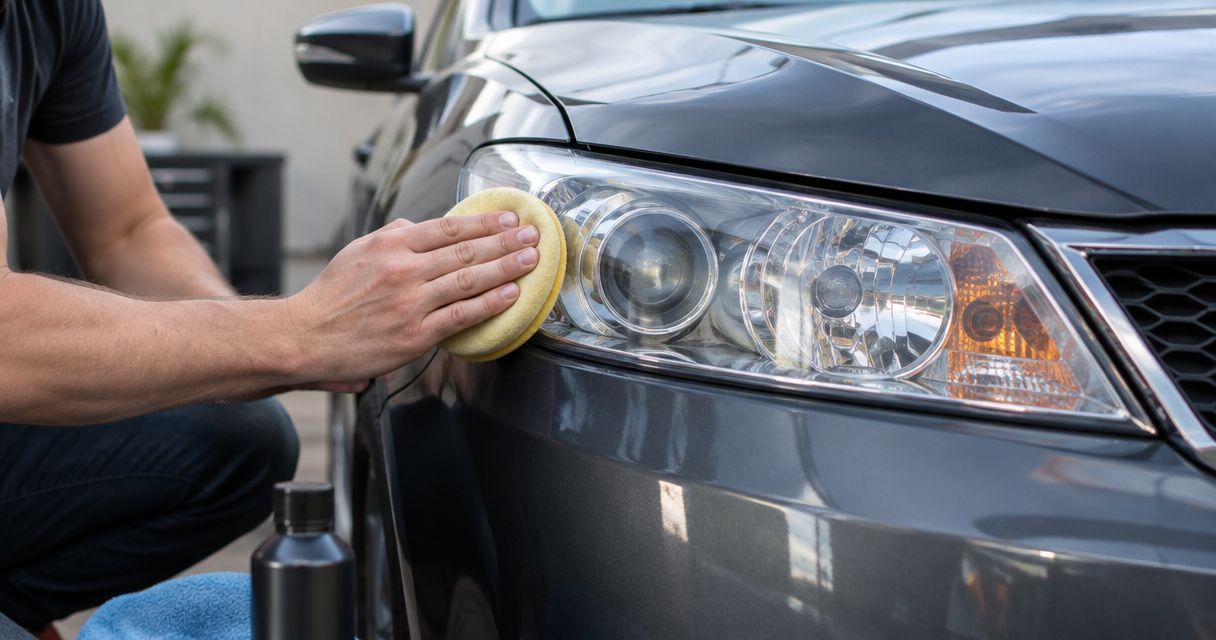
Polishing alone: clarity is not protection
Polishing improves a surface by refining defects. It does not, by itself, tell you what protection remains on the headlight afterward.
That is the limitation of judging a restoration solely by a close-up photograph. A freshly treated surface can look clear without showing whether a suitable protective finish was applied.
Best for: refining exterior haze as part of an appropriate restoration process. The benefit is visible surface improvement; the drawback is that polishing alone does not answer the durability question.
Ask whether the proposed work includes a separate protective step. If it does, ask for the product name and its application and aftercare instructions. A precise answer gives you something useful to compare.
Restoration with protection: check the finishing step
A restoration process that includes protection addresses both the damaged exterior and the need to protect the treated surface. The protection must be suitable for the headlight material and applied according to its instructions.
Do not treat every coating, sealant, or film as interchangeable. Different products have different preparation, application, and maintenance requirements. A general reference to a coating does not identify what will actually be used.
Best for: exterior oxidation on a lens that remains suitable for restoration. The benefit is a process that includes a protective finish; the limitation is that the finish cannot correct damage inside the assembly.
For a 2026 quote, request the product name and any written coverage terms. Separate a manufacturer's product claim from the service provider's promise about your particular headlights.
Replacement: when surface work is the wrong repair
Replacement belongs in the discussion when the problem extends beyond treatable exterior haze. Cracks, damaged mounting points, persistent internal moisture, or internal component damage need assessment before you authorize cosmetic work.
Not every defect requires a complete assembly replacement. The correct repair depends on the assembly design and the source of the fault. Have that diagnosis made before deciding between restoration and replacement.
Best for: an assembly with damage that exterior treatment cannot resolve. Replacement addresses a different scope of work, but it also requires checking part compatibility, installation, and alignment.
If the headlights still perform poorly after the lenses are clean, do not assume another polishing session is the answer. Ask for a lighting-system inspection.
Why headlight restoration durability varies
The original lens and the work performed on it matter more than a generic lifespan claim. Use these factors to understand why two vehicles do not necessarily get the same result:
- Lens condition: Exterior oxidation differs from cracking, internal clouding, or damage within the plastic. Surface treatment has limits.
- Preparation: The surface must be prepared appropriately for the finishing product. A protective finish is not a substitute for addressing damaged material.
- Protective finish: Ask what is applied after correction and whether it is intended for the lens material.
- Sun exposure: Ultraviolet exposure contributes to plastic weathering. Where you park affects the exposure your headlights receive.
- Cleaning habits: Abrasive scrubbing and unsuitable chemicals can damage a treated surface. Follow the finish manufacturer's care instructions.
- Physical damage: Road debris and scratches create damage that a protective finish cannot prevent in every circumstance.
For a vehicle parked outdoors in Rio Rancho, discuss its actual parking and use rather than requesting a city-wide lifespan estimate. A garage-kept vehicle and an outdoor work vehicle do not share the same exposure history.
The same approach applies when comparing appointments in Albuquerque or Corrales. Give the provider useful details about your car instead of relying on a location-based durability promise.
How do you check a restoration quote before booking?
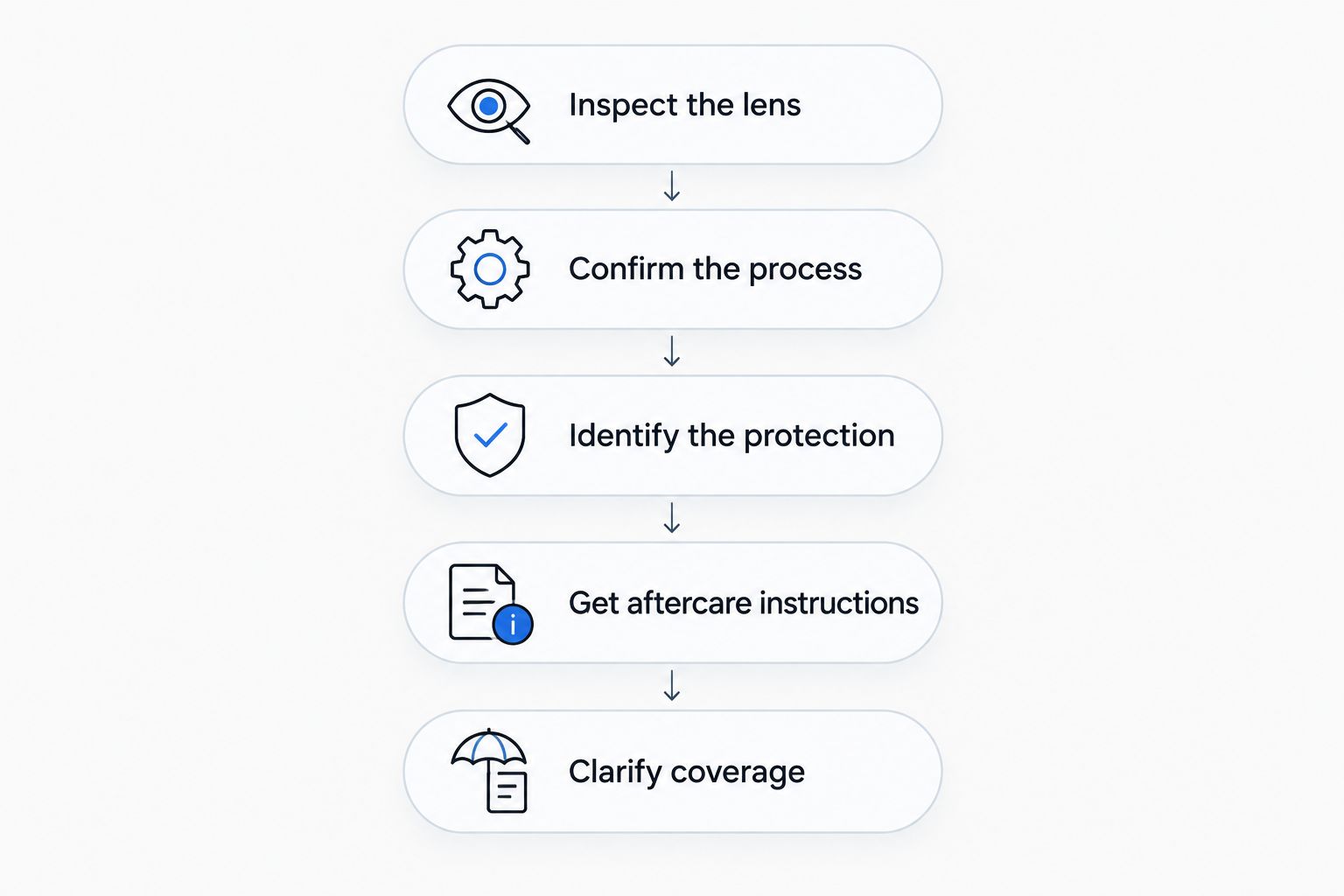
Use this sequence before authorizing headlight work. It keeps the conversation focused on diagnosis, process, and care rather than a photograph alone.
- Inspect the lens. Ask whether the haze is outside, inside, or both. Point out cracks, moisture, and any previous treatment.
- Confirm the process. Ask what material will be removed or refined and why that approach fits the lens condition.
- Identify the protection. Get the name of the finishing product and confirm that it is suitable for the headlight material.
- Get aftercare instructions. Ask about washing, handling, and exposure while the finish cures. Follow the specific instructions rather than a generic waiting period.
- Clarify coverage. Ask what the provider will do if haze returns and what exclusions apply. Keep any written terms.
Your 2026 booking decision should rest on those answers. A provider who explains the limits of restoration gives you a clearer basis for deciding whether the job fits your car.
What should you send with an inquiry?
Send clear photographs of each headlight with the lights off, plus a wider photograph showing the assembly. Describe whether the haze changes after washing and whether moisture appears inside.
Include the vehicle make and model and your location. Photos help start the conversation, but they do not replace an inspection when damage is difficult to identify.
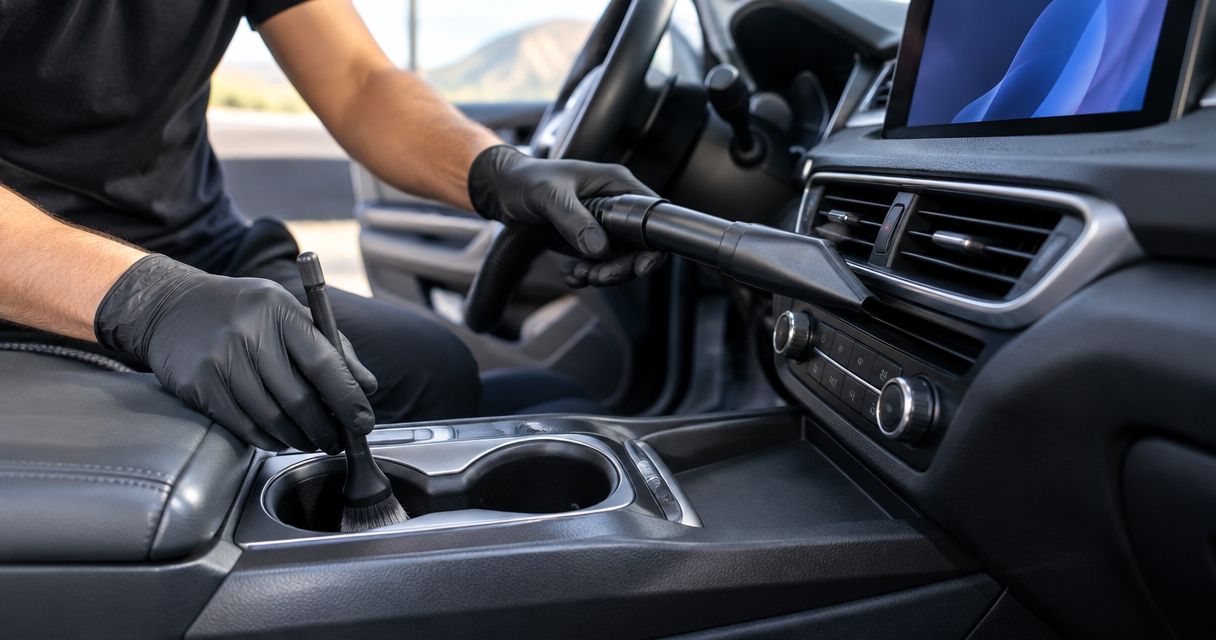
If you also want mobile detailing, keep the service requests separate. Interior cleaning, carpet shampooing, waxing, and paint polishing describe different tasks; none establishes that headlight restoration is included.
Does mobile detailing include headlight restoration?
Mobile detailing does not automatically include headlight restoration. Confirm the requested work before booking, even when a package covers both interior and exterior cleaning.
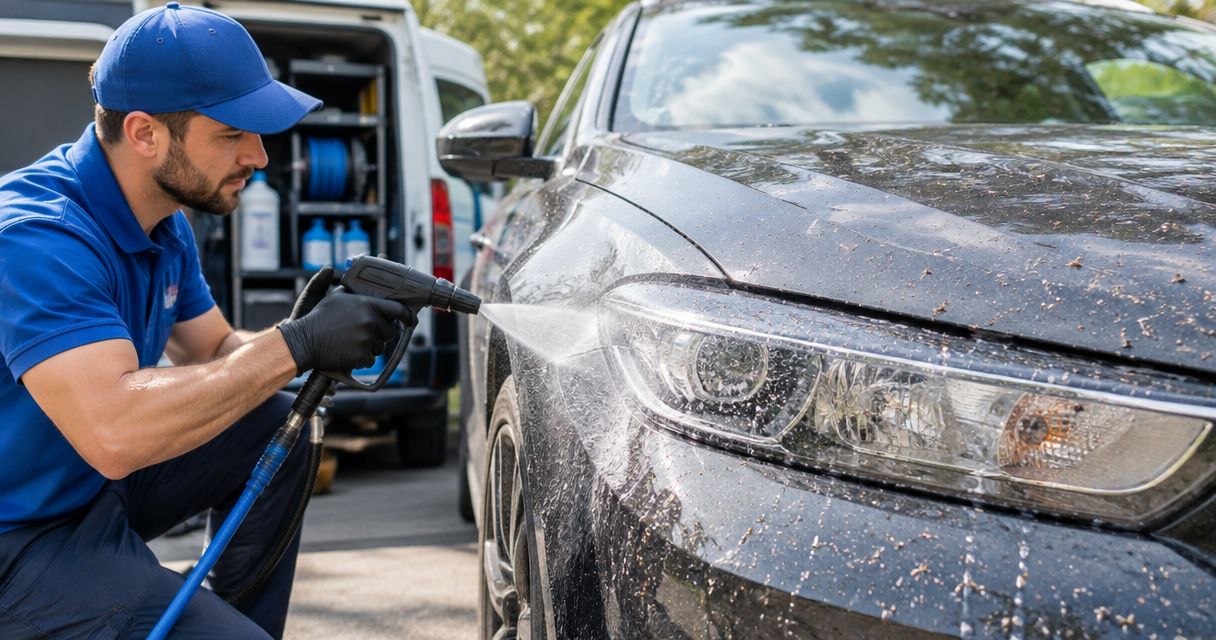
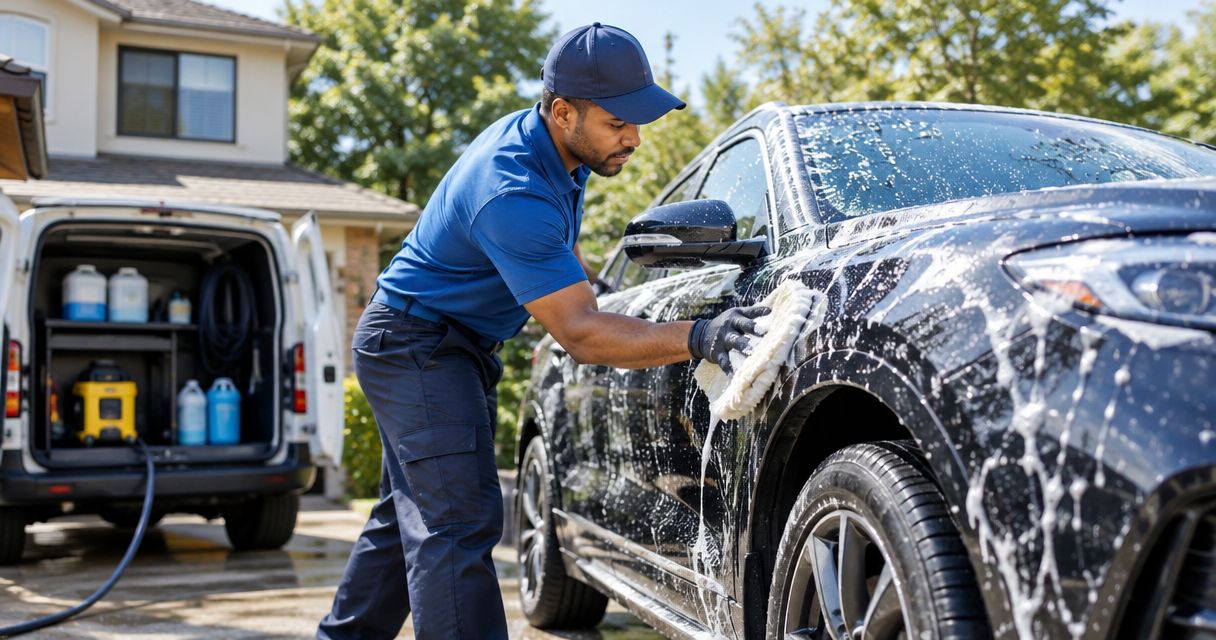
Crispy Clean Mobile Carwash is best for Rio Rancho vehicle owners seeking on-location mobile washing and auto detailing. The convenience is having those services performed at your location; that service description does not establish that a separate headlight repair is included.
Use the Crispy Clean Mobile Carwash website to make your inquiry. State that you want a headlight assessment, describe the condition, and confirm whether the requested work is offered before making appointment plans.
When contacting Crispy Clean Mobile Carwash, keep the message practical: identify your vehicle, explain the problem, give your location, and ask what the appointment includes. If you use a website form, call or text option, or social message, include the same details.
Can washing make restored headlights cloudy again?
Unsuitable cleaning methods can damage a restored surface or its protective finish. Normal care should follow the instructions for the product applied to your lenses.
Avoid treating every clear plastic surface like glass. Do not use an abrasive pad or aggressive cleaner simply because it removes a mark elsewhere on the vehicle.
A useful 2026 care routine starts with the written aftercare instructions. Keep those instructions with the service record so you do not have to guess when arranging the next wash.
If haze returns, inspect the clean, dry lens before choosing another treatment. Dirt, exterior deterioration, and internal condensation require different responses.
Is yellowing after restoration a reason to replace the headlight?
Returning yellowing is a reason to inspect the headlight, not an automatic reason to replace it. The next step depends on whether the problem is in the exterior finish, the lens itself, or the assembly.
Contact the original provider before attempting another abrasive treatment. Repeated correction removes material, so another polishing session should follow an assessment rather than habit.
If you have written coverage, review the claim process before changing the surface yourself. Keep photographs and the original service details available for that conversation.
FAQ
How long does headlight restoration last on a car parked outside?
Headlight restoration has no fixed lifespan for an outdoor-parked car. The lens condition, protective finish, sun exposure, and care all affect how long clarity remains.
Will my headlights turn yellow again after restoration?
Headlights can yellow again as the exposed surface or protective finish deteriorates. Ask what protection is applied and what returning yellowing means under the provider's written terms.
Is professional headlight restoration better than doing it myself?
The process and the condition of the lens matter more than who performs the work. Compare preparation, protective finish, instructions, and accountability rather than assuming every professional service or home kit produces the same result.
Does a ceramic coating make headlight restoration permanent?
A ceramic coating does not establish a permanent headlight restoration result. Check the specific product's suitability for plastic headlights, application requirements, and maintenance instructions.
Can headlight restoration fix condensation inside the lens?
Exterior headlight restoration does not fix condensation inside the assembly. Internal moisture needs a separate assessment of the housing, seals, and ventilation.
Can I wash my car right after headlight restoration?
Follow the applied finish's curing and washing instructions before washing your car. Ask the provider for those instructions in writing rather than using a universal waiting period.
Should I restore my headlights if they are still dim?
Restore the lenses only if exterior deterioration is part of the problem. Dim lighting also requires checking the bulbs, aim, electrical system, and internal components.
One last thing
Keep the name of the protective finish, not just a before-and-after photo. That detail tells you which care instructions to follow and gives the next technician useful information if the surface changes.
Photograph both headlights when they are clean and dry after the work is complete. A consistent reference makes a future conversation about returning haze more useful than trying to remember how the lenses looked.