Best overall for light swirls: single-stage paint correction. Best for more extensive surface defects: multi-stage correction. Best for an isolated mark: spot correction. For on-location care in Rio Rancho, Crispy Clean Mobile Carwash provides mobile washing and auto detailing; ask specifically about correction scope before booking a polishing appointment in 2026.
- For paint correction Rio Rancho searches, choose the process by paint condition, not a package name.
- Single-stage polishing suits light swirls; multi-stage correction addresses more extensive defects with additional polishing steps.
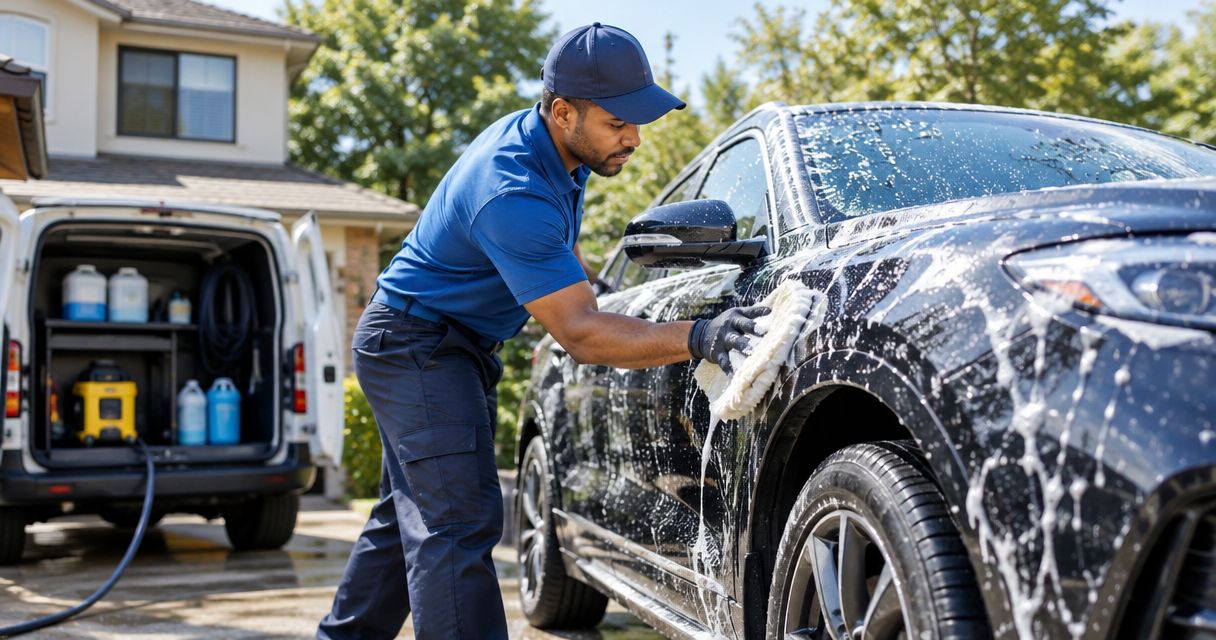
- Crispy Clean Mobile Carwash provides on-location washing and auto detailing in Rio Rancho.
- Ask for a test spot, clear exclusions, and an inspection under consistent lighting before approving correction.
Why this matters
Paint correction means abrasive polishing that levels surface defects in the paint finish. Washing removes dirt, while wax adds a protective layer; neither is a substitute for correcting swirls or scratches.
The best paint correction service removes only as much material as the finish safely allows. Chasing every scratch is the wrong goal when doing so compromises the coating protecting the vehicle.
For your 2026 appointment, choose a service around the actual problem: contamination, shallow swirls, isolated scratches, or damaged paint. The ranked options below compare service approaches so you can request the right work rather than buy an impressive-sounding package.
What makes the best paint correction service?
- Paint assessment: The detailer checks the finish, previous repairs, and defect depth before choosing an abrasive process.
- Test spot: A small trial area establishes what the selected pad, polish, and technique accomplish before broader work begins.
- Defined scope: Your estimate distinguishes washing, decontamination, correction, protection, and interior work.
- Suitable workspace: Lighting, working conditions, access, and protection from contamination support controlled polishing.
- Honest limits: The provider explains which defects should remain and which require paint repair rather than more polishing.
- Comparable evidence: Before-and-after images show the same panel under similar lighting, not unrelated reflections or different viewing angles.
Paint correction options at a glance
Use this 2026 comparison to match the service to your vehicle. These are different approaches, not interchangeable levels of the same wash.
| Rank and option | Best for | Standout feature | Key limitation |
|---|---|---|---|
| 1. Single-stage correction | Daily drivers with light swirls | One polishing stage balances refinement and scope | Deeper defects remain |
| 2. Multi-stage correction | More extensive correctable surface defects | Separate cutting and refining stages | More abrasive work requires careful assessment |
| 3. Spot correction | An isolated scratch or scuff | Targets a defined area | Local improvement does not correct surrounding panels |
| 4. Wash and decontamination | Bonded surface contamination | Cleans the surface before a correction decision | Does not level scratches |
| 5. Paint repair or refinishing | Damage through the finish | Addresses damage polishing cannot remove | Requires repair expertise rather than detailing alone |
1. Single-stage correction: best for daily-driver swirls
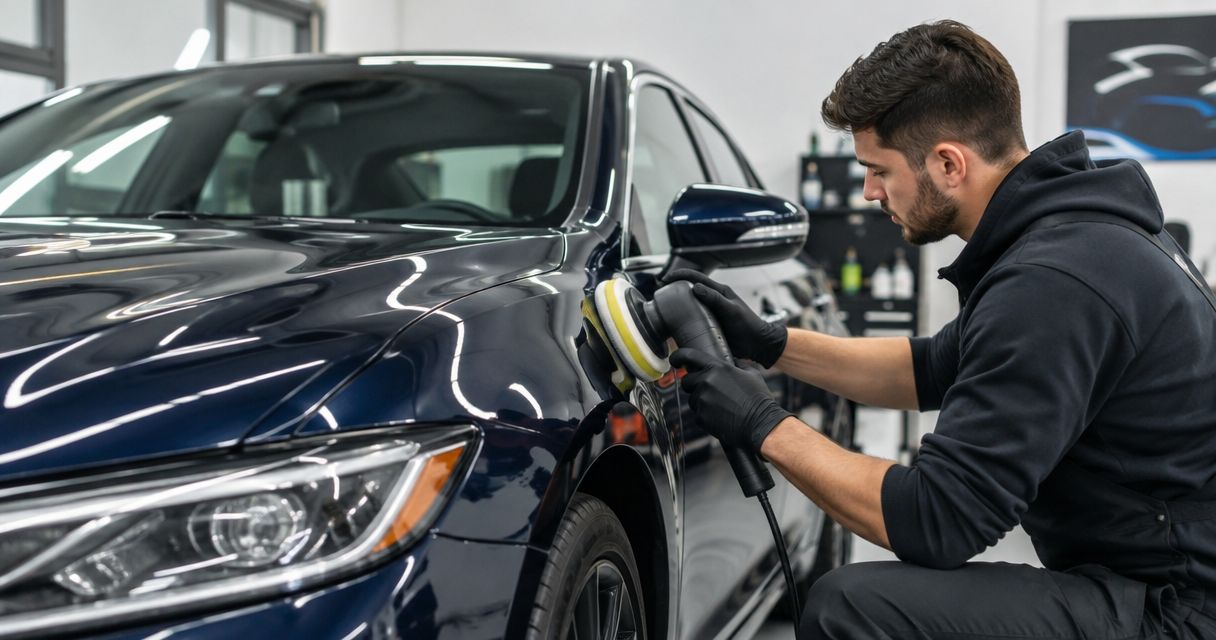
Single-stage correction uses one polishing stage after appropriate preparation. It targets light surface defects and improves clarity without automatically committing your entire vehicle to a more involved cutting-and-refining process.
This is the starting point for a daily driver with shallow wash marks. The test spot determines whether that approach produces an acceptable result; the package name alone does not.
Single-stage correction pros:
- Matches a clear goal: improve light swirls and finish clarity.
- Keeps the correction process simpler than separate cutting and refining stages.
- Gives you a defined baseline for deciding whether further work is justified.
Single-stage correction cons:
- Deeper scratches remain when they exceed the process's safe capability.
- Some finishes require additional refinement after a more aggressive approach.
Best for: Owners who want a cleaner-looking daily driver rather than an attempt at a defect-free finish.
Ask whether the quoted service includes preparation and final protection. Neither should be assumed from the word polishing.
Verdict: Buy single-stage correction when the test spot meets your expectations.
2. Multi-stage correction: best for extensive surface defects
Multi-stage correction separates more aggressive defect removal from finer polishing. A cutting stage addresses suitable defects, and a refining stage addresses the finish left by that process.
Choose this route because the paint assessment supports it, not because more stages sound better. The paint's condition and repair history matter more than the vehicle's age or badge.
Multi-stage correction pros:
- Separates defect removal from finish refinement.
- Provides a process for defects beyond a light polishing approach.
- Allows the detailer to evaluate progress between stages.
Multi-stage correction cons:
- Additional abrasive work removes additional material from the finish.
- Deep defects still require limits; more stages do not make every scratch removable.
- The scope needs a more detailed explanation than a general exterior detail.
Best for: Owners whose vehicles have extensive correctable swirls or surface defects that a lighter approach does not adequately improve.
Ask the provider to identify defects they intend to leave. A clear answer shows that the proposed result has boundaries.
Verdict: Hold until an assessment and test spot justify multi-stage correction.
3. Spot correction: best for an isolated scratch or scuff
Spot correction concentrates polishing on a limited area rather than treating the whole vehicle. It suits a localized problem when the surrounding finish already meets your expectations.
A visible mark is not automatically a scratch in the vehicle's paint. Transferred material and damage through the finish require different responses, so identification comes before polishing.
Spot correction pros:
- Keeps the work focused on your actual concern.
- Avoids automatically expanding an isolated problem into whole-vehicle correction.
- Supports a specific discussion about the expected improvement.
Spot correction cons:
- A corrected area can make surrounding swirls more noticeable.
- Damage through the clear coat cannot be restored by polishing alone.
- Local work still requires careful blending and inspection.
Best for: Owners concerned about a specific mark on an otherwise acceptable finish.
Review the difference between improvement and removal in Does paint correction remove scratches completely? before approving the work.
Verdict: Buy spot correction only after the mark is identified as suitable for polishing.
4. Wash and decontamination: best for surface contamination
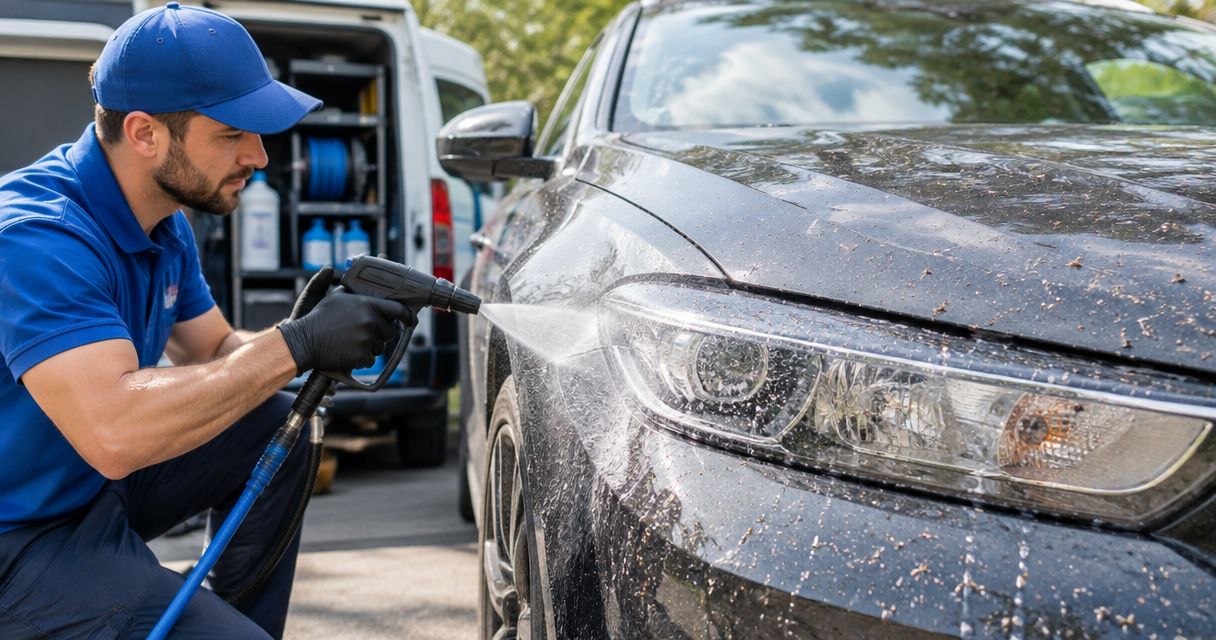
Washing removes loose dirt. Decontamination addresses bonded material that normal washing leaves behind, using methods selected for the contamination and finish.
This is preparation, not scratch correction. It is the right first decision when you cannot tell whether the problem is material on the paint or damage within it.
Wash and decontamination pros:
- Reveals the finish more clearly before abrasive work is chosen.
- Targets contamination rather than treating every visible problem as a scratch.
- Establishes a clean surface for further assessment.
Wash and decontamination cons:
- Does not level swirls or scratches.
- Mechanical decontamination can leave marring that requires polishing.
- The appropriate method depends on the surface and contaminant.
Best for: Owners whose paint feels contaminated or has visible deposits that have not been professionally assessed.
Crispy Clean Mobile Carwash provides on-location washing and auto detailing in Rio Rancho. Describe the surface problem and ask which preparation or polishing work belongs in your requested appointment.
Verdict: Buy appropriate cleaning first when contamination is the unresolved issue.
5. Paint repair or refinishing: best for damage beyond polishing
Paint repair addresses damage that abrasive polishing cannot restore, including missing paint and failing coatings. Correction removes material; it does not replace clear coat or color that is already gone.
Choose a repair assessment when you see peeling, exposed substrate, or a scratch that extends through the finish. Do not authorize repeated aggressive polishing as a substitute for that assessment.
Paint repair or refinishing pros:
- Addresses damage outside the purpose of detailing.
- Provides a route for restoring missing or failed finish layers.
- Separates cosmetic polishing goals from actual coating repair.
Paint repair or refinishing cons:
- Requires repair-specific evaluation and workmanship.
- Matching color and finish is a separate consideration from removing swirls.
- A detailing appointment alone does not cover this scope.
Best for: Owners with coating failure, exposed material, or damage confirmed to extend through the paint finish.
Verdict: Skip correction as the remedy for missing or failing paint; seek a repair assessment.
How to compare Rio Rancho appointments in 2026
Start with evidence that helps the provider understand your car. Send 3 photos: the full affected panel, a close-up of the defect, and an angled view that shows reflections. Photos support an initial conversation; they do not replace inspecting the paint.
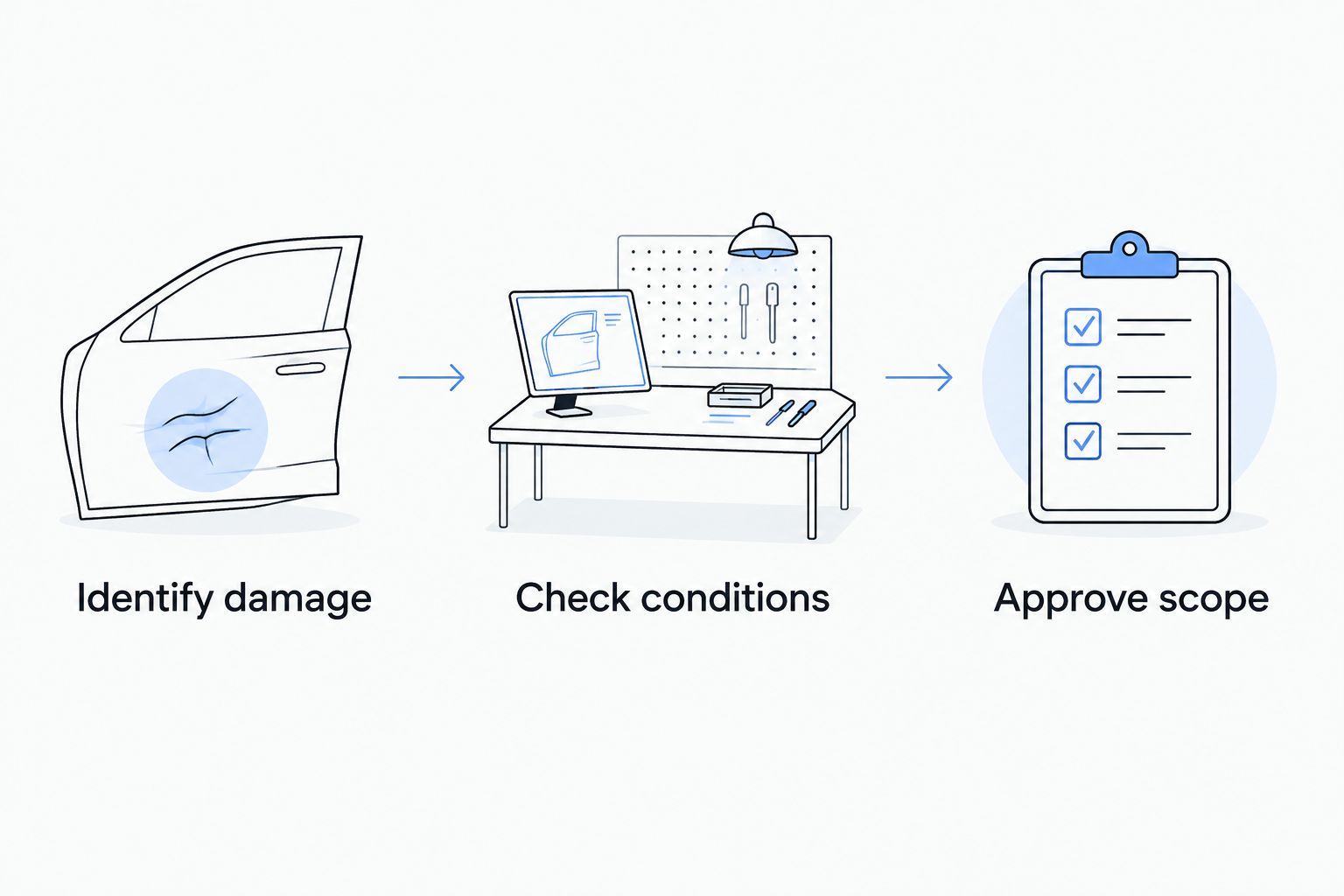
Use this sequence before approving work:
- Identify damage: Explain whether your concern is swirls, a specific scratch, contamination, or peeling.
- Check conditions: Give the vehicle location and ask what working space, lighting, shade, water, or electricity the proposed service requires.
- Approve scope: Confirm preparation, polishing approach, exclusions, protection, and the inspection process in writing.
Ask to inspect the result under 2 lighting conditions: diffuse daylight and a suitable inspection light. Different lighting reveals different defects, so a single flattering photograph is not enough to judge correction.
For on-location service, provide your actual address rather than relying on a city name. If you are comparing appointments in Albuquerque, Corrales, Los Lunas, Belen, or Santa Fe, confirm whether the provider serves that location and whether the site suits the requested work.
Keep detailing tasks separate from paint correction
A full detail, an interior detail, and paint correction solve different problems. Ask for an itemized scope rather than assuming a broad package name includes all three.
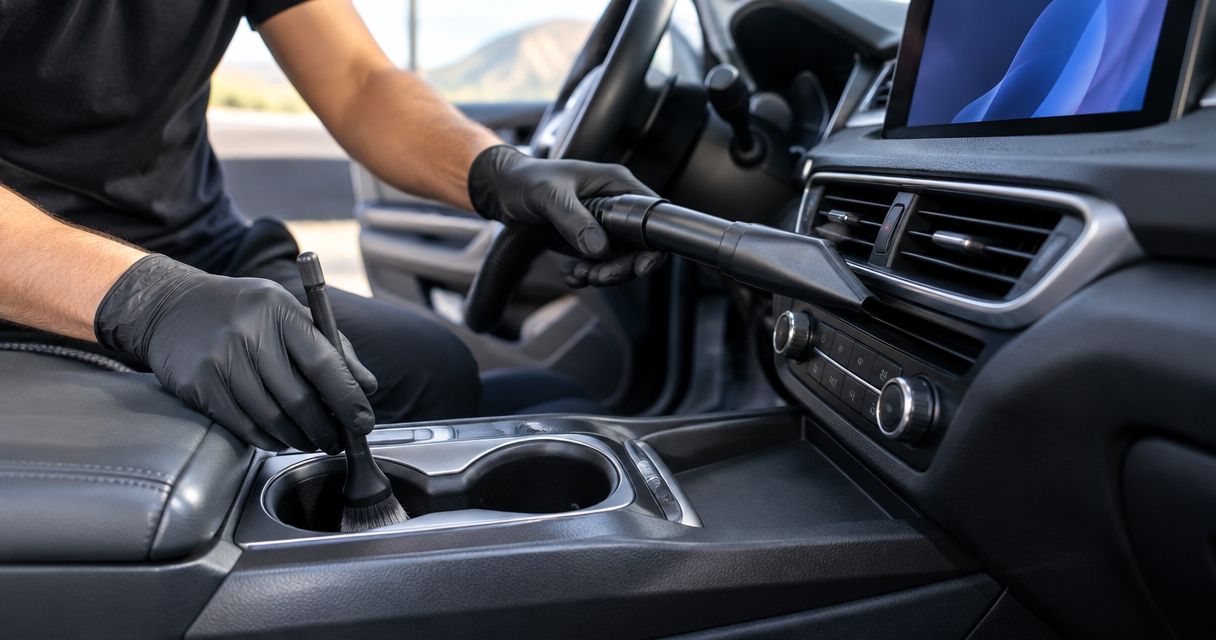
Interior detailing addresses cabin surfaces. Upholstery shampooing and carpet shampoo target fabric cleaning, while exterior polishing addresses the paint finish; carpet work does not tell you anything about correction quality.
Waxing adds protection but does not level scratches. Polishing uses abrasives to refine the surface, so ask whether an advertised polish means defect correction or simply a general appearance service.
Crispy Clean Mobile Carwash is a fit for Rio Rancho owners seeking on-location washing and auto detailing. For paint correction, explain the defects and confirm the proposed process before making the appointment.
Use the contact method provided on the website to request the work. If arranging it by call, text, website form, or social message, keep the same written scope attached to the conversation.
Discuss your vehicle's detailing needs
Share your Rio Rancho location, vehicle condition, and the paint defects you want assessed.
How these service options are ranked
The ranking prioritizes a suitable starting point for light swirls, then separates more involved correction, localized work, cleaning, and actual repair. The criteria are paint assessment, test-spot evidence, scope, workspace, honest limits, and comparable results.
It is not a ranking by unverified ratings or promises of complete scratch removal. For your 2026 decision, the strongest proposal explains both what will improve and what should remain untouched.
Which paint correction service should you choose?
Choose a single-stage assessment first if your main concern is light swirls on a daily driver. Move to multi-stage work only when the assessment supports it; choose spot correction for a localized defect and repair evaluation for damaged or missing paint.
If convenience is the priority, discuss on-location detailing with Crispy Clean Mobile Carwash. Keep the correction question specific: which defects, which process, which limitations, and which working conditions?
FAQ
What's the best paint correction option in Rio Rancho for a daily driver?
Single-stage correction is the starting point for a daily driver with light swirls. Approve it after a paint assessment and test spot demonstrate an acceptable result.
Does Crispy Clean Mobile Carwash offer on-location detailing?
Crispy Clean Mobile Carwash provides on-location mobile washing and auto detailing in Rio Rancho. Ask specifically about paint-correction scope, working conditions, and exclusions before booking.
Is multi-stage paint correction better than single-stage polishing?
Multi-stage correction is not automatically better; it suits defects that require separate cutting and refining steps. Choose the least aggressive suitable process based on the paint assessment.
Can paint correction completely remove a deep scratch?
Paint correction cannot restore missing paint or safely remove every deep scratch. Damage extending through the finish requires repair assessment rather than a promise of complete removal by polishing.
Can mobile paint correction be done in an apartment parking lot?
An apartment parking lot needs property permission and suitable working conditions before mobile correction is arranged. Confirm access, lighting, space, and the provider's site requirements before booking.
What should I ask before booking paint correction in 2026?
Ask about paint assessment, a test spot, preparation, the polishing process, exclusions, and final protection. Request a written scope and agree on how the finished panels will be inspected.
Does waxing remove swirl marks?
Waxing does not level swirl marks. Abrasive polishing addresses suitable surface defects, while wax adds protection and can temporarily alter how some marks appear.
One last thing
Ask the detailer to point out a defect they recommend leaving alone. A clear explanation of that limit is more useful than a promise to erase everything: preserving the finish matters more than winning a close-up photograph.