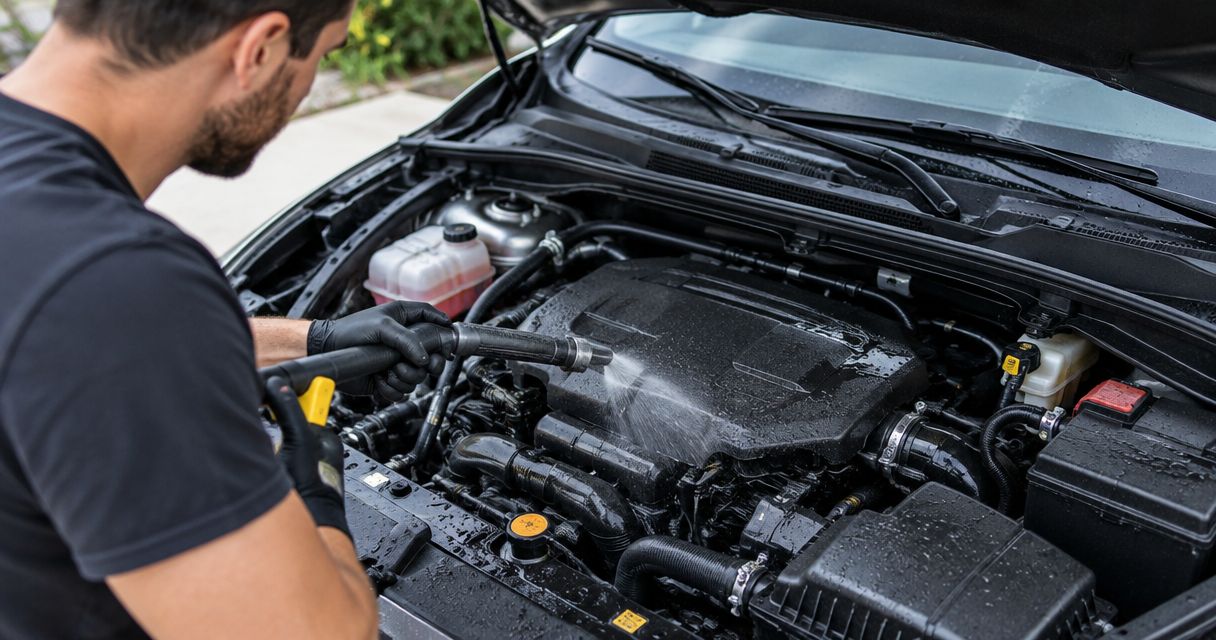
Yes—water can be used to clean some engine bays, but only when the vehicle manufacturer permits it and you avoid sensitive components, hot surfaces and forceful spray. Water entering an air intake, electrical connection or ignition component can cause damage or running problems. For engine bay cleaning safety in 2026, start with the owner’s manual and choose controlled wiping instead of rinsing whenever the instructions or component condition are unclear.
- Engine bay cleaning safety starts with the vehicle’s manual, a cool engine and protection from water intrusion.
- Damp wiping offers more control than rinsing but does not remove every oily deposit.
- Skip pressure washing when the vehicle manufacturer prohibits it; never spray directly into an air intake.
- Crispy Clean Mobile Carwash provides on-location car washing and auto detailing in Rio Rancho; confirm engine-bay work separately.
Why this matters
An engine compartment handles road splash, but that does not make every part safe to soak. A directed stream can reach places that normal driving conditions do not expose in the same way.
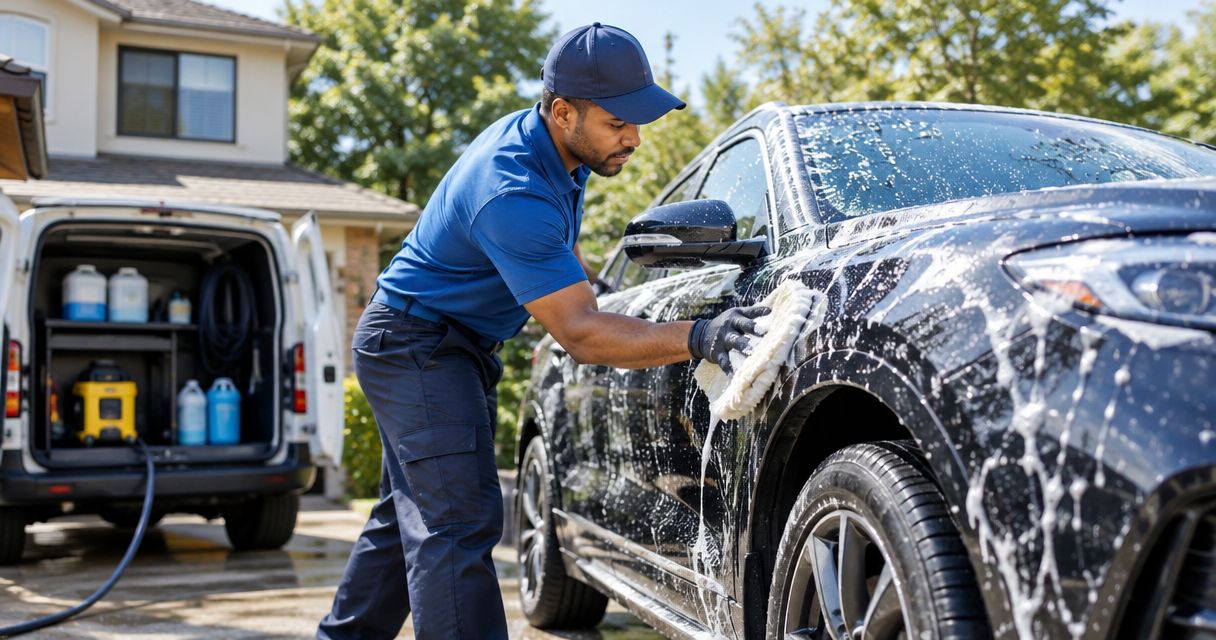
Crispy Clean Mobile Carwash is best suited to Rio Rancho vehicle owners seeking on-location car washing and auto detailing. Before requesting under-hood work through Crispy Clean Mobile Carwash, confirm that the specific task is offered and appropriate for your vehicle. A general detailing appointment does not establish that engine cleaning is included.
Is it safe to clean an engine bay with water?
It is safe only when the vehicle’s instructions and condition support the cleaning method. There is no universal hose setting, drying period or protective covering that makes every engine bay safe to rinse.
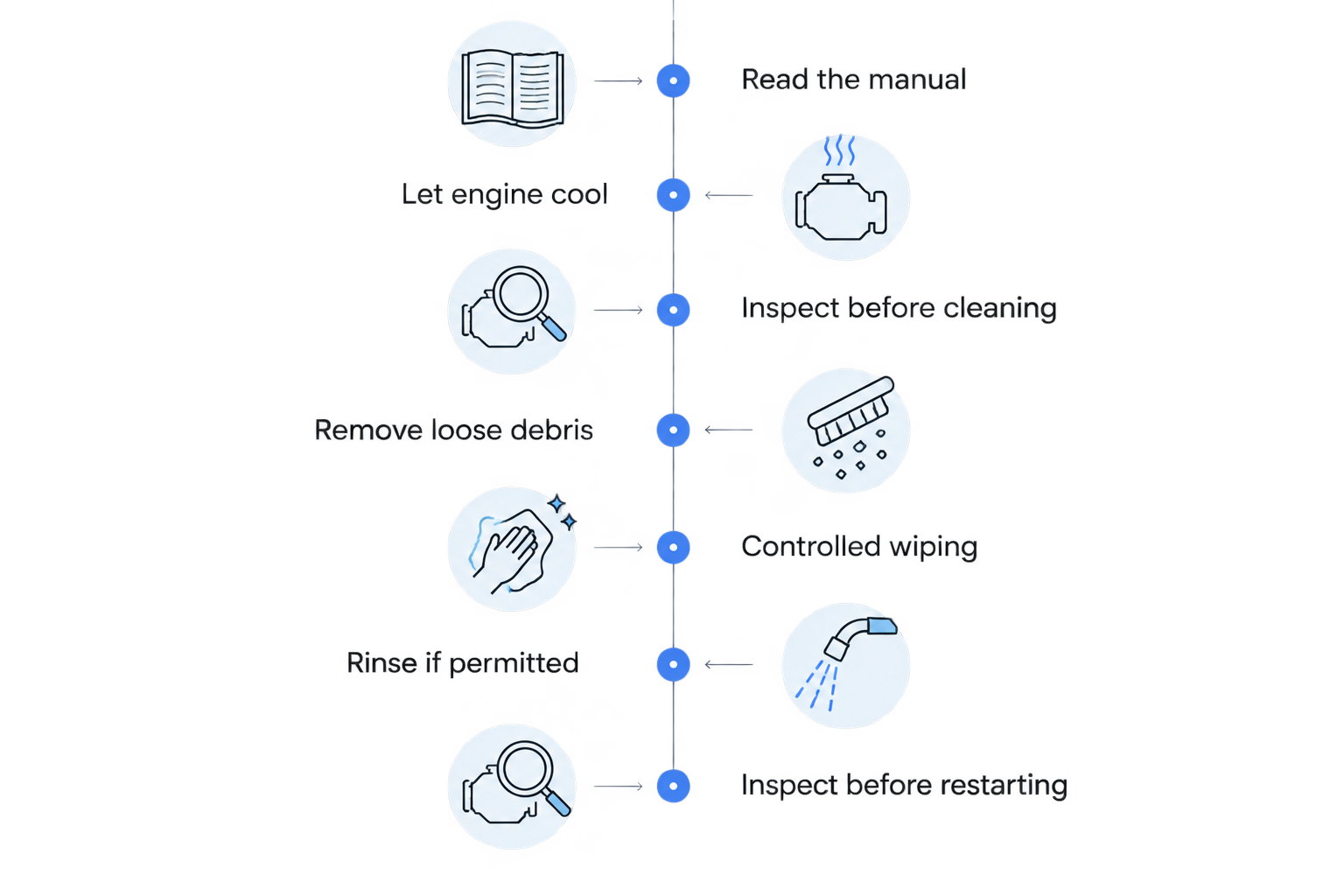
Use this sequence before introducing water:
- Read the manual. Find the manufacturer’s engine-compartment cleaning instructions and warnings. If the manual prohibits washing, do not substitute a generic online method.
- Let the engine cool. Switch the vehicle off and allow hot components to cool before cleaning. Keep clear of cooling fans, which can operate unexpectedly on some vehicles.
- Inspect before cleaning. Look for loose connectors, damaged wiring, missing covers, exposed filters and evidence of leaks. Stop if the condition needs mechanical attention.
- Remove loose debris carefully. Pick up leaves and accessible debris without pushing material into openings or disturbing wiring. Do not reach into fan assemblies.
- Start with controlled wiping. Apply an appropriate cleaner to a cloth where practical, rather than spraying indiscriminately across the compartment.
- Rinse only if permitted. Follow the manufacturer’s instructions, keep water away from sensitive areas and avoid forceful spray.
- Inspect before restarting. Remove temporary protection, check accessible areas for trapped moisture and follow the vehicle’s drying instructions.
If you cannot identify the intake, electrical equipment or safe cleaning surfaces, stop at accessible cosmetic wiping. An uncertain component is a reason to stop, not a reason to cover everything and keep spraying.
Which engine-bay cleaning method should you choose?
Choose the least intrusive method that addresses the dirt you can safely reach. More water and stronger chemicals do not automatically produce a better or safer result.
| Method | Best for | Practical advantage | Limitation |
|---|---|---|---|
| Damp wiping | Accessible covers with light dirt | Keeps moisture localized | Cannot reach every recess or remove every deposit |
| Manufacturer-permitted rinsing | Dirt on surfaces approved for rinsing | Carries loosened dirt away | Creates more opportunity for water intrusion and runoff |
| Professional assessment | Unfamiliar components, modifications or heavy contamination | Establishes whether cleaning should proceed | Assessment does not guarantee that washing is appropriate |
Damp wiping: best for accessible cosmetic surfaces
A lightly dampened cloth gives you control over where moisture goes. Work on surfaces you can identify, and keep cleaner away from openings and electrical equipment.
The limitation is reach. Do not pull wiring aside, remove unfamiliar covers or push tools into tight spaces just to make the entire compartment look uniform.
Permitted rinsing: best for approved surfaces
Rinsing is an option only when the manufacturer’s instructions allow it. Follow any restrictions on water application, cleaning products and components that must remain dry.
The drawback is spread. Water travels beyond its point of contact, so a seemingly careful rinse can still reach a connector or collect in a recess.
Professional assessment: best for uncertain conditions
Ask a qualified technician to assess damaged wiring, fluid leaks, unfamiliar modifications or existing running problems before cosmetic cleaning. Mechanical uncertainty should be resolved before a detailer introduces moisture.
Professional help is not permission to ignore the manual. Ask what method is proposed and why it suits the specific vehicle, rather than accepting a blanket assurance that every engine bay can be washed.
Why engine-bay cleaning risk varies
Vehicle layout and component condition matter more than whether the engine compartment looks dirty. These factors change the cleaning decision:
- Manufacturer instructions. Approved cleaning methods differ between vehicles; use instructions for the exact model and powertrain.
- Electrical condition. Damaged insulation, loose connectors and missing covers remove protections that cleaning depends on.
- Intake design. An exposed filter or modified intake changes where water can enter the engine’s air path.
- Engine temperature. Hot surfaces create burn hazards and complicate safe use of water and cleaning chemicals.
- Water application. Direct, forceful spray creates a different exposure from a controlled damp cloth.
- Contamination type. Loose dust, oily residue and evidence of an active leak call for different responses.
For a 2026 cleaning decision, a newer vehicle is not an automatic approval and an older vehicle is not an automatic rejection. The vehicle’s instructions, condition and proposed method determine whether to proceed.
What parts should stay out of the spray?
Keep water away from air-intake openings and exposed air filters. Water entering the intake can cause serious engine damage, so identifying the air path matters before any rinsing begins.
Avoid directing spray at electrical connectors, control modules, fuse and relay boxes, ignition components and the alternator. Their location and protection vary; an engine cover does not establish that everything beneath it is safe to soak.
Do not remove fluid caps, electrical connectors or protective covers simply to clean around them. Leave sealed systems closed, and follow manufacturer instructions for any preparation the vehicle actually requires.
Temporary protection is not waterproofing. If the manual calls for covering a component, follow that instruction and remove the covering before operating the vehicle; do not treat a plastic bag as permission to pressure-wash nearby.
What about hybrids and electric vehicles?
Do not apply a conventional engine-cleaning routine to a hybrid or electric vehicle. Follow the manufacturer’s instructions for the front compartment and leave high-voltage components, cables and service disconnects alone.
Switching the vehicle off does not authorize work on its high-voltage system. When the cleaning area contains unfamiliar electrical equipment, get model-specific guidance rather than experimenting with water or steam.
Can you pressure-wash an engine bay?
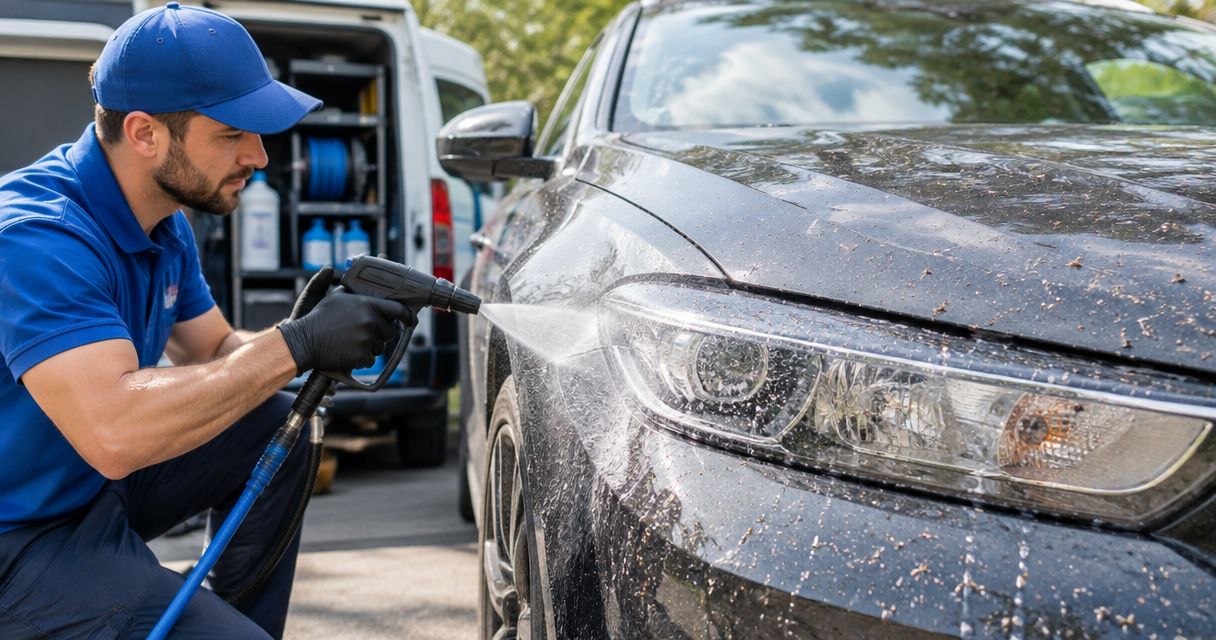
Do not pressure-wash an engine bay when the manufacturer prohibits it. Permission to rinse does not establish permission to use a pressure washer, and there is no universal nozzle distance that makes forceful spray safe around every component.
Pressure can drive water into vulnerable connections or disturb damaged material. Choosing a wider spray pattern does not fix missing seals, exposed wiring or an open intake.
Steam cleaning also needs vehicle-specific approval and suitable technique. Calling a method “low water” does not remove the effects of heat, moisture or pressure on sensitive equipment.
How long should you let an engine bay dry?
There is no universal safe drying time for an engine bay. Follow the vehicle manufacturer’s instructions and account for where water reached, not just whether the top surfaces look dry.
A dry plastic cover does not prove that a recessed connection or ignition area is dry. Remove visible moisture from safe, accessible surfaces without unplugging unfamiliar components or forcing air into openings.
Do not start the engine simply to use its heat as a drying tool unless the vehicle’s instructions specifically direct that procedure. If water entered a sensitive area, seek guidance before restarting.
What should you do if the engine runs badly afterward?
Stop treating the issue as a cleaning problem if the engine misfires, runs roughly or shows a new warning after washing. Move to a safe location if necessary, switch off when safe and seek mechanical advice.
Do not keep restarting the vehicle to see whether the problem clears. Tell the technician what was cleaned, which products were used and where water was applied; those details help distinguish a cleaning-related issue from an existing fault.
If you suspect water entered the air intake, do not attempt another start. Arrange professional assessment rather than trying to dry the engine by running it.
Choose cleaners and handle runoff carefully
Use a product intended for the surfaces being cleaned, subject to the vehicle manufacturer’s guidance. Follow the product label for application, dilution, protective equipment and disposal; do not invent a stronger mixture for stubborn grease.
Avoid treating every under-hood material as bare metal. Painted surfaces, plastics, rubber and electrical insulation can have different compatibility requirements, so keep the task narrow and controlled.
Dirty wash water can contain oil and cleaning chemicals. Prevent it from reaching storm drains, soil or neighboring property, and check local requirements before washing in a driveway or shared parking area.
For Rio Rancho owners arranging service in 2026, explain the proposed work area before the appointment. A convenient parking spot still needs to be suitable for the cleaning method and runoff handling.
What should you ask before booking mobile detailing?
On-location service saves you a trip, but it does not change the vehicle’s cleaning restrictions. Ask about engine-bay work separately from exterior washing, waxing, polishing, interior detailing or carpet shampooing; those tasks address different surfaces.
Send the provider your vehicle’s make, model, model year and powertrain, along with clear photos of the area. Mention modifications, warning lights, exposed filters and known leaks before discussing cosmetic results.
For a 2026 appointment request, ask these practical questions:
- Is engine-bay cleaning offered for this vehicle?
- Will the method follow the manufacturer’s instructions?
- Which areas will be wiped, rinsed or left untouched?
- How will sensitive components and runoff be handled?
- What preparation and drying steps are required?
- What happens if the inspection identifies a reason not to proceed?
Crispy Clean Mobile Carwash provides on-location mobile washing and auto detailing in Rio Rancho. Confirm engine-bay scope, the proposed method and your location before booking; do not assume a full detail includes under-hood cleaning.
If you are arranging service from Albuquerque, Corrales or another nearby community, provide the actual address and confirm coverage. Use call/text, a website form or a social message where the provider lists that booking channel, and request a clear description of the agreed work.
Ask about your detailing needs
Share your vehicle details and confirm whether engine-bay cleaning is offered before booking.
FAQ
Is it safe to spray water under my car’s hood?
Spraying water under the hood is appropriate only when the vehicle manufacturer permits the method. Avoid sensitive components, let the engine cool and do not substitute pressure washing for an approved rinse.
Can I clean my engine bay while the engine is running?
Do not clean the engine bay with the engine running. Switch the vehicle off, let hot parts cool and keep clear of fans that can operate unexpectedly.
Is a damp cloth safer than using a hose?
A damp cloth gives you more control over where moisture goes than a hose. It still requires care around electrical equipment, openings and surfaces that are incompatible with the cleaner.
Should I disconnect the battery before washing the engine?
Follow the vehicle manufacturer’s instructions rather than disconnecting the battery by default. Battery disconnection does not make the compartment waterproof and is not authorization to work around high-voltage equipment.
Can I use a pressure washer if I stand farther away?
Standing farther away does not establish that pressure washing is safe. Follow the vehicle’s restrictions; no universal distance makes every engine bay suitable for forceful spray.
Does cleaning an engine bay fix an oil leak?
Cleaning an engine bay does not fix an oil leak. Have an active leak assessed and repaired rather than treating repeated degreasing as a substitute for mechanical work.
What should I check before booking engine cleaning in 2026?
Before booking engine cleaning in 2026, confirm manufacturer restrictions, vehicle condition, service scope and the proposed cleaning method. Ask about drying and runoff handling before agreeing to the work.
One last thing
A clean-looking engine bay is not proof of mechanical health. If you are cleaning before selling or inspecting a vehicle, keep maintenance records and disclose known problems rather than relying on appearance.
The safest stopping point is often a tidy, carefully wiped compartment—not a uniformly wet one. Leave an uncertain area alone until you have the vehicle-specific instructions needed to clean it safely.