Yes, you can have your car detailed in your driveway without driving to a shop, provided the work area is stable, the cleaning method suits the vehicle, and wastewater is properly controlled. The main concerns are runoff, slippery surfaces, electrical equipment near water, and products drying on hot paint. Approve the location and the work plan before detailing starts—not just the appointment.
- Is it safe to have car detailed in driveway? Yes, with controlled runoff, safe access and suitable working conditions.
- Crispy Clean Mobile Carwash provides on-location mobile car wash and auto detailing in Rio Rancho.
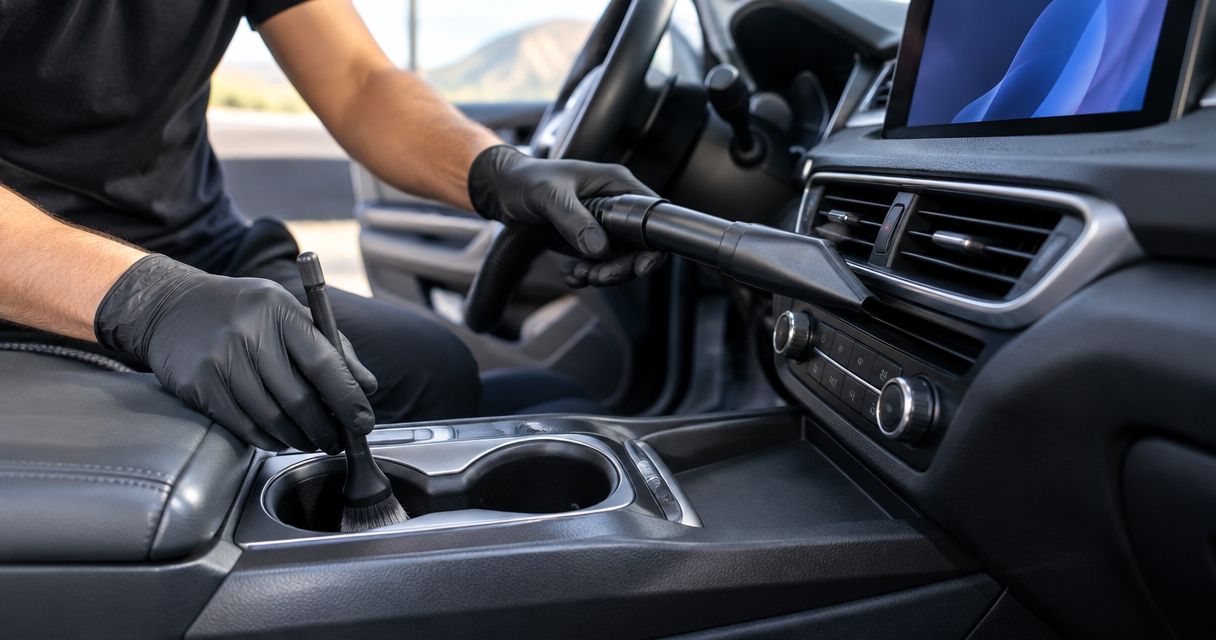
- Interior detailing still needs safe equipment placement, ventilation and a plan for drying upholstery.
- Pause exterior detailing when wind, hot panels or uncontrolled wastewater prevent safe work.
Is it safe to have your car detailed in a driveway?
Driveway detailing is safe when the site and cleaning process are suitable; a driveway alone does not make the job safe or unsafe. For your 2026 appointment, check the working space, drainage, weather and service scope before anyone unloads equipment.
Crispy Clean Mobile Carwash provides on-location mobile car wash and auto detailing for vehicle owners in Rio Rancho. Confirm your address, requested work and driveway conditions when discussing an appointment.
Use this comparison to match the work to the location. These are general service categories, not a statement of any provider’s package contents.
| Work type | Best for | Driveway advantage | Main limitation or risk |
|---|---|---|---|
| Interior detailing | Owners focused on cabin cleaning | Your vehicle stays at home while interior surfaces are cleaned | Open doors, cords and equipment need clear space |
| Carpet shampoo | Owners addressing dirty carpet | Cleaning happens where the vehicle is parked | Extracted wastewater needs proper disposal; carpet needs drying |
| Exterior washing | Owners removing exterior dirt | No trip to a wash location | Runoff, hot surfaces and wind need control |
| Waxing | Owners seeking paint protection | Protection can follow suitable washing and preparation | Application conditions must match product directions |
| Polishing | Owners addressing suitable paint defects | Work can take place on-site when conditions permit | Paint condition, lighting and technique require assessment |
| Full detailing | Owners wanting interior and exterior work | Both areas can be addressed during an on-location visit | The location must support both processes; inclusions need confirmation |
Why this matters
A convenient parking spot is not automatically a suitable cleaning area. Water can flow toward the street, an open door can block a walkway, and a hose can create a trip hazard across a shared entrance.
For a Rio Rancho homeowner booking in 2026, the useful question is not simply whether mobile detailing works. It is whether the planned work fits the actual driveway without putting people, property or the vehicle at unnecessary risk.
On-location convenience is a reason to consider driveway detailing, not a reason to skip the site check. The same assessment applies when you compare options in Albuquerque or Corrales; confirm service coverage rather than assuming a nearby city is included.
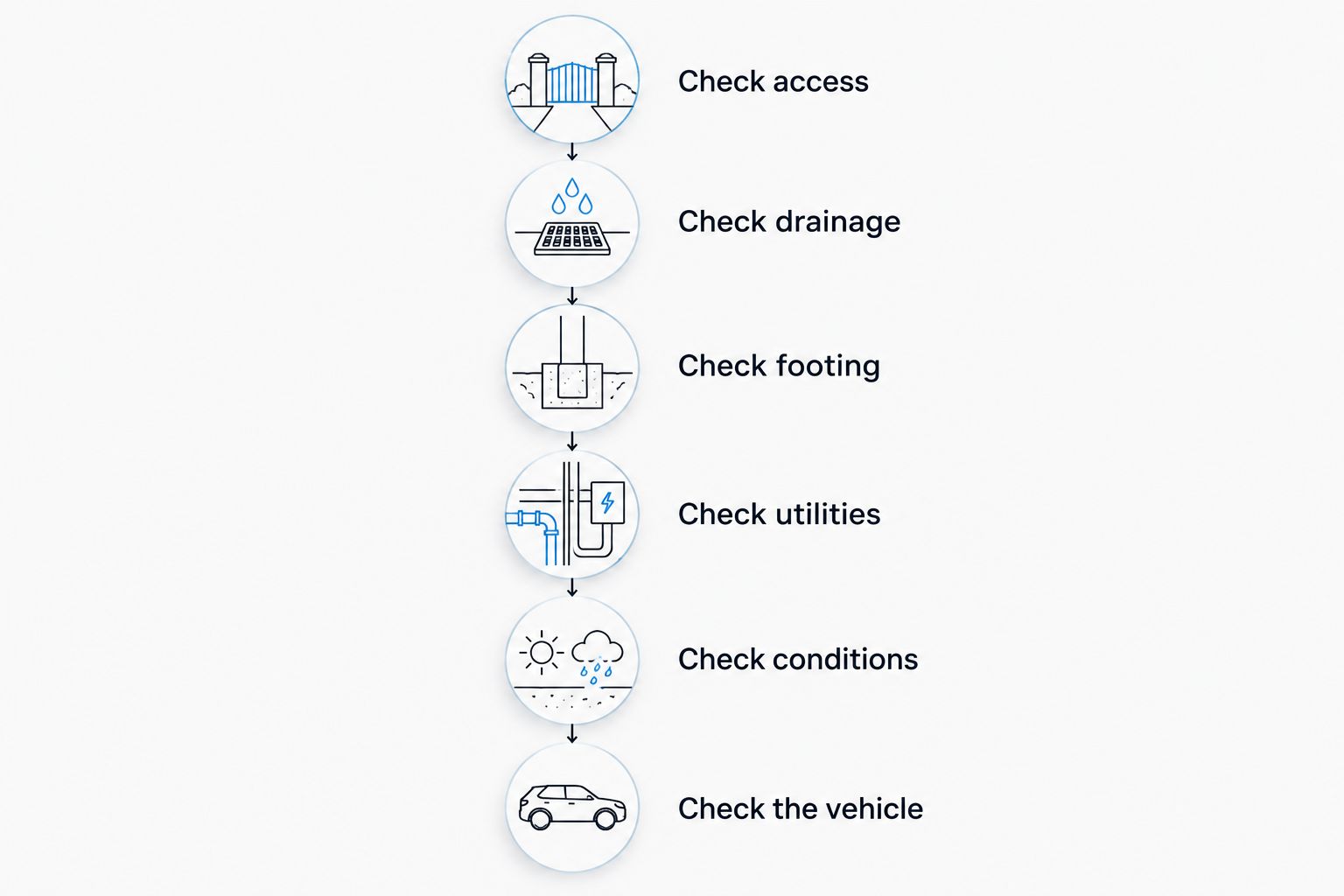
Check the driveway before the appointment
Walk through the setup with the detailer before work begins. A photo showing the parked vehicle, driveway slope and nearby sidewalk helps explain the location, but it does not replace an on-site check.
- Check access. Leave room to open doors and reach the vehicle without stepping into traffic, landscaping or a neighboring property. Keep the household entrance usable.
- Check drainage. Identify where wash water will travel. Ask how the detailer will prevent dirty water from entering the street or a storm drain and how collected wastewater will be disposed of.
- Check footing. Choose a stable surface without loose objects, obvious oil patches or damaged areas that create a trip hazard. Keep children and pets away from the work zone.
- Check utilities. Confirm whether the detailer supplies water and power or needs access to yours. Do not assume either arrangement is included.
- Check conditions. Have the detailer assess wind, precipitation, lighting and panel temperature. Agree on a different location or appointment if the setup is unsuitable.
- Check the vehicle. Point out peeling paint, loose trim, damaged seals, warning lights and aftermarket equipment before cleaning starts. Photograph existing damage for a shared record.
These checks address different problems. A shaded driveway can still have poor drainage, and a level driveway can still be too narrow to work around safely.
Exterior washing and waxing: control water and surface conditions
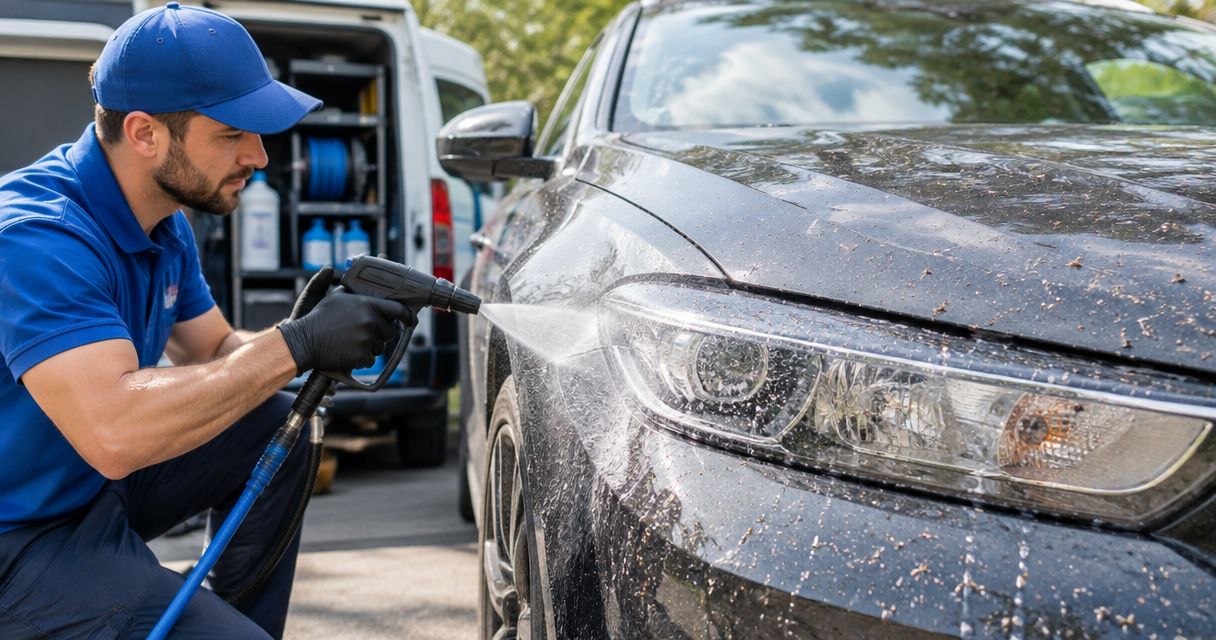
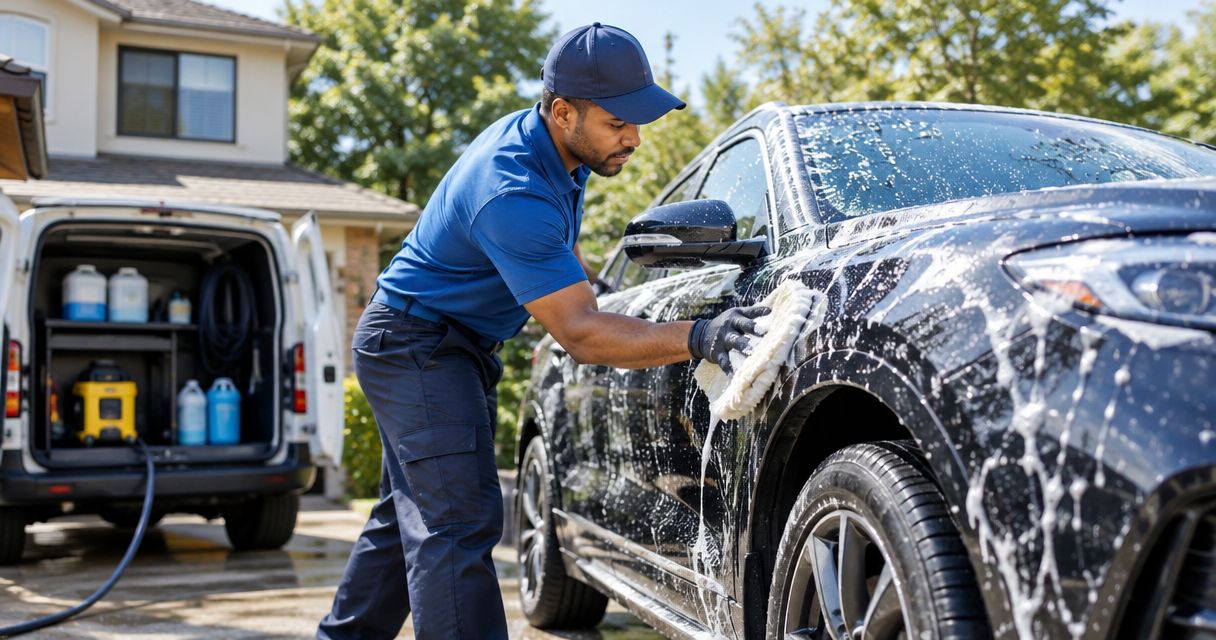
Exterior work brings the clearest driveway-specific concern: where the dirty water goes. Washing can carry road grime, oils and cleaning products off the vehicle, so a plan that simply sends everything downhill is not enough.
Ask what containment, collection or other wastewater-control method fits your property and applicable local requirements. Do not assume a biodegradable product makes storm-drain discharge acceptable. Product labeling and wastewater disposal are separate issues.
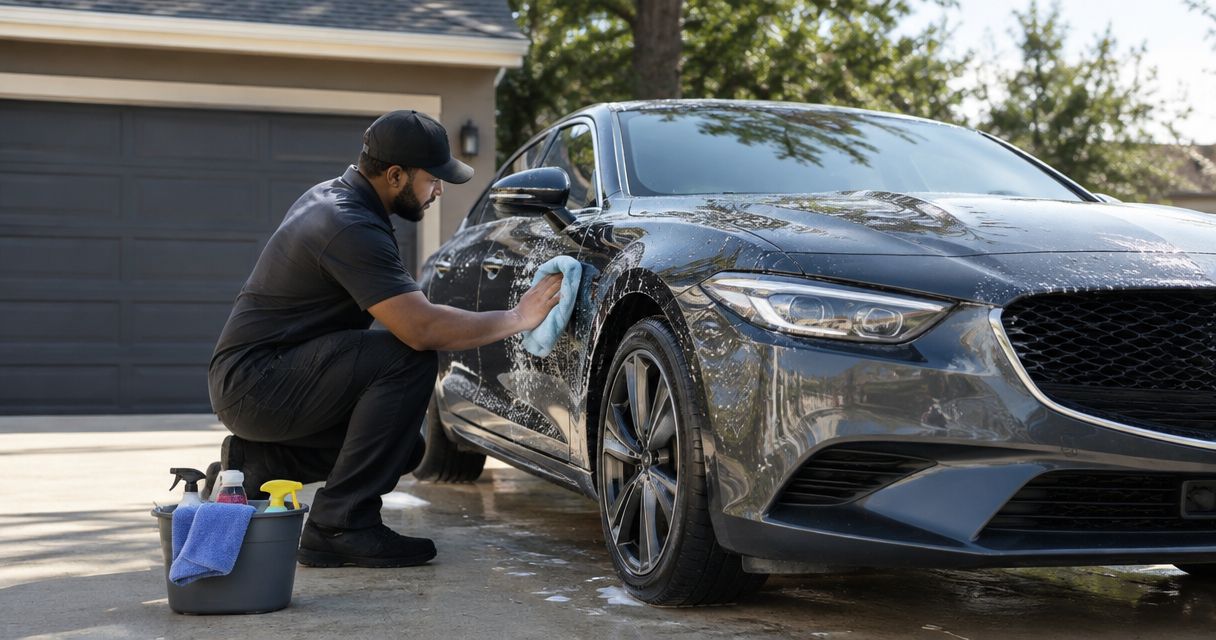
Sun and wind also affect the process. Cleaning products that dry before removal can leave residue, and hot panels can make correct application harder; follow the product’s surface-temperature and use directions rather than treating shade as a guarantee.
Waxing adds another preparation question: is the paint clean and suitable for the chosen product? Wax is not a substitute for removing dirt, and it should not be presented as a repair for damaged paint.
Interior detailing and carpet shampoo: plan for drying
Interior-only detailing avoids some exterior wash-water issues, but it still needs a safe setup. Vacuum cords, extraction hoses and open doors must not obstruct the path people use to enter the home.
Ask which materials will be cleaned and how. Leather, fabric, screens, headliners and aftermarket electronics do not all tolerate the same products or moisture levels; the method should match the surface and relevant manufacturer guidance.
Carpet shampooing requires a drying plan as well as a cleaning plan. Excess moisture left in carpet or seat padding can contribute to odors and microbial growth, so ask how moisture is extracted and how to judge when the vehicle is ready to close up or use.
Do not accept “finished cleaning” as proof that upholstery is dry. Before your 2026 appointment, discuss whether you need the vehicle immediately afterward and follow the detailer’s drying instructions without assuming a fixed drying time.
Polishing and full detailing: confirm the scope first
Polishing needs an assessment of the paint, not just enough driveway space. Abrasive polishing removes some finish material, so the operator must consider existing damage, previous repairs and the suitability of the proposed correction.
Ask which defects the work is intended to address and which will remain. Deep scratches, failing clear coat and loose paint are not problems to solve by promising more aggressive polishing.
Full detailing also needs a clear description. Ask whether the proposed work includes interior cleaning, exterior washing, waxing, carpet shampoo or polishing; do not assume those services are interchangeable or automatically bundled.
The driveway advantage is straightforward: you avoid taking the vehicle elsewhere. The limitation is equally clear: outdoor space does not offer the same environmental control as an enclosed work area.
Why driveway detailing safety varies
The right decision depends on the property and the work, not a blanket promise that every driveway qualifies. These factors should shape your 2026 booking:
- Drainage: The direction of runoff determines what containment or collection is needed and whether the location suits wet exterior work.
- Space and slope: The operator needs stable footing, safe equipment placement and access around the vehicle without blocking shared routes.
- Weather and exposure: Wind, rain, freezing conditions and hot surfaces affect whether the planned process can be performed properly.
- Service scope: Vacuuming, shampooing, washing, waxing and polishing create different equipment, moisture and surface-preparation requirements.
- Vehicle condition: Damaged paint, loose trim, leaking seals and sensitive interior materials require discussion before cleaning.
- Property permission: Rental terms, shared-property rules and homeowners association requirements need checking before equipment is set up.
For driveway mobile detailing, Crispy Clean Mobile Carwash is best for Rio Rancho vehicle owners seeking on-location service. Confirm the location and scope before booking; mobile convenience does not remove the need for suitable working conditions.
Do I need to provide water or electricity?
You need to provide water or electricity only if that is part of the arrangement with your detailer. Ask directly before the visit rather than assuming a mobile service is self-contained.
If household power is needed, have the operator confirm a suitable protected connection and equipment arrangement. Keep electrical connections away from standing water, and do not run fuel-powered equipment in a garage or enclosed area.
The guide to water and electricity for a mobile car wash covers the utility questions to raise. A confirmed setup prevents an appointment from turning into an improvised search for an outlet or hose connection.
Should I move my car if the driveway is unsuitable?
Yes—use an approved alternative location or reschedule when the driveway cannot support the work safely. Do not solve a cramped driveway by moving the job into a public road, blocking a sidewalk or using someone else’s property without permission.
An enclosed shop is worth considering when the proposed work needs more environmental control than the outdoor location provides. For interior work, a different approved parking position might address an access problem, but the operator still needs to assess it.
Change the location or the appointment, not the safety standard. If conditions change after arrival, stop and agree on the next step before work continues.
What should I ask before booking driveway detailing?
Describe the location and the result you want before agreeing to the service. For a 2026 booking, give the detailer your city, vehicle type, driveway surface, access restrictions and any known damage.
Ask for the scope and quote, then confirm wastewater handling, utility needs and weather arrangements. Request genuine customer reviews if you want evidence of other customers’ experiences; a review does not replace clear answers about your property.
For Crispy Clean Mobile Carwash, discuss your Rio Rancho address and requested mobile detailing work directly. Use the business’s published call/text details, website inquiry option or social messaging channel, and request confirmation rather than assuming a message secures an appointment.
Discuss your driveway detailing setup
Confirm your location, requested work and driveway conditions before booking.
FAQ
Can mobile detailing damage my driveway?
Detailing products, dirty runoff or equipment can stain or damage a driveway if the surface is not protected appropriately. Tell the operator about sealed, coated or recently treated surfaces and ask how the work area will be protected.
Is driveway detailing safe for my car’s paint?
Driveway detailing is safe for paint when the cleaning method, products and working conditions suit the finish. Existing damage, hot panels and contaminated wash materials require attention before exterior cleaning begins.
Can car wash water go into the street?
Do not assume car wash water can be discharged into the street or a storm drain. Confirm applicable local requirements and the detailer’s wastewater-control plan before exterior washing starts.
Can I have my car detailed in direct sunlight?
Direct sunlight is unsuitable when it makes panels too hot or causes products to dry contrary to their directions. Ask the operator to assess the surface and choose appropriate shade, another location or another appointment.
Can a detailer shampoo my car seats in the driveway?
Seat shampooing can be performed in a driveway when the upholstery permits that method and the setup supports safe extraction and drying. Confirm the material, wastewater disposal and drying instructions before work starts.
Should I leave my keys with the mobile detailer?
Agree on key access before the appointment and clarify whether the vehicle needs to be moved. Remove valuables and personal documents, and keep a way for the operator to reach you about existing damage or access issues.
One last thing
Look downhill before you look at the finished paint. The direction water leaves your driveway is easy to overlook, yet it determines whether exterior washing needs a different setup.
Before the appointment, take a photo from the vehicle toward the street and share it with the detailer. Include any nearby drain, shared walkway or steep section so the location discussion starts with the actual property.