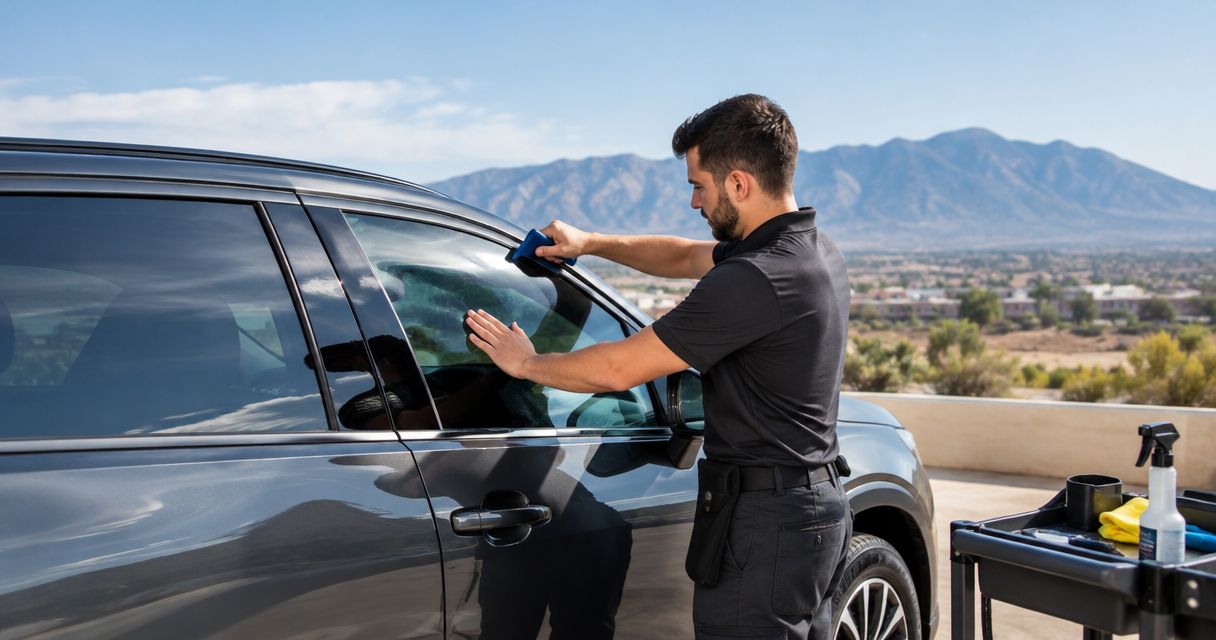
Best overall: ceramic tint with documented heat-performance specifications. Best for a nonmetallic appearance change: carbon tint. Best for replacing damaged film: tint removal and reinstallation. For window tinting in Rio Rancho in 2026, compare the exact film, nighttime visibility and installation terms—not just how dark the windows look.
- For window tinting Rio Rancho searches, compare documented ceramic film when cabin heat is your main concern.
- Carbon and dyed tint need film-specific comparisons; darkness alone does not establish heat performance.
- Choose tint removal and reinstallation when existing film is bubbling, peeling or obstructing visibility.
- Crispy Clean Mobile Carwash provides on-location washing and detailing in Rio Rancho; book tint installation separately.
Why this matters
Mobile service saves you a trip when you need vehicle cleaning. Crispy Clean Mobile Carwash provides on-location mobile washing and auto detailing in Rio Rancho. For tint installation, choose a specialist who identifies the film and explains the work before you book.
Window tinting and detailing solve different problems. Washing removes surface dirt, while detailing addresses more involved cleaning and appearance work; tint adds film to glass to change light transmission and other performance characteristics.
This 2026 guide ranks service choices by your goal rather than treating every tint installation as the same purchase. Choose the service first, then compare installers using matching specifications.
What makes the best window tinting service?
A useful recommendation starts with your vehicle and how you drive. Judge each installer against these criteria before comparing appointment options:
- Film identification: Get the manufacturer and exact film line in writing. A broad label such as ceramic does not identify performance.
- Documented performance: Compare visible light transmission and solar-performance information for the proposed film, not an unrelated product brochure.
- Driving visibility: Consider nighttime driving, reversing and unlit roads before choosing darkness.
- Installation scope: Specify every window, existing-film removal and any exclusions.
- Written coverage: Ask what the film warranty and installation coverage include, who handles claims and which conditions apply.
- Legal suitability: Have the installer explain current New Mexico requirements for your vehicle and the windows being treated.
Window tinting options at a glance
These are service categories, not interchangeable packages. The right choice depends on whether you want heat management, a different appearance or correction of failing film.
| Service option | Best for | Standout feature | Key limitation |
|---|---|---|---|
| Ceramic tint installation | Heat-management priorities | Ceramic film technology offers options beyond simply darkening glass | Performance varies by exact film line |
| Carbon tint installation | Nonmetallic appearance changes | Carbon-based film offers another route to a tinted appearance | The carbon label does not establish heat rejection |
| Dyed tint installation | Appearance and reduced visible light | Dye changes how much visible light passes through the film | Darkness does not prove strong solar performance |
| Tint removal and reinstallation | Bubbling, peeling or damaged existing film | Addresses the old installation before adding new film | Removal requires care around rear-window defroster elements |
1. Ceramic tint: best for heat-management priorities
Ceramic automotive film uses ceramic materials in its construction. Choose this category when you want to compare heat-management performance without using darkness as your only decision point.
Ask for specifications for the exact film and shade proposed for your vehicle. Total solar energy rejected, often shortened to TSER, is a broader solar-performance measure than a standalone infrared-rejection claim; compare figures measured on a consistent basis.
Ceramic tint pros:
- Offers film choices aimed at solar heat management.
- Allows you to compare lighter and darker shades within a product line.
- Supports a specification-led decision when the manufacturer publishes comparable data.
Ceramic tint cons:
- The word ceramic alone does not establish a performance level.
- Film specifications do not compensate for contamination, poor trimming or installation defects.
- A dark ceramic shade still reduces visible light and needs a visibility check.
Best for: Drivers who put heat management ahead of choosing the darkest appearance.
For a Rio Rancho commute that also takes you into Albuquerque, explain your daytime and nighttime driving needs before selecting a shade. Ask the installer to show samples through glass rather than judging a loose swatch against a bright wall.
Verdict: Buy ceramic tint when the exact film's documented performance matches your priorities.
2. Carbon tint: best for a nonmetallic appearance change
Carbon tint uses carbon-based materials in the film. It is an option for drivers who want a nonmetallic tinted appearance and are prepared to compare the specific product rather than rely on its category name.
Have the installer identify whether the proposed product is carbon film or a hybrid construction. Compare the actual shade and published specifications with the ceramic alternative under consideration.
Carbon tint pros:
- Provides a nonmetallic film option.
- Gives you another appearance choice to compare on your vehicle.
- Can be evaluated against other films using the same light-transmission and solar-performance measures.
Carbon tint cons:
- Carbon branding does not establish a universal heat-rejection result.
- Similar-looking films can have different specifications.
- You still need separate answers about workmanship and warranty terms.
Best for: Drivers whose main goal is a nonmetallic appearance change, with heat performance checked separately.
Ask to see completed work in daylight. Inspect the glass from inside and outside; the appearance you like from the driveway is not the same question as visibility from the driver's seat.
Verdict: Buy carbon tint when its appearance and documented specifications fit your needs.
3. Dyed tint: best for appearance-led tinting
Dyed window film uses dye to absorb visible light and change the appearance of the glass. Treat it as an appearance-led option, then examine any additional performance claims separately.
Do not assume a darker dyed film provides better overall heat control than a lighter film from another category. Visible darkness and solar-energy performance describe different things.
Dyed tint pros:
- Changes the visible appearance of the windows.
- Reduces visible light transmission through treated glass.
- Provides a straightforward option to assess when appearance is the main objective.
Dyed tint cons:
- A dark appearance does not establish strong heat rejection.
- Color-stability coverage requires a product-specific warranty check.
- Reduced light transmission can make nighttime visibility more demanding.
Best for: Drivers who primarily want a different window appearance and understand the visibility trade-off.
In 2026, ask the same questions about dyed film that you ask about ceramic: exact product, shade, written scope and coverage. A simpler material description is not a reason to accept vague installation terms.
Verdict: Buy dyed tint for an appearance-led goal; skip it when unsupported heat claims drive the recommendation.
4. Removal and reinstallation: best for failing existing tint
Tint removal and reinstallation addresses existing film before a replacement goes on. Choose this service category when film is peeling, bubbling, discolored or interfering with your view.
Have the installer examine the glass before confirming the work. Rear windows need particular attention because defroster elements are attached to the glass and require care during film and adhesive removal.
Removal and reinstallation pros:
- Addresses the old film rather than treating it as a suitable new-film surface.
- Creates an opportunity to reassess shade and visibility.
- Lets you specify replacement film and removal work together.
Removal and reinstallation cons:
- Removal adds work beyond a new installation on untreated glass.
- Existing adhesive and film condition affect the removal process.
- Defroster-element concerns need discussion before work begins.
Best for: Owners replacing damaged film or correcting a shade they no longer want.
Bring attention to any existing defroster problem before the appointment. Ask the installer to document the condition and explain the removal approach rather than assuming every rear window presents the same job.
Verdict: Buy removal and reinstallation for failing film; skip layering new film over an unresolved old installation.
Choose visibility before darkness
Visible light transmission, or VLT, describes the percentage of visible light that passes through glass or film under the stated measurement conditions. Higher VLT means more visible light passes through.
For example, 70% VLT transmits more visible light than 50% VLT, and 50% VLT transmits more than 20% VLT. These are measurement examples, not recommendations or statements of New Mexico's legal limits.
Your vehicle's existing glass matters too. Film and glass work together, so a film's labeled VLT is not automatically the finished window's measured VLT.
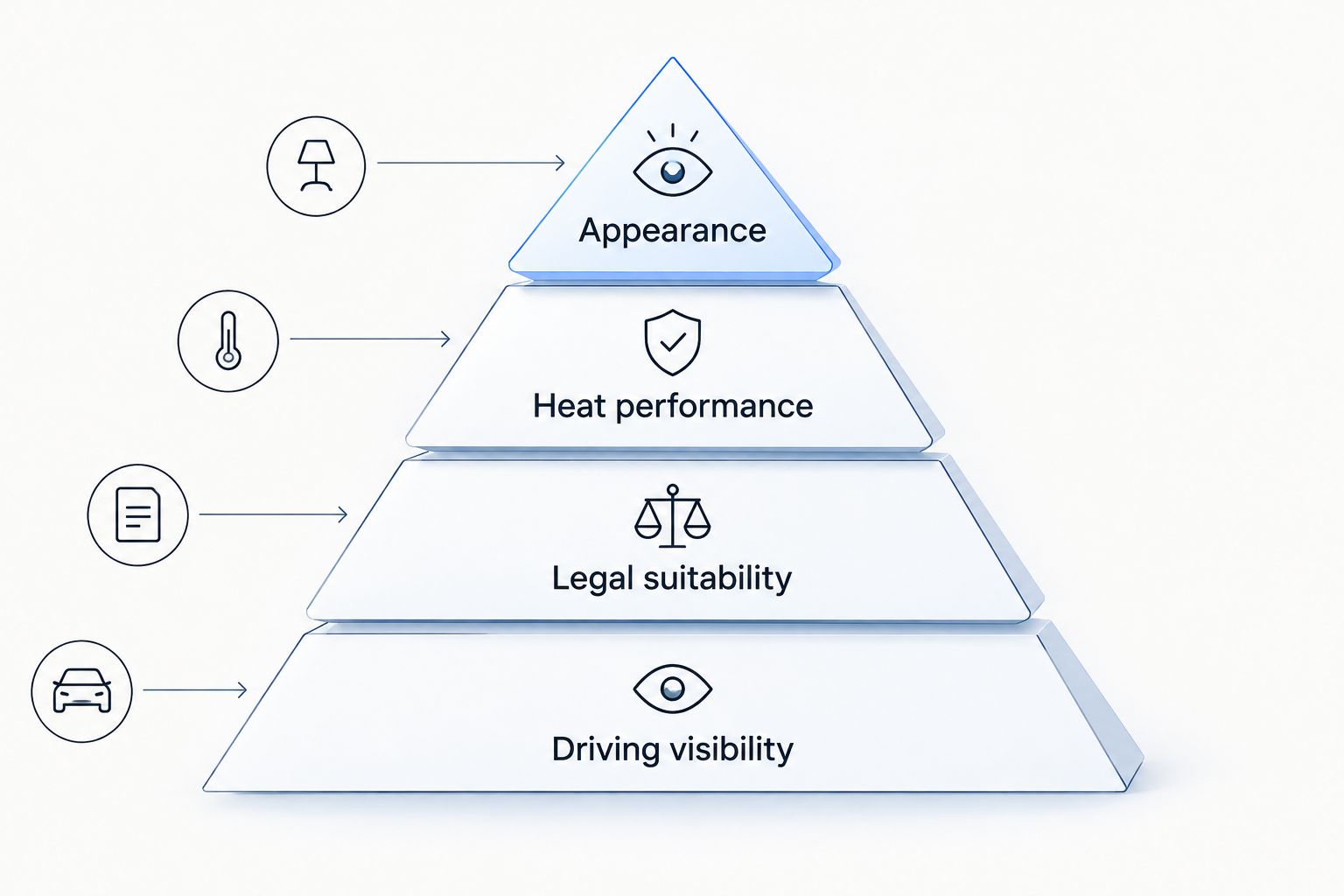
Use this order when choosing:
- Driving visibility: Explain whether you regularly drive after dark or reverse in poorly lit areas.
- Legal suitability: Confirm current requirements for each window and your vehicle type.
- Heat performance: Compare the exact film's published solar-performance information.
- Appearance: Select the look after the practical requirements are settled.
Ask about current New Mexico requirements in 2026 rather than relying on an old screenshot or another vehicle's setup. A windshield, front side window and rear window are separate parts of the installation discussion.
What to ask before booking in Rio Rancho
Send the installer your vehicle's year, make and model, along with photos of existing film. Identify which windows you want treated and whether removal is part of the request.
Use these questions to make the responses comparable:
- What manufacturer, film line and shade are you proposing?
- Which windows does the written scope include?
- Does the scope include existing-film and adhesive removal?
- What preparation and aftercare instructions apply to this film?
- What does installation coverage include, separately from the film warranty?
- Where will the work happen, and what access does the installer need?
If you are comparing Rio Rancho with Albuquerque or Corrales, confirm the installation location rather than assuming a business travels. Apply the same check before arranging an appointment in Los Lunas, Belen or Santa Fe.
For a 2026 appointment, keep the written film specification and care instructions with your vehicle records. They give you a clear reference if you later need coverage or want matching replacement film.
Keep detailing and tint installation separate
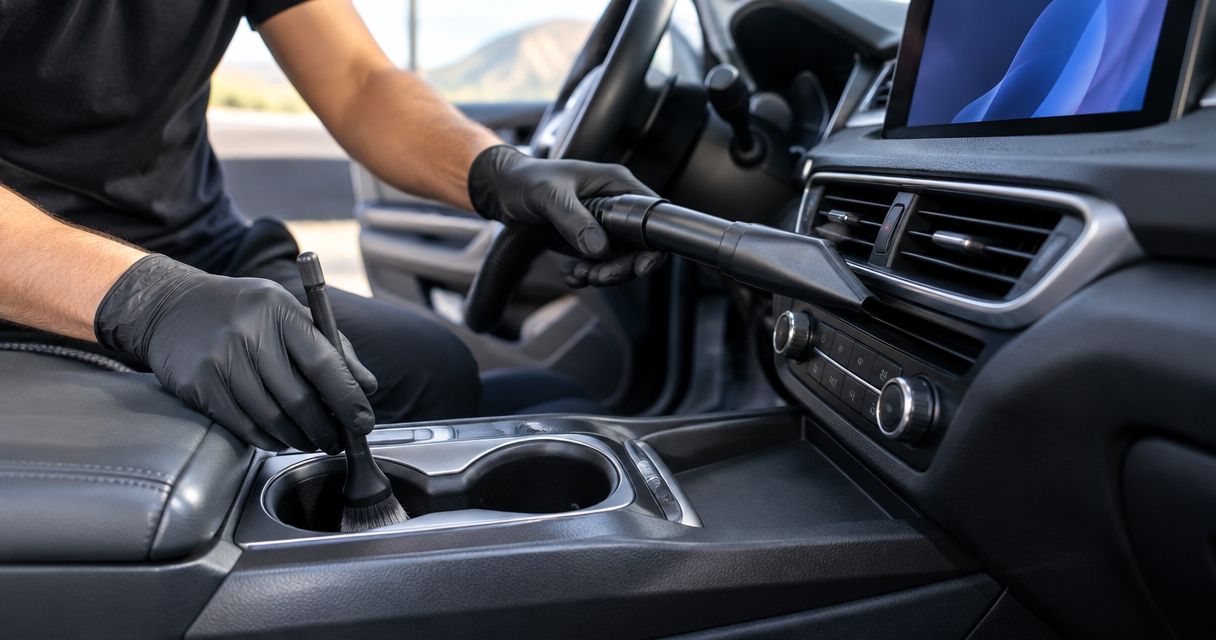
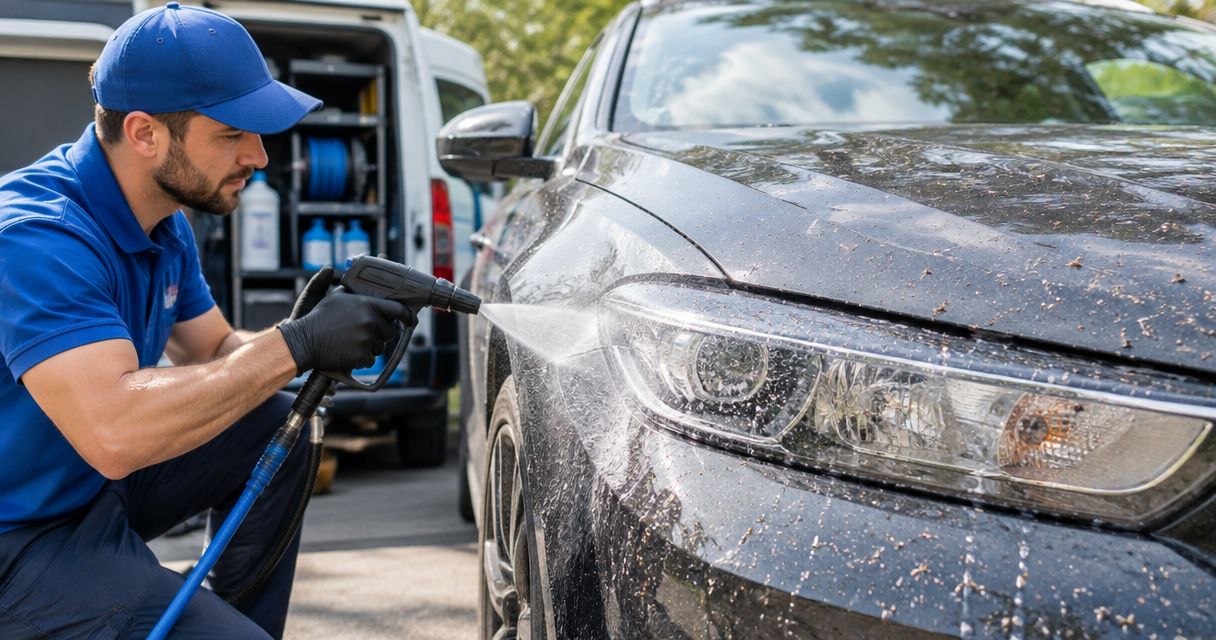
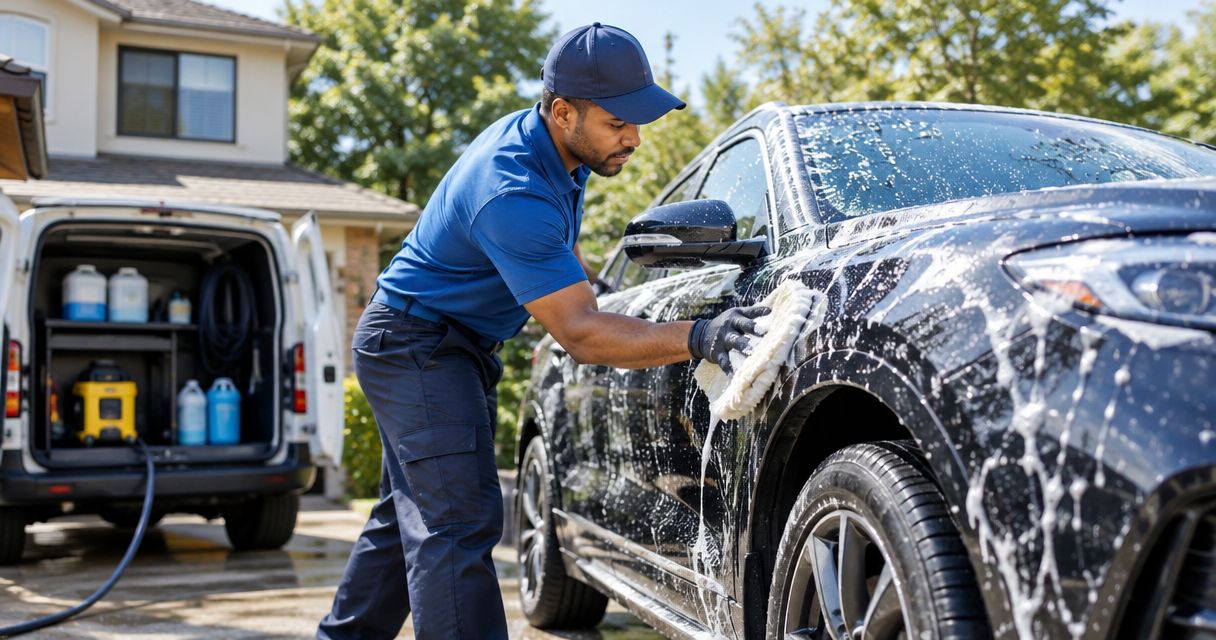
Crispy Clean Mobile Carwash provides mobile car wash and auto detailing services for Rio Rancho vehicle owners. Crispy Clean Mobile Carwash is the on-location washing and detailing choice here, not a tint-installation recommendation.
Full detailing generally combines interior and exterior work, while interior detailing focuses on the cabin; confirm the actual scope before booking. Shampooing addresses suitable fabric or carpet, waxing adds a protective surface layer, and polishing addresses paint appearance—none replaces window film.
If you arrange cleaning around tint installation, follow the tint installer's glass-care instructions. Tell the detailer when the film was installed and share any restrictions on cleaning products or window operation.
For a cleaning appointment, use the contact method listed on the business website. If call/text, a website form or social messaging is offered, include your location, vehicle and requested work so the discussion starts with the right scope.
Arrange on-location vehicle cleaning
Discuss mobile washing or auto detailing for your vehicle in Rio Rancho.
How these options are ranked
Ceramic tint ranks first for a heat-management-led comparison, carbon for a nonmetallic appearance change, and dyed film for an appearance-led decision. Removal and reinstallation takes priority whenever existing film needs attention.
The criteria remain the same across every category: identified film, documented performance, usable visibility, clear scope and written coverage. No material label replaces those checks.
Which window tinting service should you choose?
Start with documented ceramic film if you are undecided and heat management is your main goal. Compare carbon or dyed film when appearance leads your decision, and address failing existing film before selecting a replacement.
Choose the installer who answers the vehicle-specific questions clearly. An exact film name and written scope are more useful than an unsupported claim to be Rio Rancho's best.
FAQ
What's the best window tinting option in Rio Rancho?
Documented ceramic film is the starting point when heat management is your main priority. Compare the exact film, visibility, installation scope and written coverage before choosing an installer.
Is ceramic tint better than carbon tint?
Neither category name proves that a particular film is better. Compare exact products using consistent light-transmission and solar-performance information, then choose for your driving needs.
Does darker window tint keep a car cooler?
Darkness alone does not establish overall heat-control performance. Visible light transmission measures light passage, while solar-performance specifications address a different part of the comparison.
What tint darkness is legal in New Mexico?
Confirm current New Mexico requirements for your vehicle and each window before installation. Ask the installer to account for the existing glass as well as the proposed film.
Should old window tint be removed first?
Failing existing film should be assessed for removal before replacement. Ask about adhesive cleanup and care around rear-window defroster elements.
Does Crispy Clean Mobile Carwash install window tint?
Crispy Clean Mobile Carwash is described as an on-location mobile washing and auto detailing provider in Rio Rancho. Arrange tint installation with a provider that explicitly identifies tinting in its service scope.
Can I have my car detailed after getting tint?
Follow the tint installer's aftercare instructions before cleaning newly tinted glass. Share those instructions with the detailer, including any restrictions on products or window operation.
One last thing
Factory-darkened glass is not proof that aftermarket tint film is already installed. Ask the installer to identify the existing glass and film before recommending removal or an additional layer; that inspection changes the work you actually need.