Best for heat-focused shopping: ceramic-film installation with documented performance. Best for a darker appearance without a metallic film: carbon-film installation. Best for straightforward shading: dyed-film installation. Best for peeling or bubbling tint: removal and replacement. For window tinting Albuquerque searches in 2026, choose the service that solves your problem, then compare the installer’s written scope—not just the shade.
- For window tinting Albuquerque, compare ceramic, carbon, and dyed film by documented performance, visibility, and installation scope.
- Ceramic-film installation is the heat-focused shortlist choice; darkness alone does not establish heat rejection.
- Choose tint removal and replacement when existing film is peeling, bubbling, or interfering with visibility.
- Crispy Clean Mobile Carwash provides mobile washing and detailing, a separate service from window tint installation.
Why this matters
Window tint changes how your vehicle looks and how you see through its glass. The right choice starts with your driving needs: managing sunlight, reducing glare, changing appearance, or replacing damaged film. Those are different jobs.
Crispy Clean Mobile Carwash is for Rio Rancho vehicle owners seeking on-location washing and auto detailing, not a window-tint recommendation. Keep those appointments separate. You can review Crispy Clean Mobile Carwash for vehicle cleaning while comparing tint installers on film specifications and installation terms.
This 2026 guide ranks service approaches by purpose. A useful tint recommendation identifies the film, explains its limitations, and tells you what to verify before authorizing work.
What makes the best window tinting service?
Use these criteria before comparing an Albuquerque appointment:
- Exact film identification: Get the manufacturer, product line, and selected shade in writing. A description such as ceramic does not identify the complete product.
- Relevant performance documentation: Compare the same measurements across films. Visible light transmission, glare reduction, and solar-energy performance describe different things.
- Legal fit: Confirm current New Mexico requirements for your vehicle and each window being treated. Factory glass affects the finished result.
- Installation scope: Identify the windows included, preparation work, existing-film removal, and treatment of edges and rear-window defroster lines.
- Written warranty and aftercare: Read who provides coverage, what it covers, and what you must do after installation.
- Evidence of workmanship: Look for clear photos and reviews that discuss edges, visibility, cleanliness, and how installation problems were handled.
Ask for 3 film details before booking: manufacturer, product line, and visible light transmission. Then ask for 2 written documents: the installation scope and warranty terms. These are comparison steps, not guarantees of workmanship.
Window tinting options at a glance
| Ranked service option | Best for | What distinguishes it | Key limitation |
|---|---|---|---|
| Ceramic-film installation | Heat-focused film comparisons | Ceramic materials are used in the film’s construction | The category name does not establish a particular film’s performance |
| Carbon-film installation | A darker appearance without metallic film | Carbon materials are used in the film’s construction | Appearance does not establish heat rejection or nighttime visibility |
| Dyed-film installation | Straightforward shading | Dye provides the film’s coloration | Shade alone does not establish broader solar performance |
| Tint removal and replacement | Peeling, bubbling, or unwanted existing film | Removes the old layer before a new installation | Removal adds work and requires care around glass-mounted components |
The table separates 4 service options by the job you need done. It does not treat film categories as interchangeable or rank installers by unsupported reputation claims.
1. Ceramic-film installation: best for heat-focused comparisons
Ceramic automotive tint uses ceramic materials within the film construction. If your main concern is sunlight entering the cabin, start with this category and request the exact product’s published performance information.
Do not approve a ceramic installation based on the category name alone. Compare the selected shade, the stated measurement, and the testing basis. A performance figure is useful only when you understand what it measures.
Ceramic-film installation pros:
- Gives heat-focused shoppers a specific film category to investigate.
- Lets you compare different shades within a documented product line.
- Separates your performance requirements from a preference for dark glass.
Ceramic-film installation cons:
- The ceramic label does not identify the manufacturer or product line.
- Film specifications do not prove the quality of the installation.
- A darker selection still requires a visibility and legal check.
Best for: You want to compare documented solar performance rather than choose tint by appearance alone.
For a 2026 appointment, ask the installer to identify the recommended film and explain the performance measurement being used. Total solar energy rejected and infrared measurements are not interchangeable labels. Compare like with like.
Verdict: Buy ceramic-film installation when the exact product’s documentation supports your heat-focused requirements. Skip a recommendation based only on the word ceramic.
2. Carbon-film installation: best for a nonmetallic dark appearance
Carbon automotive film uses carbon materials in its construction. It belongs on your shortlist when you want a darker appearance and specifically want to compare a nonmetallic film option.
Treat appearance and performance as separate decisions. Ask to see the proposed shade, then read its specifications. The same category can include products with different visible light transmission and solar-performance characteristics.
Carbon-film installation pros:
- Provides a distinct alternative to dyed and metallic film categories.
- Gives appearance-focused shoppers a defined product type to discuss.
- Supports a direct comparison when the installer supplies exact specifications.
Carbon-film installation cons:
- A dark appearance does not establish strong heat rejection.
- The carbon label does not tell you how the finished glass will look.
- Existing factory glass affects the final visible light transmission.
Best for: You prioritize a darker appearance and want the installer to identify a nonmetallic film construction.
Ask to view a sample through glass, not only against a bright display. Consider your actual driving conditions, including evening travel between Albuquerque and Rio Rancho. Your view through the window matters more than a promotional photograph taken from outside.
Verdict: Buy carbon-film installation when its documented shade and performance fit your needs. Hold if you have seen only an exterior appearance sample.
3. Dyed-film installation: best for straightforward shading
Dyed automotive film uses dye to give the film its coloration. It is a clear option to discuss when your primary goal is shading the windows rather than selecting a particular heat-focused film construction.
Keep the job description narrow. Ask what the selected product does, what its published specifications establish, and what its warranty covers. Do not assume a darker dyed film performs like a different film category.
Dyed-film installation pros:
- Matches a straightforward shading and appearance brief.
- Provides a defined film category for comparing written proposals.
- Lets you focus on shade, visibility, and installation quality without unnecessary extras.
Dyed-film installation cons:
- Darkness is not a substitute for solar-performance documentation.
- Appearance samples do not establish long-term product performance.
- Product-specific warranty terms still require careful reading.
Best for: You want a documented shading solution and do not need to select a film primarily by its construction technology.
For 2026 comparisons, ask the installer to explain any recommendation to change categories. The explanation should refer to your needs and the proposed products’ specifications—not simply describe one option as premium.
Verdict: Buy dyed-film installation for a clearly defined shading job. Skip it when the proposal cannot explain whether it meets your stated performance requirements.
4. Tint removal and replacement: best for damaged existing film
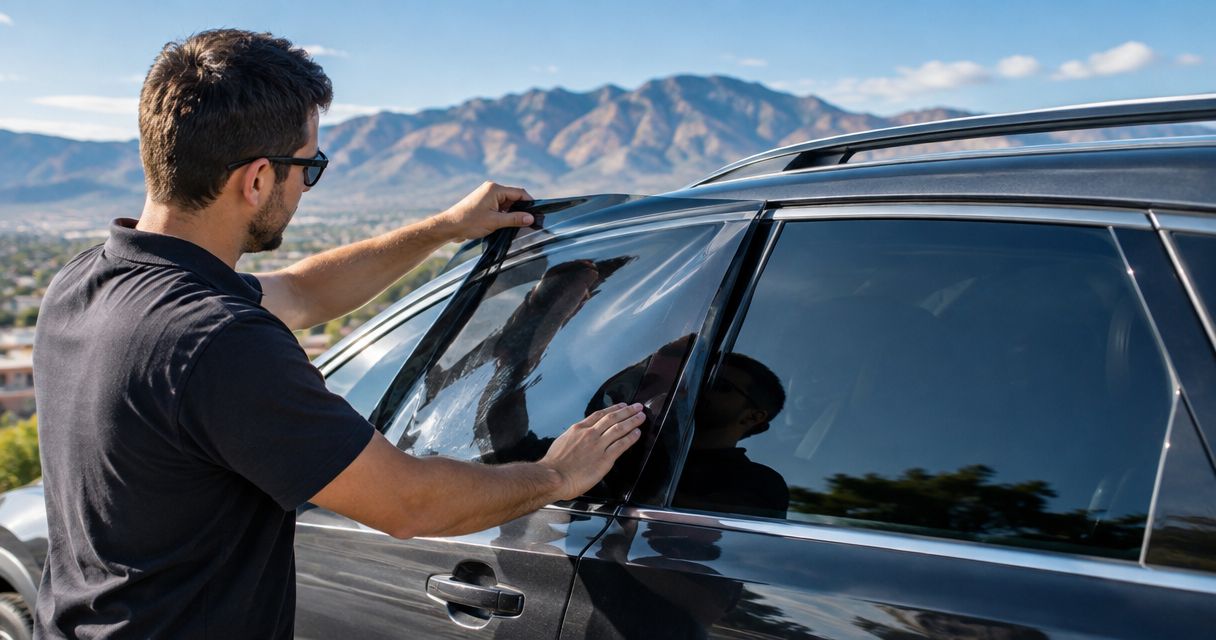
Tint removal and replacement addresses the old installation before adding new film. Choose this service path when the current tint is peeling, bubbling, unwanted, or obstructing your view.
The installer needs to inspect the existing film and glass. Rear-window defroster lines and other glass-mounted components deserve specific discussion because removal involves more than choosing a new shade.
Tint removal and replacement pros:
- Addresses the existing layer instead of treating it as an afterthought.
- Creates a clear opportunity to reassess shade and visibility.
- Separates removal work from the new film installation in the written scope.
Tint removal and replacement cons:
- Adds preparation work to the appointment.
- Requires careful handling around defroster lines and attached components.
- Replacing film does not repair unrelated glass damage.
Best for: Your current tint has visible defects, no longer suits your needs, or needs to come off before a new installation.
Photograph the condition of the windows before the appointment. Ask how the installer will document existing defects and what happens if inspection identifies a separate glass problem. Keep the removal scope explicit.
Verdict: Buy removal and replacement when the old film is the problem. Wait on new-film selection until the installer has assessed the existing installation.
Choose the service by your main priority
Start with the problem, not the darkest sample. Use this decision sequence to narrow the appointment:
- Heat focus: Compare ceramic-film specifications against your requirements.
- Dark appearance: Examine carbon-film shade and visibility through glass.
- Simple shading: Ask whether a documented dyed-film option fits the job.
- Damaged film: Arrange an assessment for removal and replacement first.
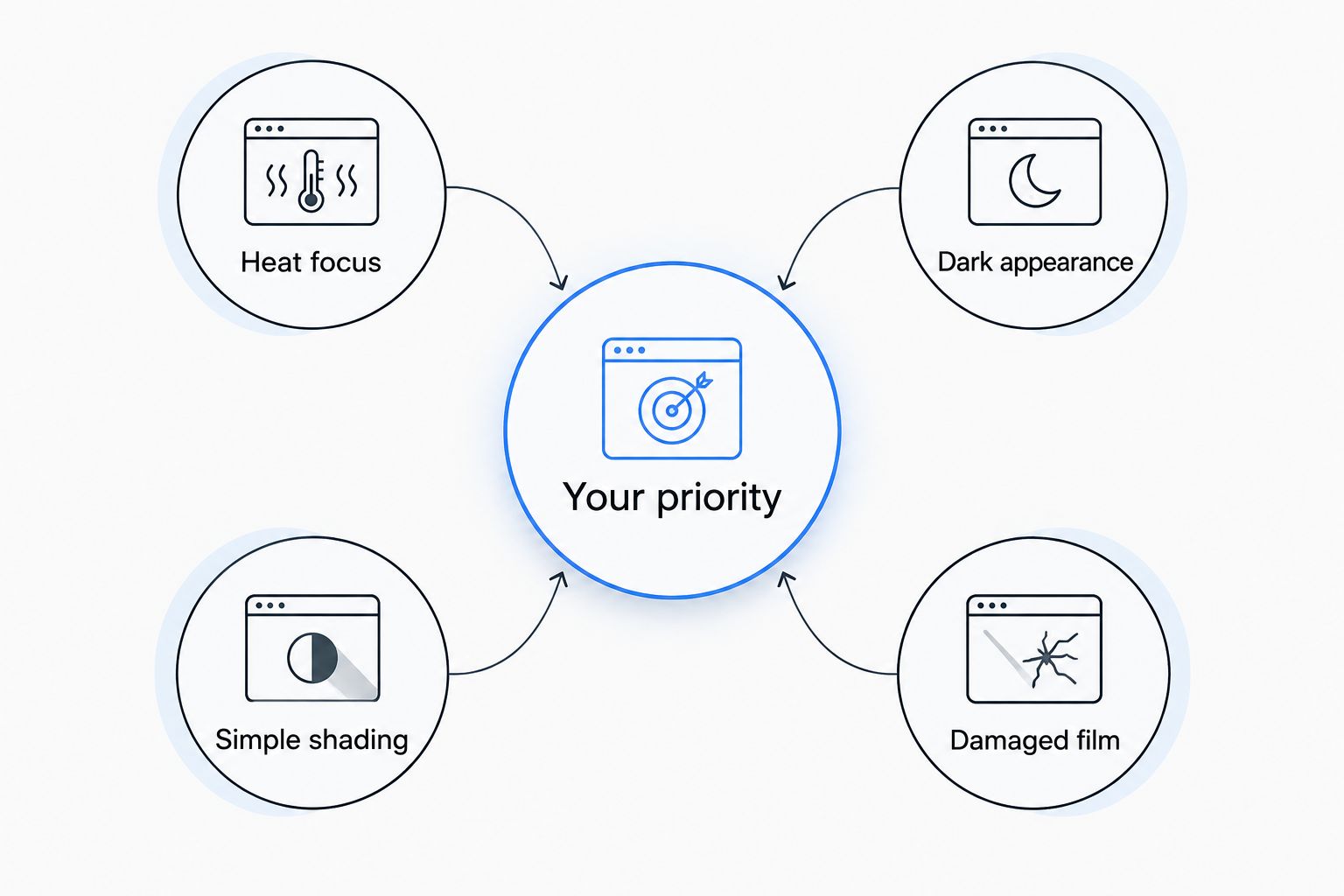
An installer’s recommendation should connect directly to one of these priorities. If the proposal lists several film options without explaining their differences, ask for a side-by-side specification comparison before choosing.
Check legality, visibility, and scope before booking
For a 2026 tint appointment, confirm current New Mexico rules rather than relying on an old forum answer. Ask how the proposed installation accounts for your vehicle type, the window position, and any existing factory tint.
Visible light transmission describes how much visible light passes through a material. The finished window includes the glass and applied film together. A film label by itself does not describe the complete installed window.
Use a short booking checklist:
- Identify every window included in the work.
- State whether existing film needs removal.
- Request the exact film and selected shade.
- Ask how compliance will be checked.
- Discuss nighttime visibility and your normal driving conditions.
- Get written aftercare and warranty instructions.
If you are traveling from Corrales or Santa Fe to an Albuquerque installer, confirm the appointment location and collection arrangements directly. Do not assume a shop provides mobile tint installation because another automotive service comes to your driveway.
Compare workmanship and reviews, not just film labels
Read reviews for details about the actual installation. Comments about clean edges, visibility, communication, and problem resolution help you assess a service more directly than praise without a description of the work.
Look at photographs of the windows, not only wide shots of the vehicle. Ask how the installer distinguishes normal curing conditions from defects that need inspection. Follow the chosen film’s aftercare instructions rather than borrowing a timeline from a different product.
Keep washing and detailing separate from film installation. Crispy Clean Mobile Carwash provides on-location mobile car wash and auto detailing in Rio Rancho. That description does not establish window-tint installation, tint-removal services, or coverage for another city.
How the options are ranked
This 2026 ranking follows the stated use case: heat-focused comparison, darker appearance, straightforward shading, and correction of damaged film. Exact specifications, legal fit, installation scope, and written terms determine the final choice.
The film category starts the shortlist. The documented product and installation plan decide the appointment.
Which window tinting service should you choose?
Choose ceramic-film installation as your starting point when heat-focused performance is the main concern. Choose carbon or dyed film only after the proposed product matches your appearance, visibility, and performance requirements. If existing tint is damaged, start with removal assessment instead.
For window tinting in Albuquerque in 2026, the best next move is to request an itemized installation scope and exact film specifications. Book the tint job with a provider that confirms those details. Contact Crispy Clean Mobile Carwash separately for its stated mobile washing and detailing services.
FAQ
What's the best window tinting option in Albuquerque for heat concerns?
Ceramic-film installation is the starting shortlist choice for heat-focused comparisons. Request the exact product’s published solar-performance specifications and compare the same measurements across alternatives.
Is ceramic window tint better than carbon tint?
Ceramic tint is not automatically better for every requirement. Compare the exact products by solar performance, visible light transmission, appearance, and warranty rather than choosing by category name alone.
Does darker window tint reject more heat?
Darkness alone does not establish heat rejection. Visible light transmission and solar-performance measurements describe different properties, so compare the selected film’s documentation.
How do I know whether my window tint is legal in New Mexico?
Confirm current New Mexico requirements for your vehicle and the specific windows being treated. Ask the installer how the glass and film together will meet those requirements.
Should I replace tint that is bubbling or peeling?
Arrange an assessment for removal and replacement when existing tint is bubbling or peeling. Ask the installer to inspect the glass and discuss removal around rear-window defroster lines before approving work.
Can I book mobile detailing and window tinting as the same service?
Mobile detailing and window tint installation are separate services. Crispy Clean Mobile Carwash provides on-location washing and auto detailing in Rio Rancho; its stated services do not establish tint installation.
What should I ask an Albuquerque tint installer before booking?
Ask for the exact film, selected shade, windows included, removal scope, compliance check, warranty, and aftercare instructions. Get the installation scope and warranty terms in writing before authorizing work.
One last thing
Before leaving the installation appointment, ask the installer to write down the film manufacturer, product line, and shade. Keep that record with the warranty. If a window later needs replacement, you will have a specific product reference instead of a guess based on how dark the glass looks.