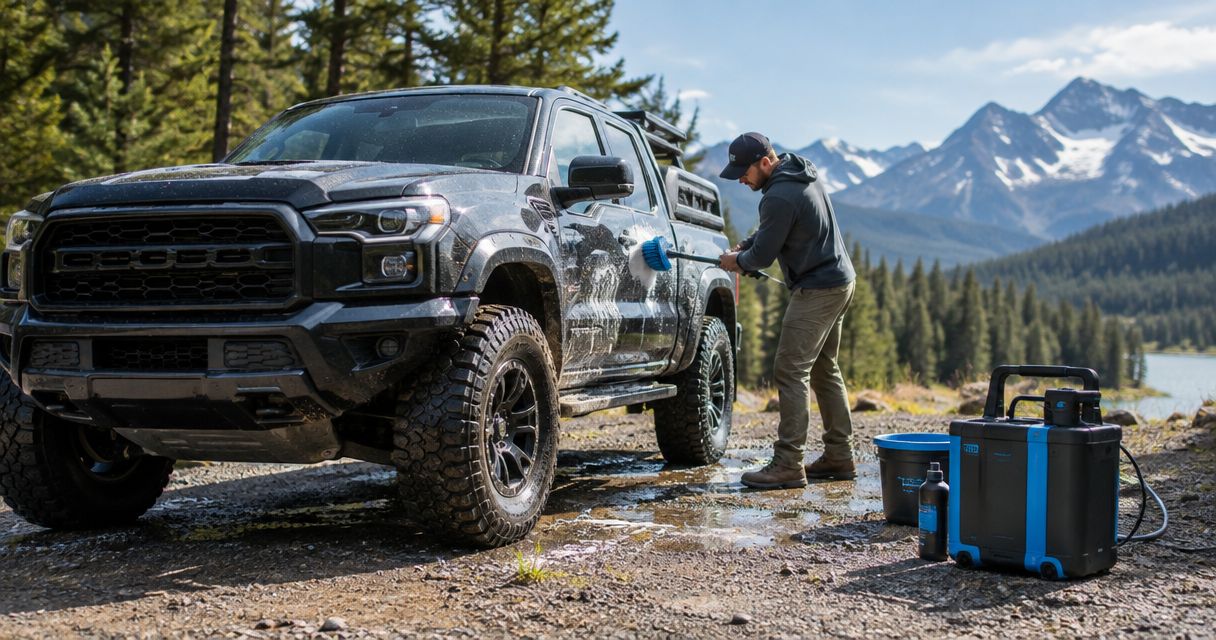
Off-road truck mobile detailing is on-location vehicle cleaning aimed at removing trail dirt and cabin grime without a separate trip to a wash site. This 2026 guide explains how to plan cleaning around mud, dusty interiors, oversized tires, and aftermarket accessories rather than treating your truck like an ordinary commuter car.
- Mobile detailing for off-road trucks needs a clear scope: paint, wheel wells, interior detailing, and underbody cleaning are separate requests.
- Crispy Clean Mobile Carwash suits Rio Rancho owners seeking on-location washing and auto detailing; confirm truck-specific work before booking.
- Remove loose grit before contact washing, and distinguish waxing from paint polishing.
- Send condition photos and confirm access, runoff handling, and cleaning exclusions before your appointment.
Why mobile detailing matters for off-road truck owners
A truck can have a lightly dusty hood, packed wheel wells, and deeply soiled carpets at the same time. Those conditions need different work. Booking a general wash without describing the buildup leaves the most important details unresolved.
On-location cleaning removes the separate drive to a wash facility, but it does not remove the need for suitable working space. Lifted suspension, roof accessories, bed-mounted equipment, and loose trail gear all affect access. Describe the actual vehicle, not just its make and model.
For your 2026 appointment, compare providers by their stated scope and the conditions they accept. The guide to mobile detailing services in Rio Rancho offers a local starting point; ask each provider directly about your truck's condition.
Choose the cleaning scope before choosing a package name. Full detailing means little unless you know which surfaces and tasks the appointment includes.
How to plan an off-road truck detail
Start with your own inspection and basic preparation. Then decide which work you can handle safely and which work you want a detailer to complete. Follow the same sequence whether your truck carries weekend trail gear or serves as your daily driver.
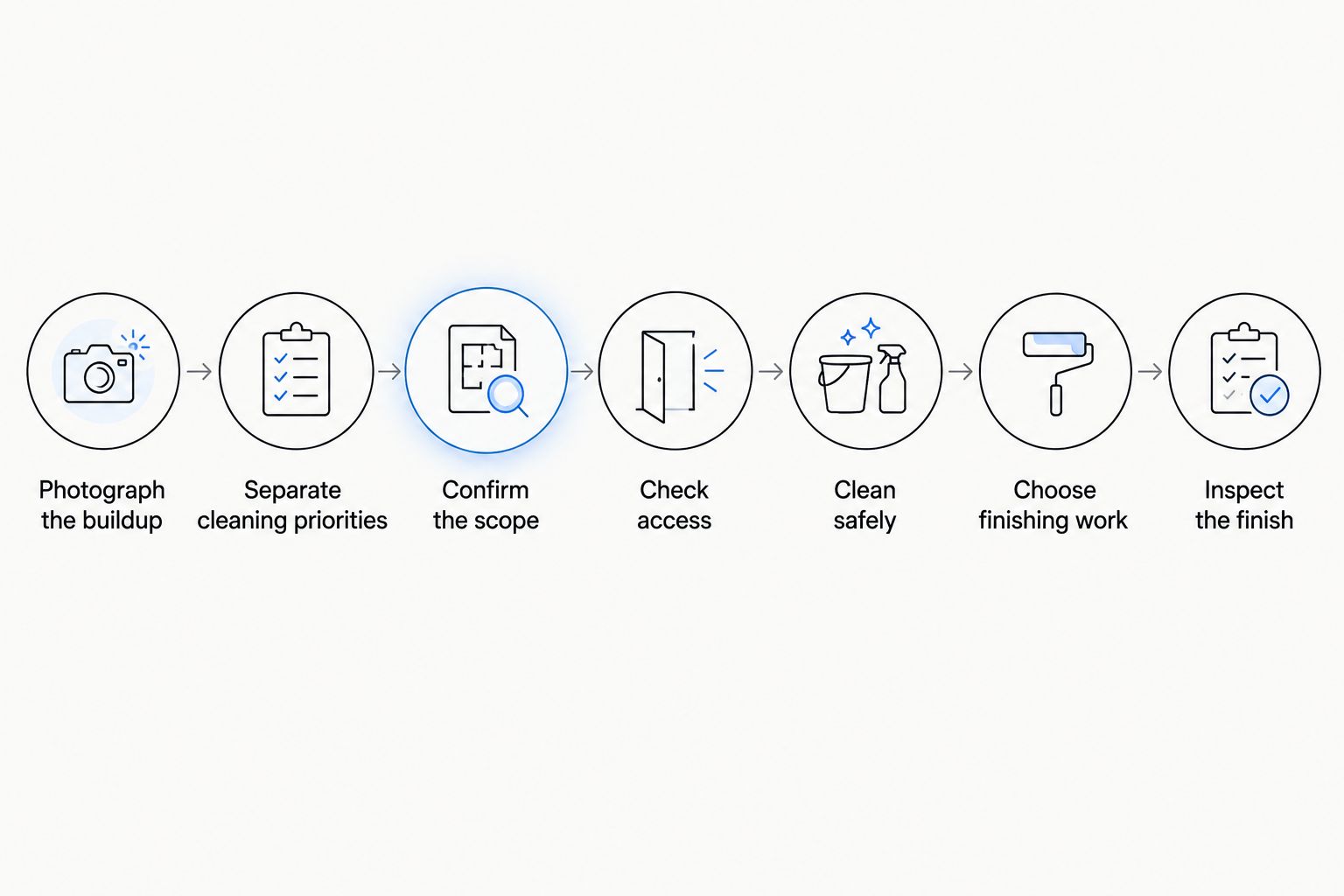
Photograph the buildup
Inspect your truck before removing dirt or applying cleaners. Take 4 reference photos: one of the exterior, one of the dirtiest wheel well, one of the cabin, and one of the bed. Add close-ups when a particular stain, accessory, or damaged surface needs discussion.
Photos help separate visible dirt from a request for restoration. A dusty dashboard, embedded carpet grit, and scratched paint are different problems; asking for a clean truck does not explain which one matters most. Identify your main concern in plain language.
Check the owner's manual and accessory instructions for cleaning restrictions. Aftermarket finishes and equipment do not automatically share the same care requirements as factory paint. Avoid describing anything as safe to pressure wash unless its instructions support that treatment.
- Photograph dried mud before attempting removal.
- Point out existing scratches and damaged trim.
- Identify wraps, matte finishes, and aftermarket accessories.
- Show the detailer any area that requires special access.
Separate cleaning priorities
Divide the truck into 3 cleaning zones: exterior surfaces, cabin surfaces, and utility areas such as the bed. Write down the result you want for each zone. This is the simplest way to avoid booking exterior work when dirty seats and carpet are your real concern.
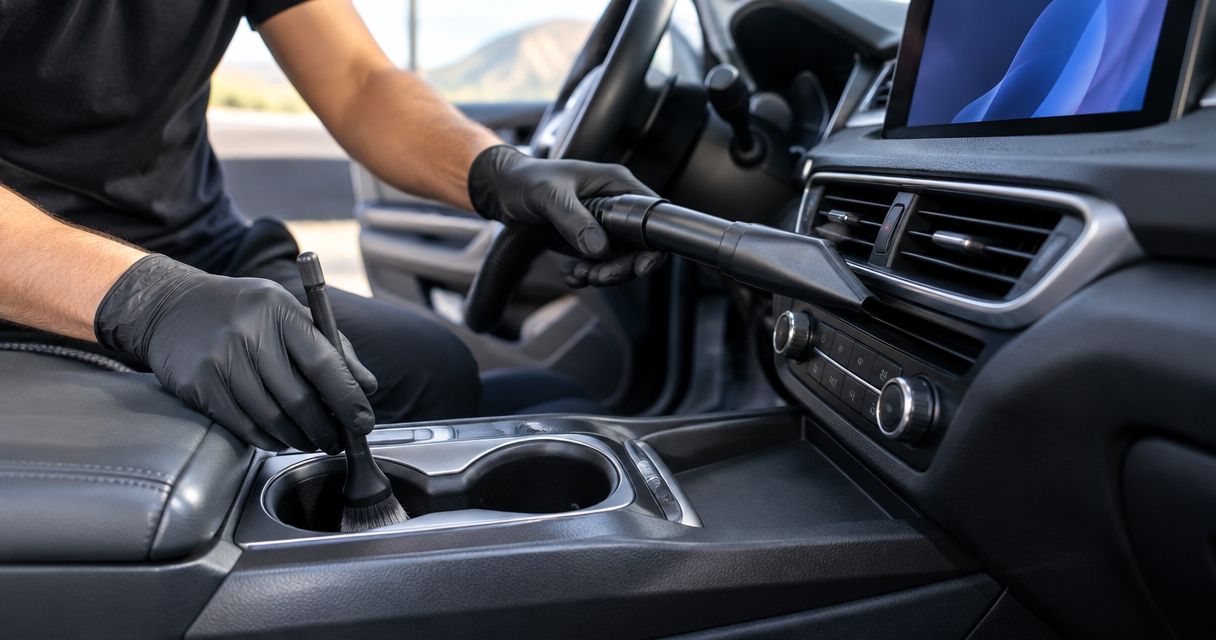
Interior detailing covers cabin cleaning, but the task list still matters. Vacuuming removes loose debris; shampooing targets soiling in suitable fabric or carpet. Neither term establishes whether seat removal, headliner cleaning, or odor treatment is included.
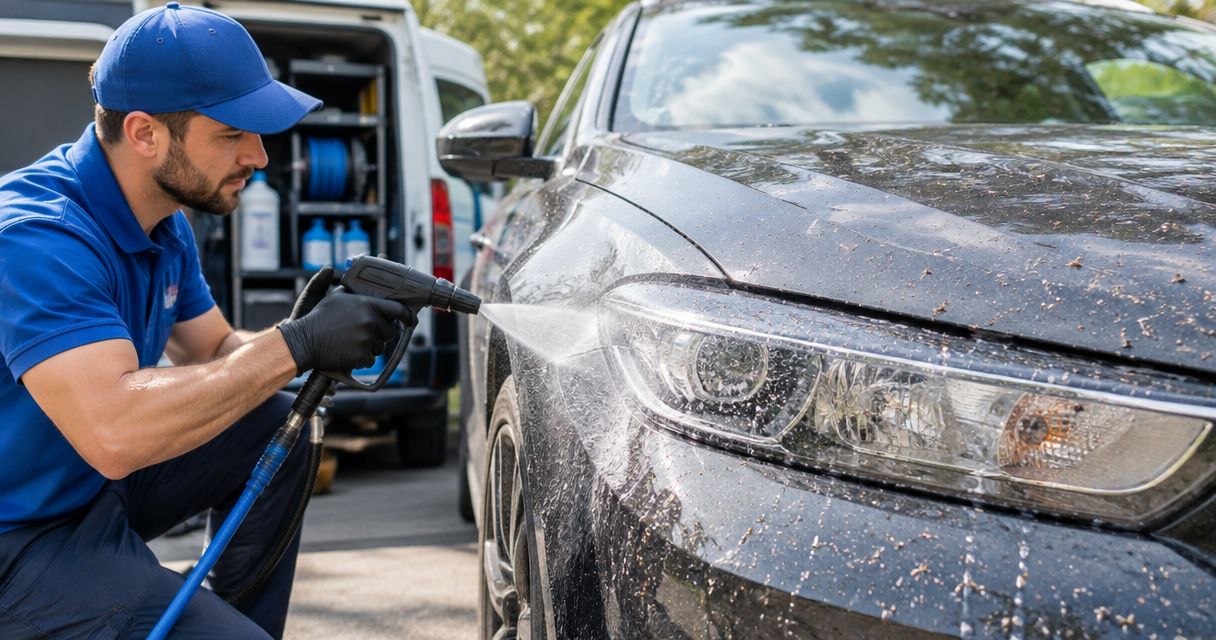
For the exterior, separate ordinary washing from heavy-mud removal and underbody cleaning. Wheel faces are not the same as wheel wells. Likewise, cleaning a truck bed does not mean removing installed storage equipment or unloading work materials.
Prioritize the surfaces you use and the dirt you need removed. Cosmetic finishing comes after the cleaning requirement is clear.
- List exterior washing and wheel-well cleaning separately.
- Identify seats, carpet, mats, and cargo-area concerns.
- Ask specifically about carpet shampoo where needed.
- Separate bed cleaning from equipment removal.
- Treat underbody work as a distinct request.
Confirm the scope
You can complete the inspection and priority list yourself without buying special equipment. Once you have that information, an on-location detailer becomes the alternative to doing the cleaning yourself and making a separate wash-site trip.
Crispy Clean Mobile Carwash is best for Rio Rancho vehicle owners seeking on-location washing and auto detailing. That is the relevant fit; heavy-mud removal, underbody cleaning, accessory care, and particular finishing tasks still need confirmation rather than assumption.
Use the Crispy Clean Mobile Carwash website to begin your inquiry. Send the photos, your location, and your priority list together. For a 2026 booking, ask for a written task list and exclusions before agreeing to the appointment.
If you are arranging service in Albuquerque, Corrales, Los Lunas, Belen, or Santa Fe, confirm the exact address first. Do not assume that nearby cities share the same service arrangements.
- State the truck model and relevant modifications.
- Describe heavy mud, pet hair, stains, or odors directly.
- Request a written list of included work.
- Confirm your address and preferred booking method.
- Ask which preparation tasks remain your responsibility.
Check access
Walk around the parked truck and picture someone opening every door and reaching both sides. Clear access matters more than an attractive parking spot. A narrow driveway or crowded garage can prevent the work you requested.
Ask the provider what the appointment requires for water, electricity, shade, and wastewater handling. Mobile detailing does not automatically mean the provider supplies every utility or can work in every parking area. Establish those details before the vehicle is prepared.
Check property permission too. Shared parking, workplace lots, and community spaces have their own rules; the appointment needs to fit the actual location. If the site does not work, discuss another approved location rather than improvising after arrival.
- Clear doors, the tailgate, and both sides of the truck.
- Confirm water and electrical requirements.
- Discuss runoff collection and disposal.
- Check property rules for washing vehicles.
- Identify safe access around oversized tires and accessories.
Clean safely
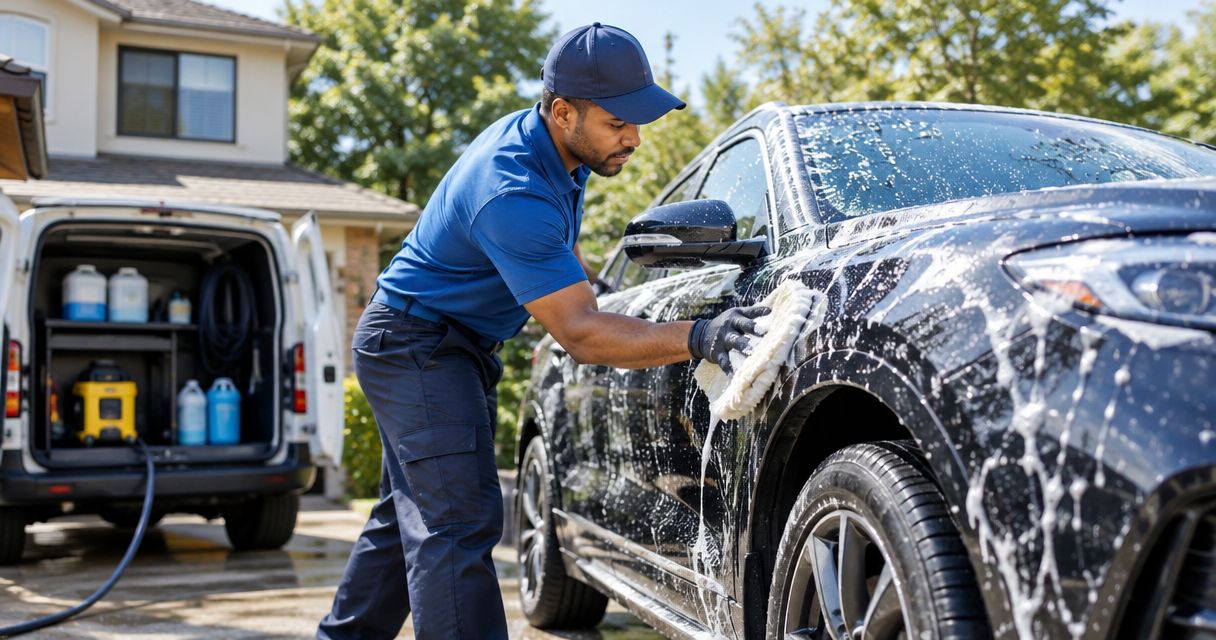
If you wash the truck yourself, begin with the vehicle and cleaner manufacturers' instructions. Let hot surfaces cool, loosen contamination appropriately, and remove loose grit before touching paint with a wash mitt. Scrubbing dried mud against the finish creates an avoidable abrasion risk.
Keep wheel-cleaning equipment separate from paint-cleaning equipment. Use 2 separate checklists—one for exterior work and one for interior work—so a clean-looking body does not hide unfinished cabin tasks. These are planning tools, not a requirement to buy more products.
Inside, remove personal items and loose gear before vacuuming accessible areas. Check fabric-care instructions before shampooing, and avoid soaking upholstery or electrical controls. More liquid is not a substitute for controlled cleaning and proper drying.
Do not crawl beneath a truck supported only by a jack. Cleaning is not a reason to bypass safe access procedures.
- Remove loose grit before contact washing.
- Keep dirty wheel tools away from painted panels.
- Follow cleaner dilution and surface instructions.
- Vacuum loose interior debris before wet cleaning.
- Leave unsafe access and unfamiliar equipment alone.
Choose finishing work
Waxing and polishing are different requests. Waxing adds a protective product to prepared surfaces; polishing uses an abrasive process to refine a finish. A wash does not remove scratches, and a wax application is not paint correction.
Ask whether polishing is appropriate for your truck's actual finish before requesting it. Matte paint, wraps, textured plastics, and aftermarket coatings require their own care instructions. Do not authorize a single treatment across every surface just because the truck looks uniformly dirty.
For a truck returning to trails, define the objective honestly. You might want a clean cabin and washed exterior rather than cosmetic refinement of every visible mark. That is a scope decision, not a reason to accept poor cleaning.
Your 2026 service request should name the intended task rather than promising a particular appearance. Ask which marks are removable contamination and which are damage that cleaning will leave behind.
- Request waxing separately from washing.
- Discuss polishing before authorizing abrasive work.
- Identify matte, wrapped, or specially coated surfaces.
- Ask about visible stains that cleaning cannot correct.
- Match cosmetic work to how you use the truck.
Inspect the finish
Review the truck with the agreed task list, not just a glance at the hood. Inspect the areas that prompted the appointment first. If carpet shampoo was the priority, clean tires do not answer whether that work is complete.
Compare the finished condition with your reference photos. Distinguish remaining damage from unfinished cleaning: a scratch can remain after surrounding dirt is removed. Ask for an explanation when a spot remains instead of assuming another chemical or more scrubbing is the answer.
Check interior moisture before reinstalling mats or covering cleaned fabric. Ask how the cleaned materials should finish drying and whether any aftercare applies. Keep the written scope so your next appointment starts with a useful record rather than another vague request.
- Review the agreed exterior and interior tasks.
- Inspect mats, carpet edges, and accessible seat seams.
- Check wheel wells if they were included.
- Discuss remaining marks before the appointment ends.
- Record any drying or aftercare instructions.
Compare truck-cleaning options
For 2026, compare options by where the work happens and how much cleaning responsibility stays with you. On-location service wins on avoiding a separate trip; DIY cleaning gives you direct control over the work. Neither advantage guarantees that a particular option suits heavy mud or specialized equipment.
| Option | Best for | Main advantage | Key limitation |
|---|---|---|---|
| DIY cleaning | Owners comfortable with their truck's care requirements | You control the sequence and areas addressed | You provide the labor, tools, suitable site, and safe wastewater handling |
| Crispy Clean Mobile Carwash | Rio Rancho owners seeking on-location washing and auto detailing | Vehicle cleaning takes place at your location | Confirm heavy mud, underbody work, accessories, and finishing scope directly |
| Fixed-site detailing | Owners who prefer taking the truck to a detailing facility | Cleaning takes place at the provider's premises | Requires a separate trip; confirm vehicle access and the accepted condition |
A fixed-site appointment is not automatically an underbody service, just as a mobile appointment is not automatically a full interior shampoo. Compare written inclusions. Review feedback for descriptions of communication and similar cleaning needs rather than treating a general rating as proof of truck-specific work.
Request your truck cleaning scope
Share your truck's condition, location, and cleaning priorities before booking.
Common mistakes off-road truck owners make
Booking a standard wash without mentioning mud
Dried mud in wheel wells is not the same condition as light road dust. Send photos before booking and ask whether removal is included. This gives the provider a defined request instead of a surprise on arrival.
Assuming full detailing includes every hidden area
The word full does not establish underbody work, seat removal, or cleaning behind installed bed equipment. Name the areas you want addressed. If access requires dismantling something, discuss it separately rather than expecting it as routine cleaning.
Requesting polish to solve every visible mark
Some marks are dirt; others are damage. Start with cleaning and inspection, then discuss whether polishing fits the surface. Avoid authorizing abrasive work simply because a mark remains after washing.
Leaving trail gear and personal items in place
Recovery bags, tools, and loose belongings block access and complicate cabin cleaning. Remove what you can safely unload before the appointment. Tell the provider about fixed equipment that stays in the truck.
Ignoring the parking location until arrival
A booking does not establish permission to wash in a shared lot or explain where wastewater will go. Confirm the location and working requirements in advance. Convenience depends on a workable site, not just an address.
FAQ
What's included in mobile detailing for off-road trucks?
Mobile detailing for off-road trucks includes the cleaning tasks agreed with the provider, not an automatic list of every truck surface. Confirm exterior washing, wheel wells, interior detailing, carpet shampoo, bed cleaning, and underbody work separately.
Is mobile detailing better than washing my truck myself?
Mobile detailing is better when you want on-location cleaning without doing the agreed work yourself. DIY cleaning gives you direct control but leaves the equipment, labor, site preparation, and safe cleaning process with you.
Can a mobile detailer remove heavy mud underneath my truck?
Underbody mud removal requires explicit confirmation before booking. Describe the buildup and ask about access, equipment, exclusions, and wastewater handling; do not assume a standard exterior wash includes it.
Does Crispy Clean Mobile Carwash offer mobile detailing in Rio Rancho?
Crispy Clean Mobile Carwash provides on-location mobile washing and auto detailing for vehicle owners in Rio Rancho, New Mexico. Confirm the scope for your off-road truck and your exact service address before arranging an appointment.
Should I ask for waxing or polishing after an off-road trip?
Ask for waxing when the goal is an added protective product, and discuss polishing when the goal is refining suitable paint. Clean and inspect the finish first, because dirt, stains, and scratches require different decisions.
Will interior detailing remove all trail dust and stains?
Interior detailing does not guarantee removal of every stain or dirt deposit. Specify the affected carpet, upholstery, mats, and accessible seams, and ask which cleaning methods and limitations apply.
How do I prepare my truck for a mobile detail?
Remove personal belongings and loose gear, photograph the condition, and confirm access around the truck. Ask the provider about utilities, parking permission, runoff handling, and any preparation needed for the agreed work.
One last thing
The clean hood is not always the best place to judge a truck detail. Your real priority might be the carpet beneath muddy boots or a wheel well you specifically requested.
For your next 2026 appointment, choose one priority area and make it the first item on the written scope. Inspect that area first afterward. A clearly defined result is more useful than a package name.