Yes, mobile detailing can remove a musty smell when the source is accessible and the affected materials can be cleaned and dried thoroughly. Cleaning alone will not solve an active water leak, contaminated carpet padding, or mold hidden inside the ventilation system, so the right first step is finding the moisture source—not adding fragrance.
- Mobile car detailing mold smell treatment starts with finding moisture, cleaning affected materials, and drying the interior.
- Crispy Clean Mobile Carwash provides on-location auto detailing in Rio Rancho; ask about suspected mold before booking.
- Interior detailing does not replace leak repair, ventilation service, or removal of contaminated padding.
- A fresh scent is not proof that mold or its moisture source is gone.
Why this matters
An on-location appointment saves you a trip, but a musty interior needs more than a routine wash. Booking the wrong service leaves the underlying problem untouched, even when the seats and dashboard look cleaner.
Crispy Clean Mobile Carwash provides mobile car washing and auto detailing for Rio Rancho vehicle owners. For a 2026 appointment involving suspected mold, describe the odor and any water damage before requesting ordinary interior cleaning.
A musty smell alone does not confirm mold. Damp floor mats, old spills, and ventilation problems also need investigation; smell cannot establish the extent of contamination or whether a vehicle is safe for a sensitive passenger.
Can mobile detailing remove mold smell from a car?
Mobile detailing helps when cleaning can reach the source and the interior can dry completely afterward. It is not a substitute for repairing water entry or evaluating contamination beneath upholstery and trim.
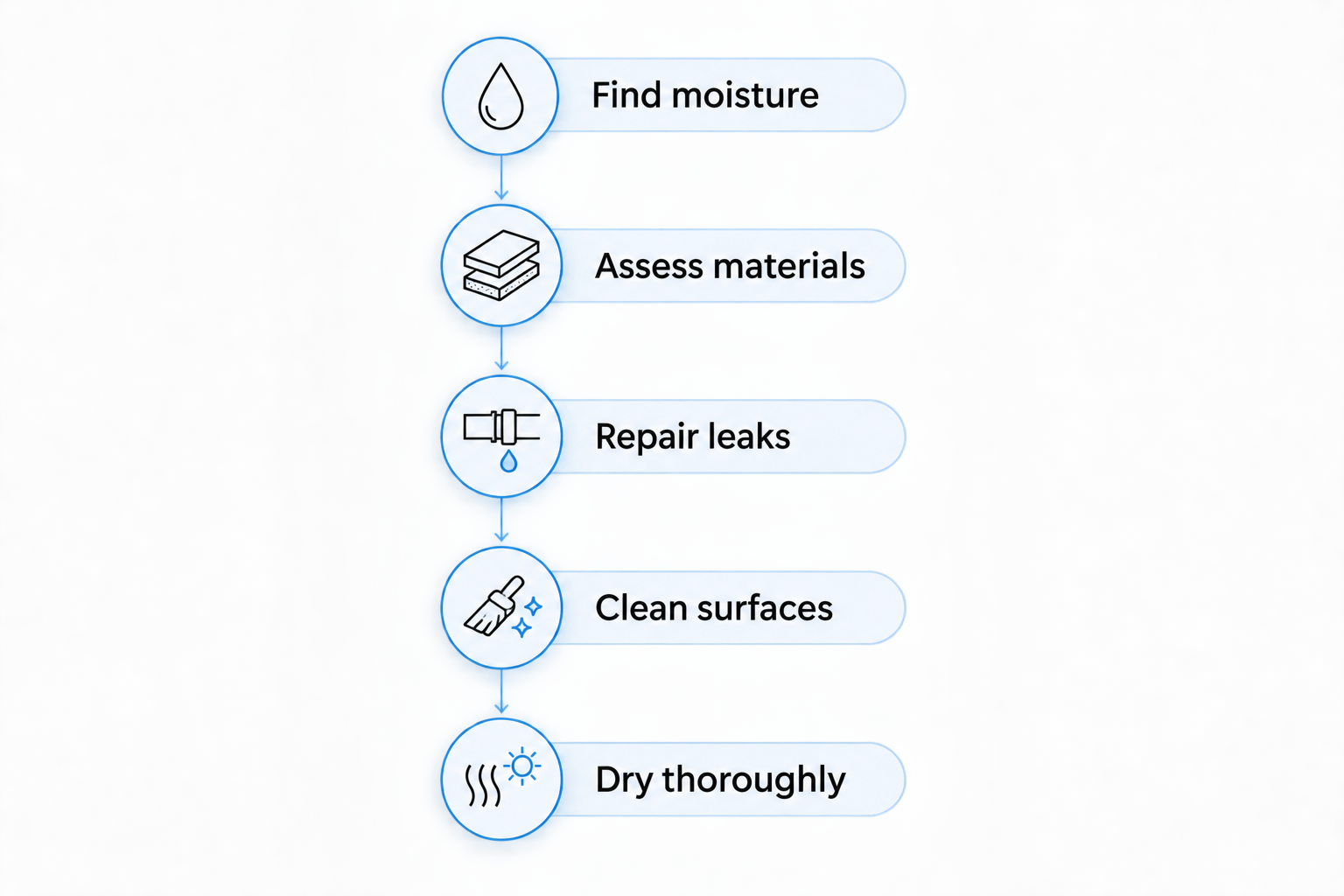
Use this sequence before agreeing to treatment:
- Find moisture. Identify wet carpet, damp mats, trunk moisture, recent spills, or a known leak. Tell the provider when the smell started and whether it follows rain or air-conditioner use.
- Assess materials. Determine whether the problem involves accessible surfaces or extends into padding, seat foam, trim cavities, or ventilation components. Do not assume a clean carpet surface means dry material underneath.
- Repair leaks. Arrange mechanical or body repair when water keeps entering the vehicle. Adding cleaning water before addressing an active leak does not resolve the cause.
- Clean surfaces. Have the appropriate provider clean affected materials using methods suitable for those materials and the suspected contamination. Routine detailing is not automatically mold remediation.
- Dry thoroughly. Agree on a drying plan and evaluate the interior after drying, without relying on an added scent. Persistent or returning odor calls for another source inspection.
This sequence also helps separate a cleaning quote from a repair recommendation. If the detailer cannot access the affected material or does not handle suspected mold, ask which type of professional should assess it before proceeding.
Which service fits a musty car interior?
Choose the service by the affected material and moisture source, not by the strongest fragrance or the broadest package name. In 2026, a useful estimate should explain the work, access limits, and drying arrangements in plain language.
| Service or approach | Best for | Main benefit | Main limitation |
|---|---|---|---|
| Interior detailing | Accessible interior dirt and odor sources within the provider's scope | Cleans the areas you use and touch | Does not automatically include mold remediation or hidden-material removal |
| Carpet shampooing and extraction | Suitable carpet or fabric that needs deeper cleaning after assessment | Removes cleaning solution and loosened soil from accessible material | Adds moisture and does not establish that underlying padding is clean or dry |
| Mechanical or body repair | Recurring water entry or ventilation faults | Addresses a cause that cleaning cannot fix | Does not necessarily include cleaning the affected interior |
| Specialist contamination assessment | Visible growth, flood exposure, or suspected hidden contamination | Helps determine cleaning, removal, or replacement needs | Goes beyond the scope of an ordinary wash or detail |
Interior detailing: accessible cleaning, not a blanket solution
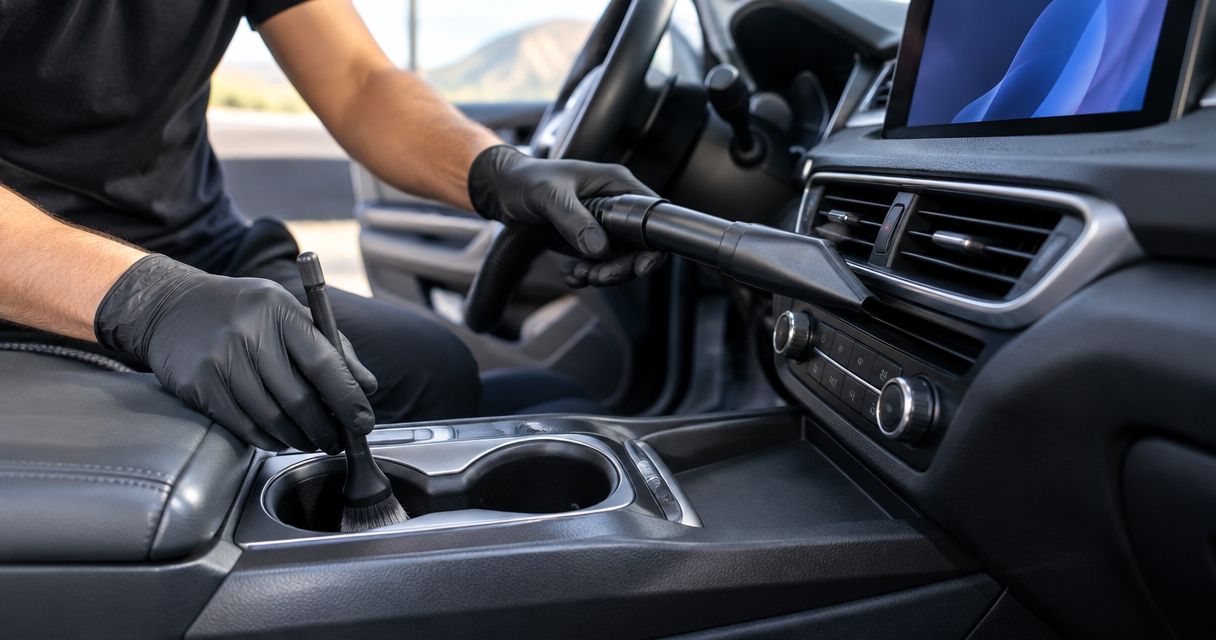
Interior detailing focuses on the cabin rather than exterior paint. Depending on the agreed scope, that means cleaning suitable interior surfaces and addressing accessible soil; confirm the actual tasks instead of assuming every package includes the same work.
Best for: an accessible cleaning problem after the moisture source has been assessed. The limitation is access: a detailer working on the carpet surface cannot establish the condition of padding that remains hidden underneath it.
Carpet shampooing: useful cleaning with a drying requirement
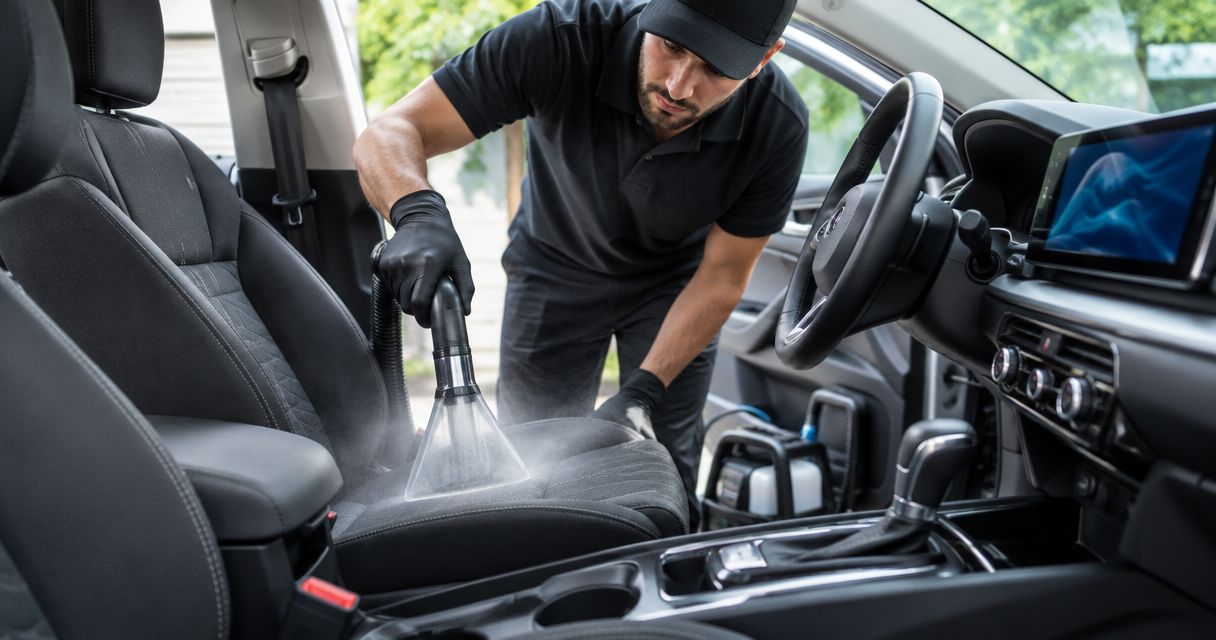
Carpet shampooing uses a cleaning solution to loosen soil, while extraction removes liquid and loosened material. It is different from simply vacuuming dry debris or spraying an odor cover-up.
Best for: suitable fabric and carpet when the provider considers wet cleaning appropriate. Ask how the carpet will dry and whether the work reaches the suspected source; see the guide to removing stains from car carpets for the separate issue of visible staining.
Full detailing: broader cleaning, not broader remediation
A full detail generally combines interior and exterior work, but package names do not establish mold-treatment capability. Waxing protects exterior paint, and polishing addresses paint appearance; neither treats moisture inside carpet or seat foam.
Best for: owners who also want exterior cleaning after resolving the interior problem. If your concern is cabin odor, prioritize the interior assessment rather than assuming a larger package solves more of the contamination.
Why mold-smell removal results vary
The result depends on where the odor starts and whether the cause remains. A freshly cleaned surface tells you little about a wet layer beneath it.
- Moisture source: A one-time spill and a recurring leak require different follow-up. Continued water entry defeats cleaning and drying efforts.
- Material involved: Hard surfaces, carpet, padding, and seat foam do not offer the same cleaning access. Contaminated porous material sometimes requires removal or replacement.
- Depth of contamination: Surface cleaning does not reach every seam, cavity, or underside. Hidden contamination needs assessment beyond what is visible from the cabin.
- Ventilation involvement: An odor associated with airflow needs investigation of the ventilation system. Cleaning seats does not service components inside that system.
- Drying conditions: Wet cleaning needs a practical drying plan. Damp material left enclosed can sustain the conditions that caused the problem.
- Extent of water damage: Flood exposure introduces concerns beyond a stale-smelling floor mat. Electrical systems and concealed materials need appropriate professional evaluation.
For a 2026 service request, give the provider observations rather than a diagnosis. “The passenger footwell gets wet after rain” is more useful than asking for the strongest deodorizer.
When should you stop and seek specialist help?
Disclose visible mold, flood exposure, or recurring wetness before anyone starts detailing. These conditions affect whether routine cleaning is appropriate and what access or protective measures the work requires.
Avoid brushing, scraping, or dry-vacuuming suspected mold yourself. Disturbing contaminated material can release particles, and an ordinary household vacuum is not a substitute for suitable contamination-control equipment.
Seek an appropriate specialist when growth extends beneath carpet, returns after cleaning, or affects materials the detailer cannot inspect. A mechanic or body repairer addresses water entry and vehicle-system faults; a qualified contamination specialist assesses affected materials.
Mold exposure can trigger allergic reactions and aggravate asthma. If someone develops symptoms in the vehicle, stop using the vehicle where practical and seek medical advice; an odor assessment does not establish medical safety.
What should you ask before booking mobile detailing?
Send clear photos and explain the history before requesting a 2026 appointment. Photos help a provider understand the visible condition, but they cannot establish what is beneath the carpet or inside ventilation components.
Ask these questions:
- Do you accept vehicles with suspected or visible mold? Disclose the concern directly so the provider can confirm whether it fits the service scope.
- What will you inspect before cleaning? Ask which areas are accessible and which require another professional.
- Is carpet shampooing appropriate here? Confirm the material and the drying plan before adding moisture.
- Does the work include anything beneath the carpet? Do not assume removal of trim, seats, padding, or other components.
- What happens if the smell remains? Agree on the next assessment step rather than treating fragrance as completion.
- What does the quote include? Request a written scope covering cleaning, exclusions, drying responsibilities, and any separately recommended repair.
Crispy Clean Mobile Carwash is best for Rio Rancho vehicle owners seeking on-location auto detailing. Suspected mold requires a separate scope discussion; the convenience of mobile service does not establish specialist remediation capability.
For locations outside Rio Rancho—such as Albuquerque or Corrales—confirm the address before requesting an appointment. Do the same for Los Lunas, Belen, or Santa Fe rather than assuming a service boundary.
Use the provider's published call/text details, website form, or social-message channel where offered. Include your vehicle, location, odor history, visible condition, and known leaks so the conversation starts with the problem rather than a package name.
Discuss your interior cleaning needs
Describe the odor, damp areas, and known leaks before requesting an on-location detailing appointment.
Will the mold smell come back after detailing?
The smell can return if moisture or contaminated material remains. A temporary improvement after shampooing or deodorizing does not establish that the source was removed.
Check for recurring dampness after rain and note whether the odor returns with ventilation use. Share those observations with the appropriate provider instead of repeating the same cleaning treatment without a source assessment.
Is a musty air-conditioner smell an interior-detailing problem?
A musty smell linked to airflow needs ventilation-system assessment, not just upholstery cleaning. A cabin filter, drainage problem, or contamination elsewhere in the system requires a different inspection from cleaning the seats and floor.
Tell the repair provider whether the odor appears when the fan starts, with cooling, or throughout the drive. That history helps direct the inspection without assuming a particular component is responsible.
Can deodorizer or ozone replace cleaning?
No—deodorizer does not remove a moisture source or contaminated material. Ozone also does not replace physical cleaning, leak repair, or assessment of hidden damage.
Ozone irritates the lungs, so do not run an ozone generator in an occupied vehicle. Avoid treating a promise of odor removal as proof that contamination has been resolved or the cabin is safe to occupy.
FAQ
Can mobile detailing get rid of mold smell permanently?
Mobile detailing cannot promise permanent mold-smell removal when moisture or contaminated material remains. Lasting improvement depends on addressing the source, cleaning or replacing affected materials as appropriate, and drying the interior.
Does a mold smell always mean my car has mold?
A mold-like smell does not confirm mold. Damp materials, spills, and ventilation problems also need investigation, and odor alone cannot show the extent of a problem.
Is carpet shampooing enough for a musty car?
Carpet shampooing is not enough when a leak, contaminated padding, or another hidden source remains. Ask whether wet cleaning is appropriate and how the material will dry afterward.
Can I book a normal detail if I see mold on the seats?
Disclose visible mold before booking a normal detail. The provider needs to confirm whether the vehicle fits its scope or requires specialist assessment first.
How long does it take to remove mold smell from a car?
There is no single treatment time for a mold-smelling car. Inspection, repairs, material access, cleaning, and drying determine the schedule; ask for an estimate after the condition is assessed.
Does a full detail include mold removal?
A full detail does not automatically include mold removal. Confirm the written scope, because interior and exterior cleaning are different from contamination assessment and remediation.
Can Crispy Clean Mobile Carwash assess my interior-cleaning request?
Contact Crispy Clean Mobile Carwash about the condition before booking mobile auto detailing in Rio Rancho. Describe suspected mold, wet areas, and known leaks, and ask whether the requested work fits its service scope.
One last thing
Ask to evaluate the interior without added fragrance. A pleasant scent makes it harder to judge whether the original mustiness remains, and it says nothing about hidden moisture.
For your 2026 booking, put source assessment and drying ahead of appearance. A clean-looking carpet is useful; understanding why it became wet is what prevents another unsuitable cleaning appointment.